The Quiz Question
Which obsolete Lend Lease destroyer was packed with explosives and rammed into the dock gates at St Nazaire in March 1942, wrecking the only dry dock on the Atlantic coast able to hold the Tirpitz?
- A. HMS Kelly
- B. HMS Campbeltown
- C. HMS Ardent
- D. HMS Cossack
The answer is B. HMS Campbeltown. Here is the full story.
At 1:34 in the morning on 28 March 1942, a battered old destroyer travelling at 19 knots smashed into the dock gates of the Normandie dry dock at St Nazaire, France. She carried 4.5 tons of hidden explosives in her reinforced bow. Her crew knew she was never coming home. What followed in the next few hours was one of the most daring, costly, and strategically decisive commando raids of the entire Second World War.
A Ship Sailing Straight Into History
The operation was codenamed Operation Chariot, and it involved 611 men — 257 Royal Navy personnel and 354 Army commandos — launched from Falmouth, Cornwall, two nights before. Their target was a single piece of French harbour infrastructure: the Normandie dry dock, the only facility on the entire Atlantic coast capable of servicing a German capital ship.
HMS Campbeltown struck the caisson and drove 36 feet into the dock gates, embedding herself exactly as planned. Her bow was packed with 24 Mark VII depth charges — approximately 4.5 tons of Amatol explosive — concealed inside a steel and concrete casing, connected to an eight-hour delayed fuse. The explosion would not come until morning. And by then, the Germans would have no idea what was waiting for them.
Winston Churchill and Combined Operations HQ had approved the mission in full knowledge that casualties would be catastrophic. Internally, those who planned it understood it was, in every practical sense, a suicide mission.
Why St Nazaire Mattered So Much
The Normandie dry dock had been built in 1932 to service the great French ocean liner SS Normandie. It measured 1,148 feet long — large enough to accommodate virtually any vessel afloat. In 1942, only one ship in the German fleet truly required a facility of that size: the battleship Tirpitz.
The Tirpitz was the sister ship of the Bismarck, and by early 1942 she was operational in Norwegian waters. The Royal Navy had not forgotten what the Bismarck had done the previous May — sinking HMS Hood with the loss of all but three of her 1,418 crew before her own destruction required a vast fleet effort. The sinking of the Bismarck had come at enormous cost. The Tirpitz posed the same existential threat to Allied Atlantic convoys.
The strategic logic was simple but brilliant. If the Tirpitz broke out into the Atlantic and was damaged, St Nazaire was the only port outside Germany where she could be repaired. Destroy that dock, and she could never safely venture into the open ocean. She would be bottled up in Norway — neutralised without ever having to fight her directly.
HMS Campbeltown: The Unlikely Weapon
HMS Campbeltown had not started life as a British ship. She was originally USS Buchanan, a Wickes-class destroyer launched in 1919 and transferred to Britain in September 1940 under the Destroyers for Bases Agreement — the deal that sent 50 ageing American destroyers to the Royal Navy in exchange for basing rights in British overseas territories.
By 1942 she was considered obsolete — over 20 years old, too slow and too unreliable for front-line fleet duties. But she had one crucial advantage: a shallow enough draft to navigate the sandbanks and shoals of the Loire estuary without grounding. Her age made her expendable. Her dimensions made her ideal.
To disguise her during the approach, two of her four funnels were removed and the remaining two were cut at an angle to mimic the silhouette of a German Möwe-class torpedo boat. The explosive charge hidden in her bow was designed and fitted by Lieutenant Nigel Tibbits RN, who engineered the entire concealment system himself. It was a remarkable piece of improvised naval engineering — invisible to any inspection from the outside.
Planning Operation Chariot: A Daring and Dangerous Gamble
The operation was planned under Commodore Lord Louis Mountbatten, head of Combined Operations, who approved the final plan in February 1942. The Army element was commanded by Lieutenant Colonel Charles Newman of No. 2 Commando. The naval force was led by Commander Robert Ryder RN.
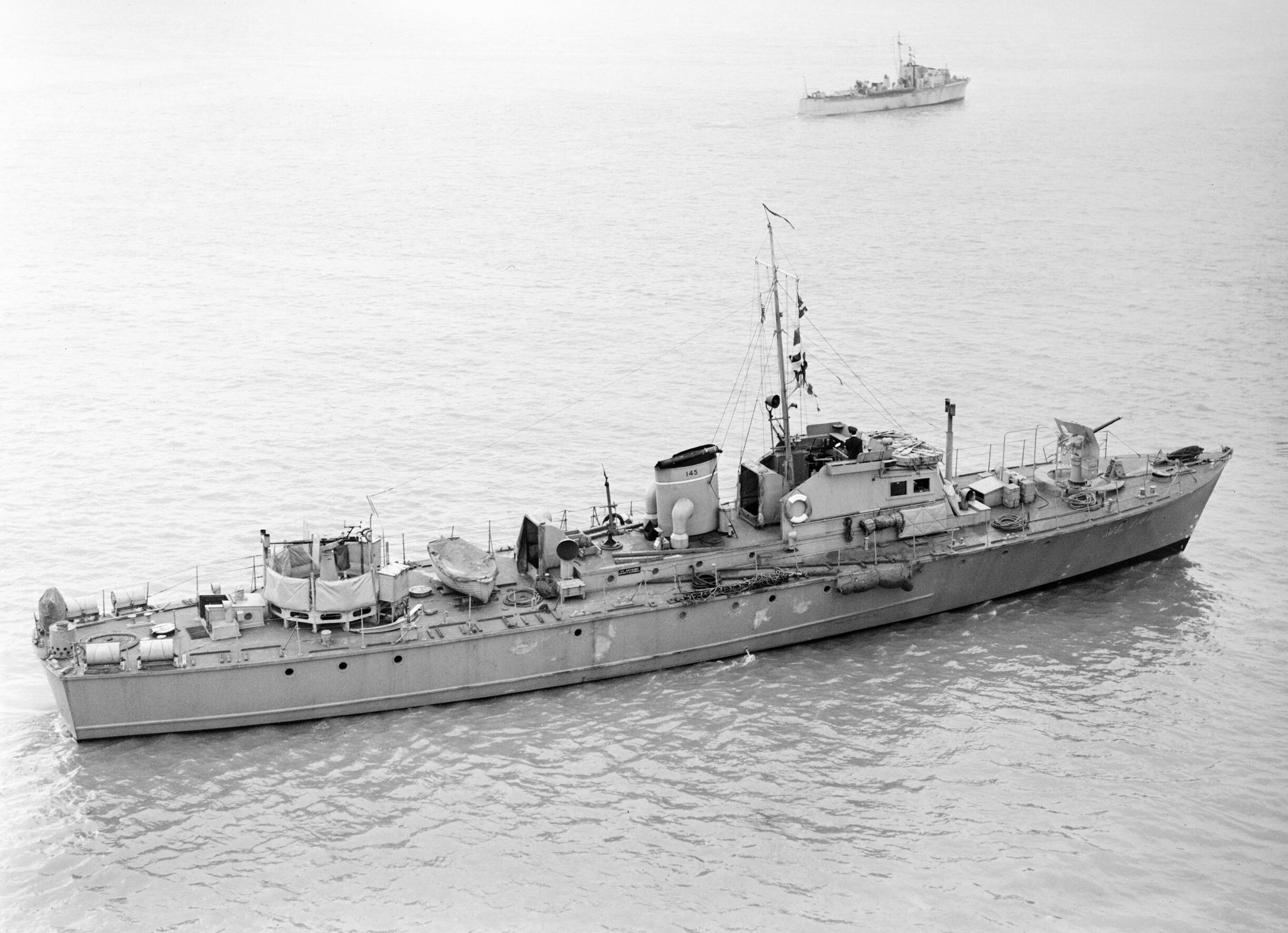
The raiding fleet comprised HMS Campbeltown, one motor gunboat (MGB 314, from which Ryder would direct operations), one motor torpedo boat (MTB 74), and 16 Fairmile motor launches carrying the commando assault teams. The motor launches were wooden-hulled and lightly armed. Against the German shore batteries, searchlights, and harbour defences at St Nazaire, they were horribly exposed.
Intelligence for the operation came partly through a French naval officer who had worked at St Nazaire before the German occupation. The approach route through the Loire estuary was charted in meticulous detail. Every demolition target — the winding houses, the pumping stations, the impounding station, the dock machinery — was assigned to a specific commando team with specific orders. Nothing was left to chance that could be controlled in advance.
The Night of 28 March 1942: Into the Jaws
The force departed Falmouth on the evening of 26 March 1942 and crossed the Bay of Biscay, using the submarine HMS Sturgeon as a navigational waypoint. To confuse any German observers, the convoy sailed partly submerged alongside her for a stretch of the journey.
At 11:30 PM on 27 March, a German signal lamp challenged the fleet. A German-speaking British officer aboard sent back a carefully prepared response, claiming the force was on urgent operational business and requesting that shore batteries hold fire. The bluff bought precious minutes — long enough to close the distance to the harbour entrance.
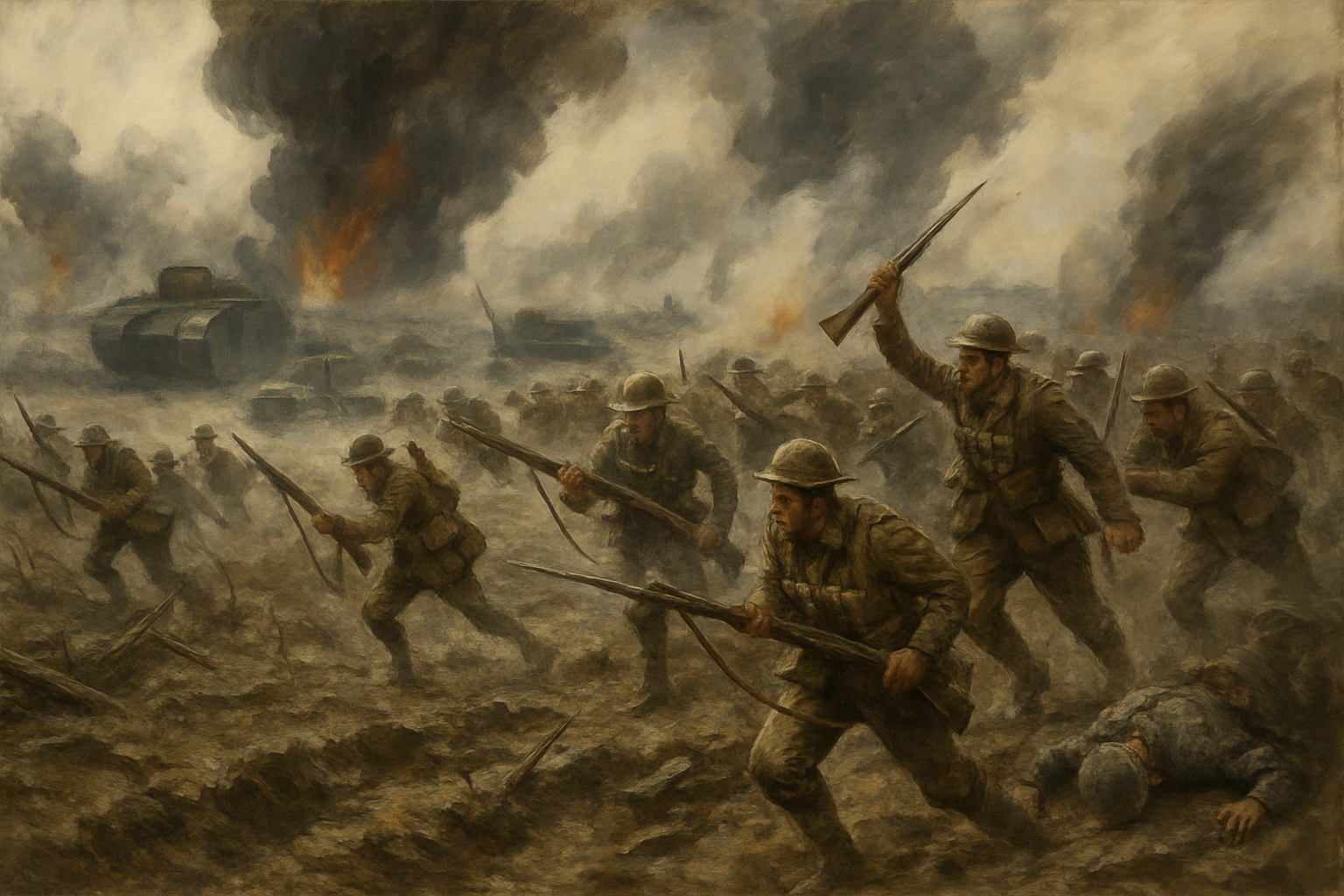
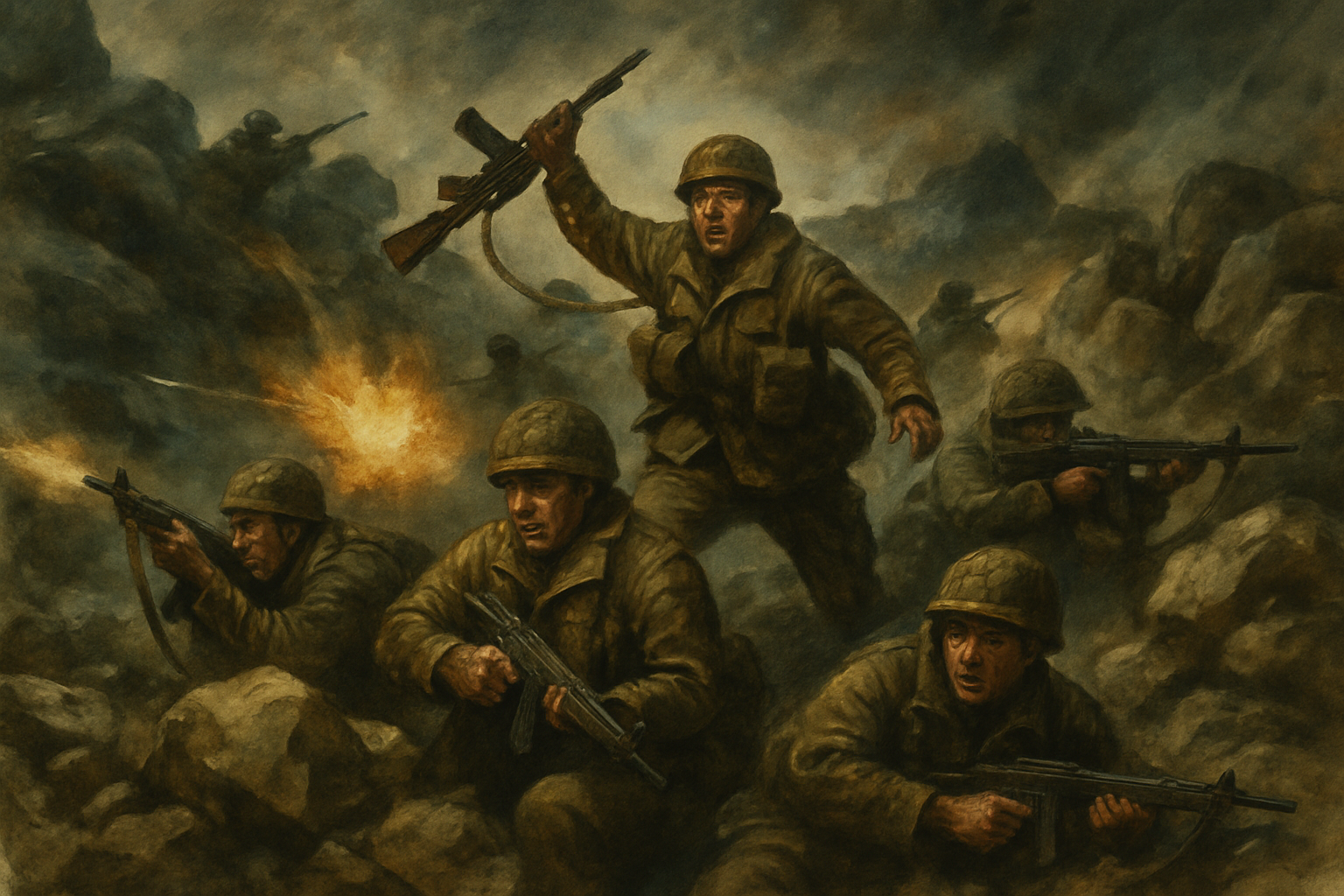
At 1:22 AM the deception collapsed. German shore batteries opened fire, and the Loire estuary became a cauldron of tracer fire and explosions. The wooden motor launches were devastatingly vulnerable. Seven of the sixteen were sunk during the approach and withdrawal. Men burned in the water. Others were cut down at their guns.
HMS Campbeltown absorbed multiple direct hits but held her course. Commander Ryder watched from MGB 314 as she bore down on the dock gates. At 1:34 AM she struck, driving 36 feet into the caisson at 19 knots — four minutes behind schedule, but exactly on target. The commandos poured ashore immediately, racing to their demolition objectives through a harbour now fully alert and fighting back.
The Explosion That Changed Everything
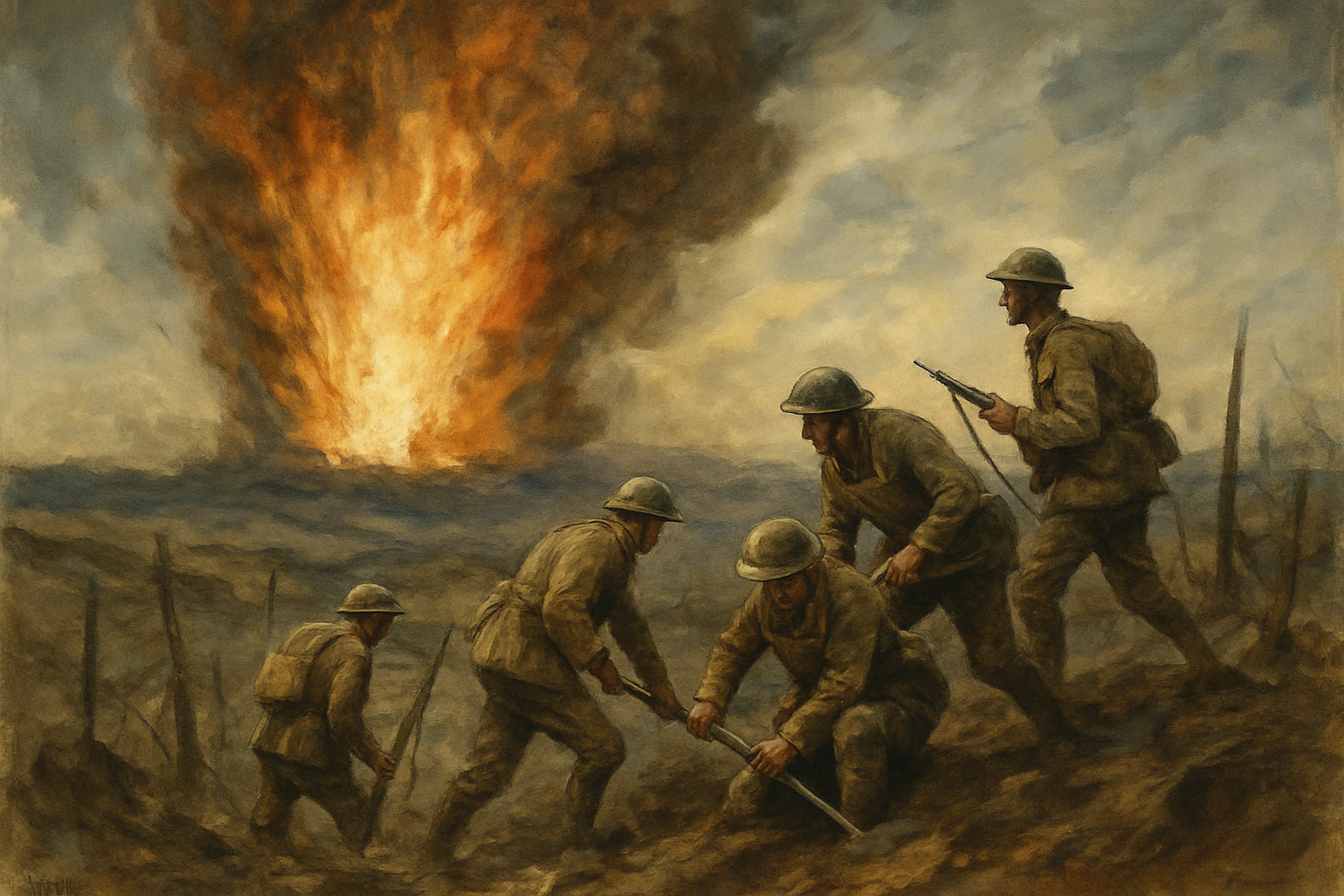
The commandos fought hard. Demolition teams attacked the winding houses and pumping stations that controlled the dock, destroying machinery essential to its operation even before the main charge detonated. But the German defences were overwhelming, and with the motor launches shredded, extraction became impossible for most of the men ashore.
By morning, the surviving raiders were dead, wounded, or in German hands. German officers, apparently satisfied that the ship was nothing more than a wrecked hulk, allowed parties of personnel to board and examine her. Contemporary accounts suggest as many as 40 German officers were aboard Campbeltown when the fuse completed its work.
At approximately 10:35 AM on 28 March 1942, the 4.5 tons of Amatol explosive detonated. The blast killed an estimated 250 to 360 German soldiers and sailors and destroyed the dock caisson beyond any immediate repair. Two days later, on 30 March, the delayed-action torpedoes fired by MTB 74 during the raid detonated in the outer lock, causing further casualties among German forces who had again gathered near the site.
The Normandie dry dock remained out of action for the entirety of the war. It was not restored until 1947. The Tirpitz never attempted to break out into the Atlantic. She spent the rest of the war hiding in Norwegian fjords, a ghost threat rather than a real one, until RAF Lancaster bombers using Tallboy bombs finally sank her in November 1944. You can read more about that final chapter in our article on the sinking of the Tirpitz.
The Men Who Paid the Price
Of the 611 men who set out from Falmouth, 169 were killed and 215 were taken prisoner — a casualty rate of over 60 per cent. Only 228 men returned to Britain. Five commandos evaded capture entirely, making their way back through Occupied France and Spain with the help of the French Resistance.
Lieutenant Colonel Charles Newman was captured and spent the remainder of the war as a prisoner of war. He was awarded the Victoria Cross for his leadership and courage during the raid. Commander Robert Ryder RN also received the Victoria Cross. Able Seaman William Savage, who manned the forward pom-pom gun on MGB 314 and kept firing until he was killed, received a posthumous Victoria Cross.
In total, five Victoria Crosses were awarded for Operation Chariot — more than for any other single raid during the Second World War. A further 80 decorations were awarded, including four Distinguished Service Orders and four Conspicuous Gallantry Medals. The scale of the gallantry recognised reflects the scale of what those men were asked to do.
German Panic and a Massacre in the Streets
The explosion of HMS Campbeltown sent shockwaves far beyond the dry dock. German troops in St Nazaire were gripped by rumour and paranoia, convinced that further saboteurs were concealed throughout the town. The command atmosphere deteriorated rapidly.
On the evening of 28 March and again when the delayed torpedoes detonated on 30 March, French civilians who had gathered near the wreck out of curiosity found themselves caught in the crossfire. Jumpy German soldiers opened fire on the crowds, killing a number of French citizens. The exact death toll among French civilians remains uncertain, but contemporary accounts confirm that dozens died in the confusion and panic.
German commanders initially filed reports downplaying the damage. Adolf Hitler, according to accounts from within the Wehrmacht's own command structure, was enraged and demanded a full investigation into how such a raid had penetrated German coastal defences. The Wehrmacht's own after-action assessment ultimately acknowledged that the dry dock was irreparably damaged and that the raiders had achieved their primary objective — a remarkable admission from a military bureaucracy with every incentive to minimise its failures.
Legacy: The Greatest Raid of All
Operation Chariot is widely regarded by military historians and the Imperial War Museum alike as one of the most audacious and strategically successful combined operations raids of the Second World War. It achieved its primary objective completely. It did so at terrible human cost. And its consequences shaped the entire strategic posture of the German surface fleet for the remainder of the conflict.
The raid's influence on the Tirpitz was direct and lasting. Her commanders, knowing she had no Atlantic repair base, never risked her in open ocean operations. She became a fleet-in-being: feared, expensive to maintain, and ultimately useless as an offensive weapon.
St Nazaire and Falmouth, Cornwall are twinned towns to this day — a permanent memorial to the bond forged on that March night in 1942. The St Nazaire Society, formed by survivors of the raid, held annual reunions for decades. The last surviving raider, Arthur Young, died in 2016. A permanent memorial stands on the quayside at St Nazaire, and the caisson that HMS Campbeltown destroyed now bears a commemorative plaque to all who took part in Operation Chariot.
They sailed into an impossible situation, in wooden boats and an old American destroyer dressed up as the enemy, and they changed the course of the Atlantic war. It is one of the most extraordinary stories in British military history — and it deserves to be remembered by every generation that follows.
If this story moved you, share it with someone who loves military history — and leave a comment below telling us which part of Operation Chariot you found most remarkable. We read every one.
Further Reading
- Imperial War Museum — holds extensive collections on Operation Chariot including personal testimony, photographs, and official records
- The National Archives, Kew — original operational orders, after-action reports, and medal citations for the St Nazaire Raid
- National Army Museum, London — collections relating to No. 2 Commando and Combined Operations
- Royal Navy Historical Branch — naval records covering HMS Campbeltown and the Destroyers for Bases Agreement
- The National WWII Museum, New Orleans — contextual resources on Allied Combined Operations strategy and the Atlantic war