The Quiz Question
Which Royal Navy frigate took four 1,000lb bombs at Fanning Head on 8 June 1982, none of which exploded, yet still returned to front line duty within a week?
- A. HMS Andromeda
- B. HMS Plymouth
- C. HMS Yarmouth
- D. HMS Avenger
The answer is B. HMS Plymouth. Here is the full story.
On 8 June 1982, a Royal Navy frigate absorbed four 1,000lb bombs, a cluster of rockets, and a barrage of cannon fire in the space of two minutes — and lived to fight on. HMS Plymouth's survival in Falkland Sound that afternoon was one of the most extraordinary episodes in modern British naval history, yet it remains far less well known than the ships the Royal Navy lost in the same conflict. That needs to change.
The Ship That Should Have Been Sunk
By any rational calculation, HMS Plymouth should have gone to the bottom on 8 June 1982. Four 1,000lb bombs struck her in rapid succession. Rockets tore into her hull. Fires broke out dangerously close to her ammunition. The fact that she did not explode, did not sink, and did not lose a single man killed is one of the most remarkable convergences of luck, training, and professional coolheadedness in Royal Navy history.
Her survival stands comfortably alongside the losses of HMS Sheffield and HMS Coventry as a defining moment of the Falklands War. If anything, it illustrates something those tragedies cannot — what it looks like when a crew refuses, through sheer discipline and courage, to let their ship die.
Meet HMS Plymouth: A Rothesay-Class Frigate on Her Last Commission
HMS Plymouth (pennant number F126) was a Rothesay-class Type 12 frigate, launched at Devonport in 1959 and commissioned into the Royal Navy in 1961. By 1982 she was already elderly by warship standards — over two decades of Cold War service had been hard on the hull and machinery.
She displaced around 2,800 tonnes and carried a complement of approximately 235 officers and ratings. Her armament included a 4.5-inch gun, Seacat surface-to-air missiles, a Limbo anti-submarine mortar, and torpedo tubes — a capable package for her era, but not a young ship's loadout.
Remarkably, Plymouth was already scheduled for decommissioning when Argentina invaded the Falkland Islands in April 1982. The crisis gave her a last mission. Her commanding officer was Commander David Pentreath, a highly experienced officer whose decisions in the hours after the attack would prove critical to the ship's survival.
Plymouth had already earned her combat stripes by June. She had taken part in the recapture of South Georgia on 25 April 1982, making her a veteran ship crewed by men who had already been under fire. That experience mattered enormously when the worst happened.
The Road to 8 June: The Falklands Air Threat in Context
By early June 1982, the Argentine air threat had already extracted a terrible toll from the British Task Force. HMS Sheffield had been lost on 4 May, HMS Ardent on 21 May, HMS Antelope on 23 May, and both HMS Coventry and the Atlantic Conveyor on 25 May. The threat from fast, low-flying jets was not theoretical — it was a proven killer.
Argentine pilots from Grupo 6 flew IAI Dagger aircraft, an Israeli-built derivative of the French Mirage 5. Fast, manoeuvrable, and capable of devastating low-level attack runs, the Dagger gave defending ships minimal reaction time. Falkland Sound — the channel separating East and West Falkland — had already acquired the grim nickname "Bomb Alley" among Royal Navy crews after the punishing air battles of 21 May.
8 June became one of the darkest single days of the entire war. That same afternoon, Argentine jets struck RFA Sir Galahad and RFA Sir Tristram at Bluff Cove, killing 48 men — the majority Welsh Guards soldiers waiting to disembark. Plymouth's ordeal unfolded within hours of those losses, compounding an already catastrophic day for the Task Force.
Plymouth was in Falkland Sound that afternoon to provide naval gunfire support for British ground forces advancing on Port Stanley. It was a vital mission, but it placed her directly on the routes Argentine aircraft used for their attack runs.
The Attack: Four Daggers, Four Bombs, and Two Minutes of Terror
At approximately 14:00 local time on 8 June 1982, four Argentine Dagger jets of Grupo 6 came in low and fast over Falkland Sound. They attacked from the direction of West Falkland, giving Plymouth's crew almost no warning. The entire engagement — from first visual sighting to the jets pulling away — lasted barely two minutes.
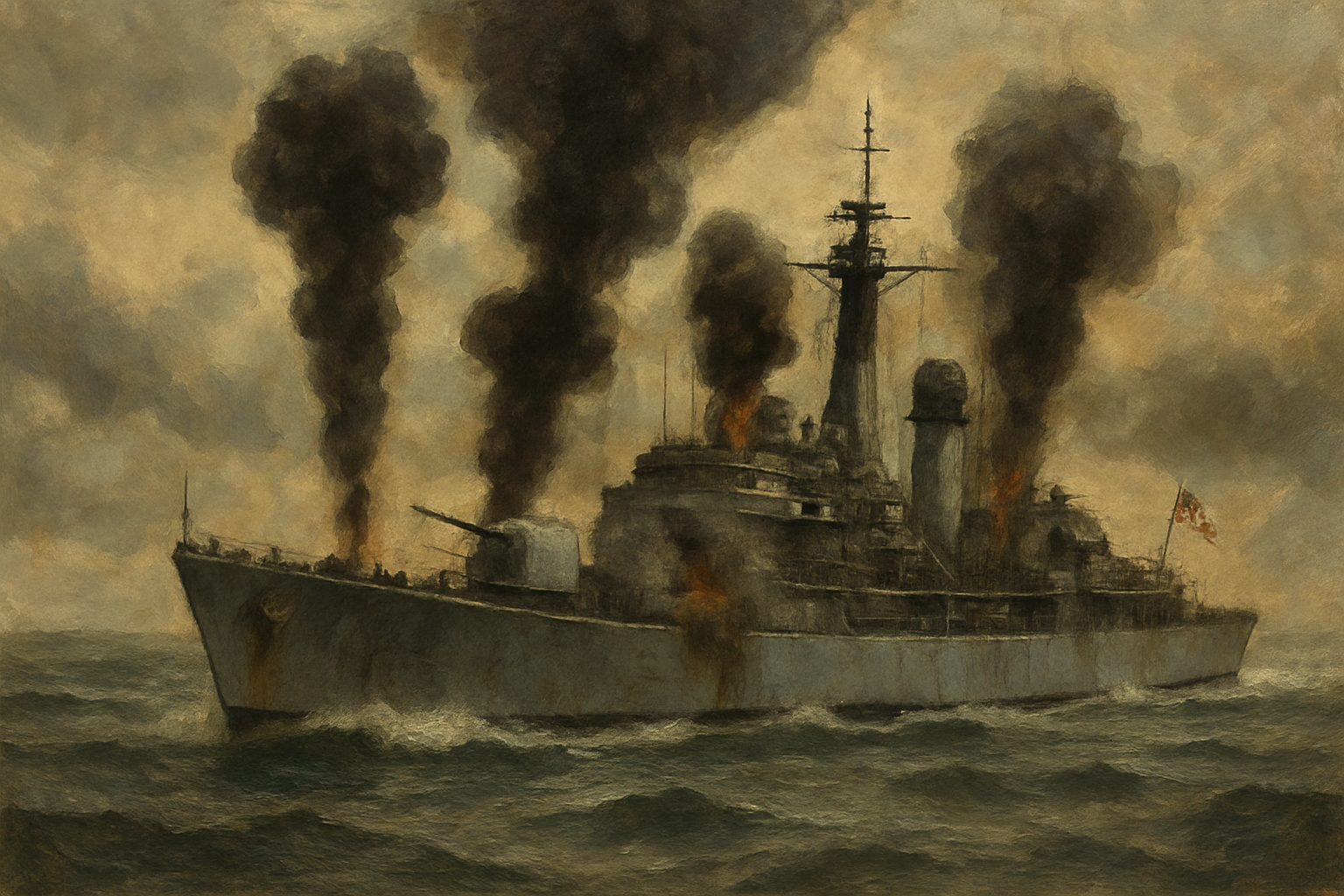
All four 1,000lb bombs struck the ship. One hit in the area of the funnel. Others struck the flight deck and passed through the hull structure. Alongside the bombs, the attack delivered a salvo of rockets and multiple 30mm cannon strikes. The ship absorbed an enormous weight of ordnance in moments.
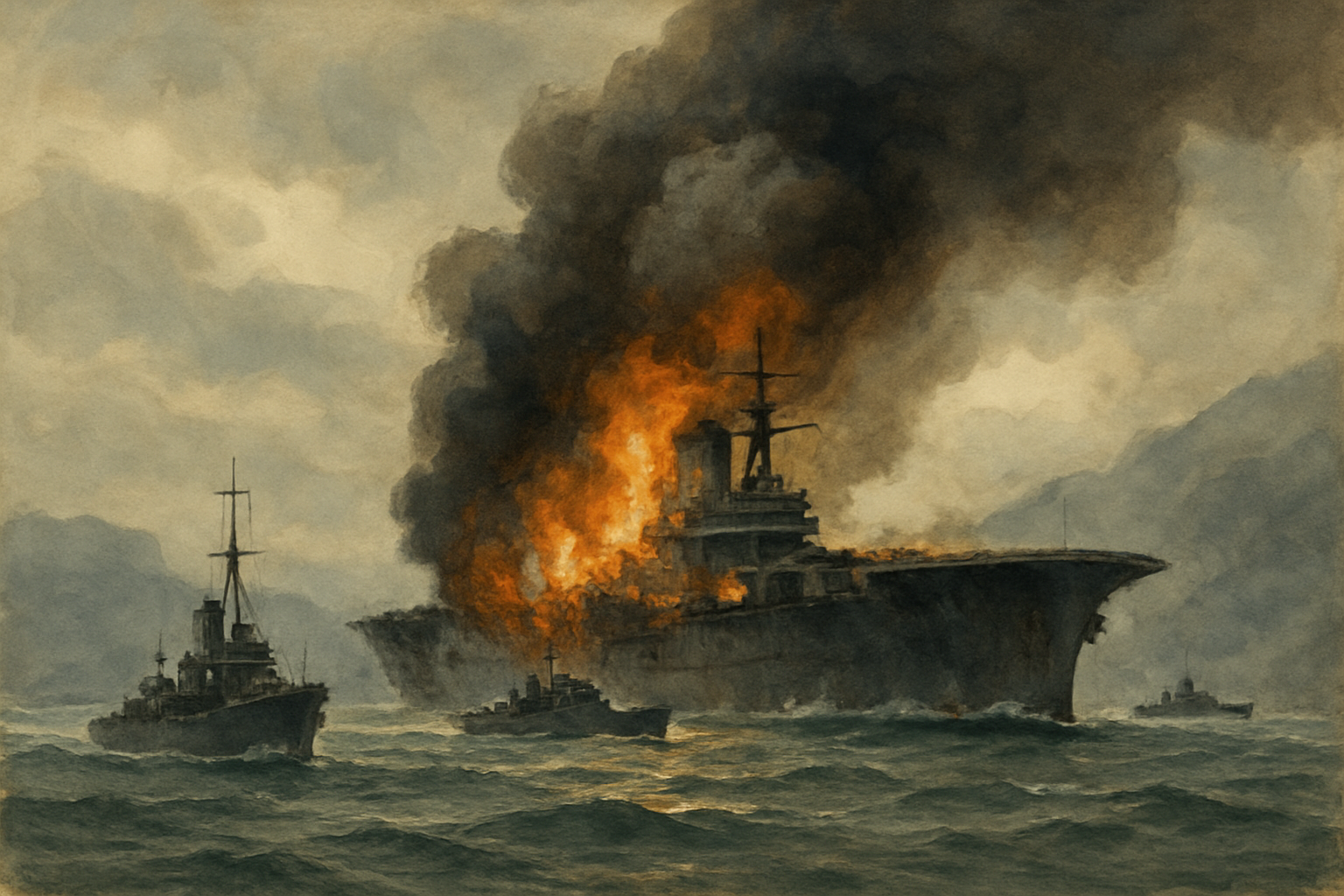
One rocket penetrated the anti-submarine mortar magazine and started a fire. Depth charges stowed on the flight deck began to heat in the flames, threatening the kind of catastrophic secondary explosion that would have torn the ship apart. For the men below decks and in the damage control parties, those first minutes after the attack were the most dangerous of the entire engagement.
And yet none of the four bombs detonated. They had entered the ship, torn through bulkheads, and exited through the hull — but they had not exploded. It was the central, almost incomprehensible fact of the attack.
The Men Who Saved HMS Plymouth
Commander David Pentreath maintained command throughout the attack and its chaotic aftermath, making rapid decisions that kept his ship afloat. His composure set the tone for everything that followed. In the fog of a damage-control emergency — fires burning, ammunition threatening to cook off, the ship holed and listing — steady leadership from the top is not optional. It is everything.
The damage control parties moved immediately and with practiced precision. Royal Navy ratings are drilled extensively in firefighting, flooding control, and emergency repairs — 8 June was the moment that training was cashed in for real. Teams tackled the mortar magazine fire at serious personal risk, knowing that if the ammunition ignited fully, the ship was gone.
The most critical single decision of the entire episode was the jettisoning of the burning depth charges from the flight deck. Depth charges, once ignited, do not give much warning before they detonate. The decision to push them overboard had to be made in seconds, under fire, with the ship already on fire around them. The crew made the right call and made it fast.
Four men were wounded in the attack. There were no fatalities. In a strike of this weight and intensity, that outcome borders on miraculous — but it was not entirely luck. Training and speed saved those men as surely as faulty Argentine fuzes did.
The Science of Survival: Why the Bombs Didn't Explode
The Argentine Air Force armed many of their bombs with retard fuzes designed for medium-altitude delivery. These fuzes required a minimum fall distance to arm fully before impact. When Dagger pilots attacked at extremely low level — skimming the wave tops to avoid British radar and missiles — the bombs simply did not have enough air time to complete the arming cycle before they struck the ship.
This was not unique to Plymouth. HMS Argonaut survived the campaign with two unarmed bombs lodged in her hull. HMS Antelope's bomb disposal team was not so fortunate — a delayed detonation during a disposal attempt caused the explosion that ultimately sank her. The fuzing problem ran through the entire Argentine air campaign.
Post-war analysis, referenced in official assessments of the Falklands conflict, confirmed that approximately a third of all Argentine bombs that struck Royal Navy and Royal Fleet Auxiliary vessels during the war failed to detonate. Had Argentine engineers solved this fuzing problem before or during the conflict, naval historians have concluded that British losses would have been dramatically higher — potentially war-changing in scale.
For the Argentine pilots, low-level attack was a calculated trade-off. It reduced their exposure to British Sea Dart and Seacat missiles, which were most effective at medium altitude. But it cost them their bombs' lethality. They were brave men flying into ferocious defensive fire — but the physics of their own ordnance worked against them.
Back in Action: Repairs, Resilience, and Return to Duty
The damage to HMS Plymouth was extensive. Fires had burned through key compartments, the flight deck was wrecked, the hull had been penetrated multiple times, and internal systems had been destroyed or disrupted. By any conventional measure, a return to a home dockyard for major repairs would have seemed the only option.
The Royal Navy thought otherwise. Engineers and the ship's own crew carried out emergency repairs in the South Atlantic, using field-expedient methods and ingenuity born of necessity. The goal was not to make Plymouth perfect — it was to make her capable.
Within approximately one week of the attack, HMS Plymouth had returned to front-line operations in support of the ground offensive closing in on Port Stanley. The speed of her return was a significant morale boost for a Task Force badly shaken by the losses at Bluff Cove. She was still fighting.
HMS Plymouth was present in San Carlos Water for the Argentine surrender on 14 June 1982. She had outlasted the war that had very nearly ended her on 8 June. For Commander Pentreath and his crew, that must have been a moment of profound, hard-won satisfaction.
After the Falklands: A Hero Ship's Sad Final Chapter
Despite everything she had endured and survived, HMS Plymouth was decommissioned from the Royal Navy in 1988. Age and maintenance costs had finally caught up with the old Rothesay-class frigate. She had given the Navy 27 years of service and, at the end, one final extraordinary act of survival.
For a time, it seemed her story might be preserved in steel. Plymouth was saved as a museum ship in Birkenhead, Merseyside, opening to the public in the 1990s alongside other historic vessels. Veterans visited. Schoolchildren walked her decks. Her Falklands damage was part of the story told.
But funding difficulties plagued the preservation project persistently, and the ship deteriorated. She was eventually closed to the public, and the campaigns to save her — fought hard by Falklands veterans including members of her own crew — ultimately failed. HMS Plymouth was broken up for scrap in 2014.
Commander Pentreath and surviving crew members attended memorial events and lobbied for years to keep her afloat. Her battle ensign and a number of artefacts were saved and are held by museums and veterans' associations. They are all that physically remains of a ship that should, by rights, have been lost with all hands on an afternoon in June 1982.
Why HMS Plymouth's Story Still Matters
Plymouth's survival is a masterclass in damage control, crew training, and calm leadership under fire — lessons that remain embedded in Royal Navy doctrine to this day. The speed with which her crew identified priorities, fought fires, and jettisoned the threat of secondary explosion was not instinct. It was the product of rigorous, repeated training meeting a moment of absolute crisis.
Her story also illustrates how devastatingly thin the line between survival and catastrophe is in naval combat. A slightly higher attack altitude by those Dagger pilots. Correctly armed fuzes. A few seconds' slower response from the damage control teams. Any one of those variables, and over 250 men almost certainly die in Falkland Sound on 8 June 1982.
The Falklands War as a whole demonstrated that modern warships are far more vulnerable to air attack than peacetime doctrine had assumed. That lesson shaped Royal Navy ship design, defensive systems, and tactics in the decades that followed. HMS Plymouth paid part of the tuition fee for that education.
For Falklands veterans, Plymouth represents the Task Force at its absolute best — a ship's company that was struck by everything a determined enemy could throw at them, and simply refused to stop. With the ship herself now gone, preserving her story in detail becomes ever more urgent. The men who lived it are now in their 60s, 70s, and 80s. Their testimony is irreplaceable.
If you served during the Falklands War, have a family connection to HMS Plymouth or her crew, or simply want to share this remarkable story, please leave a comment below or pass this article on. These are histories that deserve to be kept alive.
Further reading
- Imperial War Museum — holds extensive Falklands War collections including oral histories, documents, and artefacts relating to Royal Navy operations in 1982
- The National Archives, Kew — official Royal Navy and Ministry of Defence records from the Falklands conflict, including operational reports and damage assessments
- National Museum of the Royal Navy, Portsmouth — collections and research resources covering Royal Navy history including the Falklands campaign
- Fleet Air Arm Museum, Yeovilton — records and exhibits covering naval aviation and air defence during the South Atlantic campaign
- Falklands Conservation and the Falkland Islands Museum and National Trust — local archives preserving the history of the 1982 conflict from the South Atlantic perspective