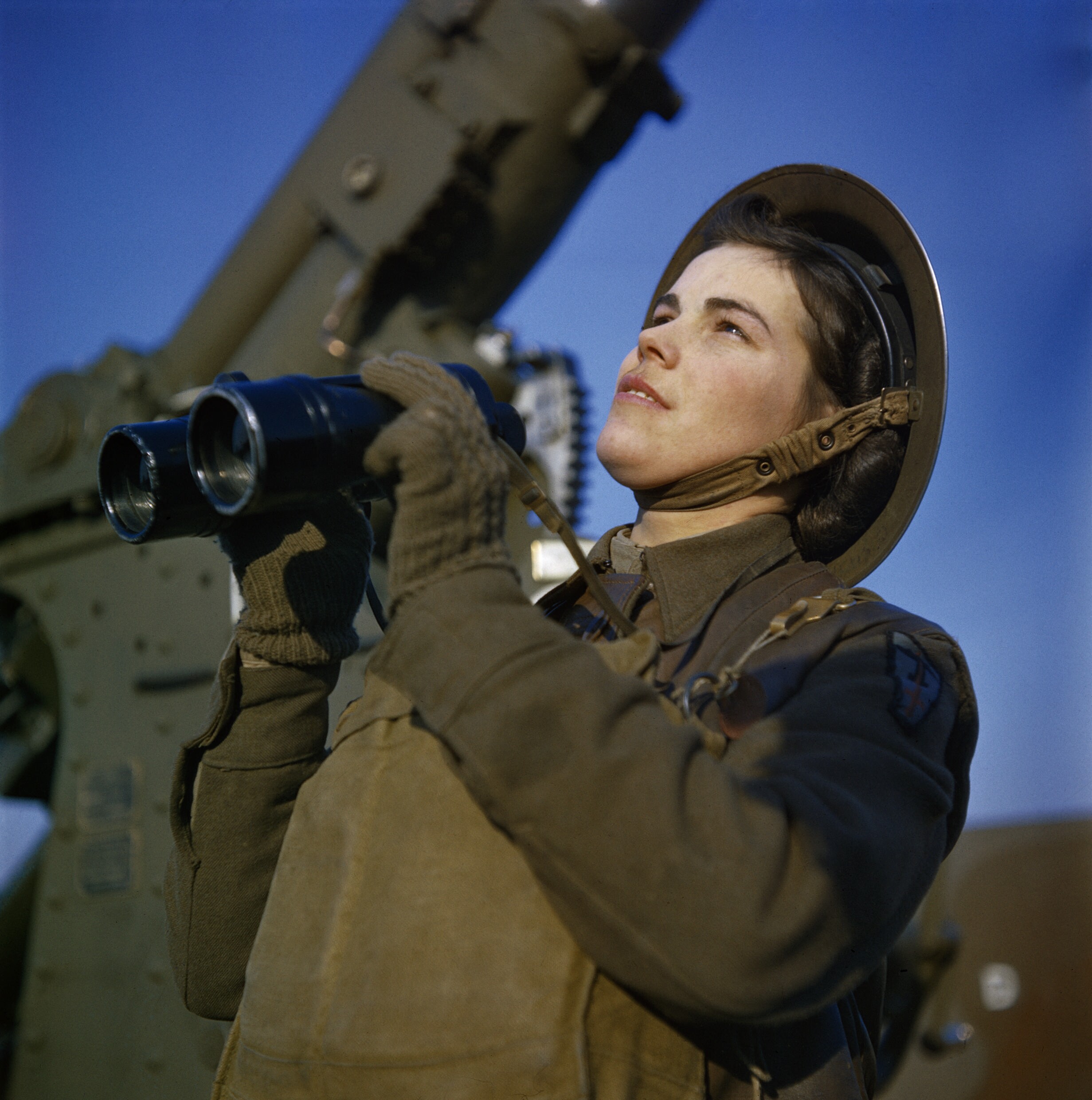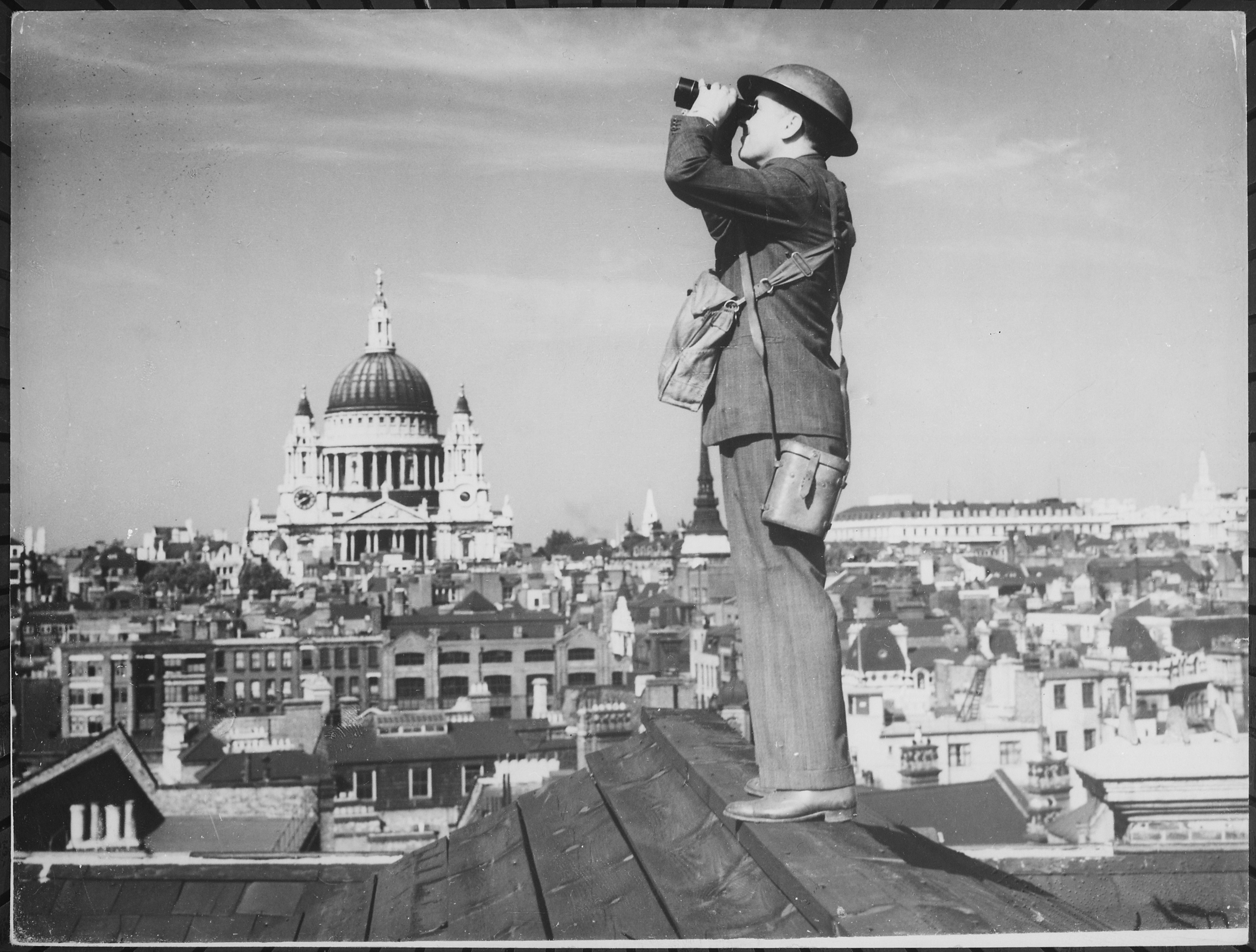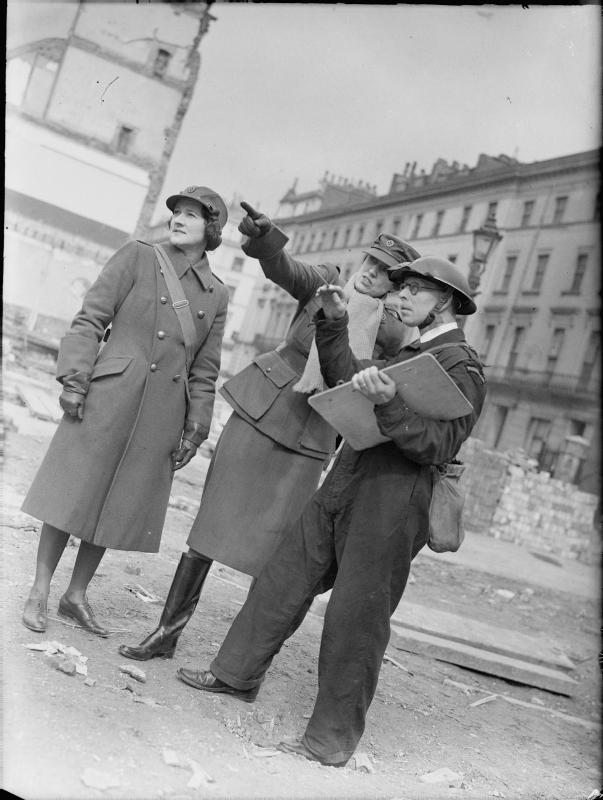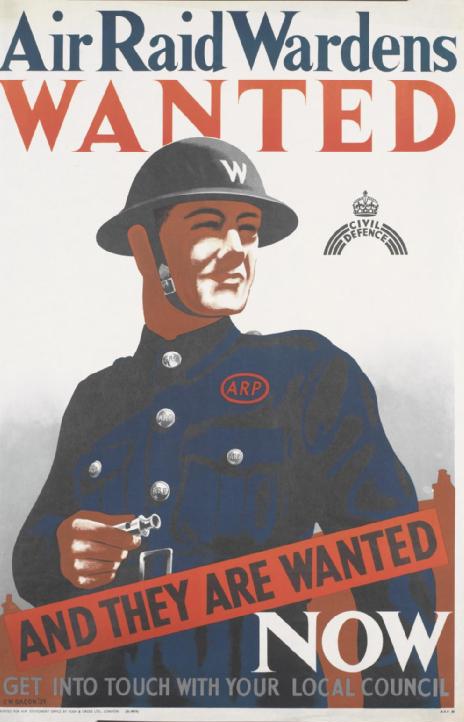
When German bombers came over British cities during the Blitz, the first people on the streets were rarely soldiers. They were Air Raid Precautions wardens, ordinary men and women in dark overalls and tin helmets marked with a white W, moving through the blackout to do the unglamorous, dangerous work of keeping a city alive under fire.
The Air Raid Precautions organisation was built in the years before the war, when the government correctly judged that any future conflict would bring mass bombing of civilian areas. By the time the raids began in earnest in the autumn of 1940, ARP wardens were the front line of what became known as Civil Defence. They were not glamorous. They were essential.
What ARP Wardens Actually Did
The warden's most visible duty was enforcing the blackout. Any chink of light from a window or a car headlamp could help a bomber's crew fix a target, so wardens patrolled their sector after dark calling out the famous instruction to put that light out. It made them unpopular. A warden who hammered on a door about a badly curtained window was, to the household inside, a nuisance. To the crews overhead, that light was a signpost.
When bombs fell, the warden's role changed instantly. Each warden knew their own small patch of streets intimately, the houses, the families, the location of shelters. When a raid began they guided people to public shelters and Anderson shelters, then, once the bombs started landing, they became the eyes of the emergency services. A warden reported each bomb strike as an incident, describing what had been hit, whether there was fire, whether people were trapped, and what help was needed. Those reports set the whole rescue machine in motion, summoning heavy rescue squads, ambulances, and the fire service.
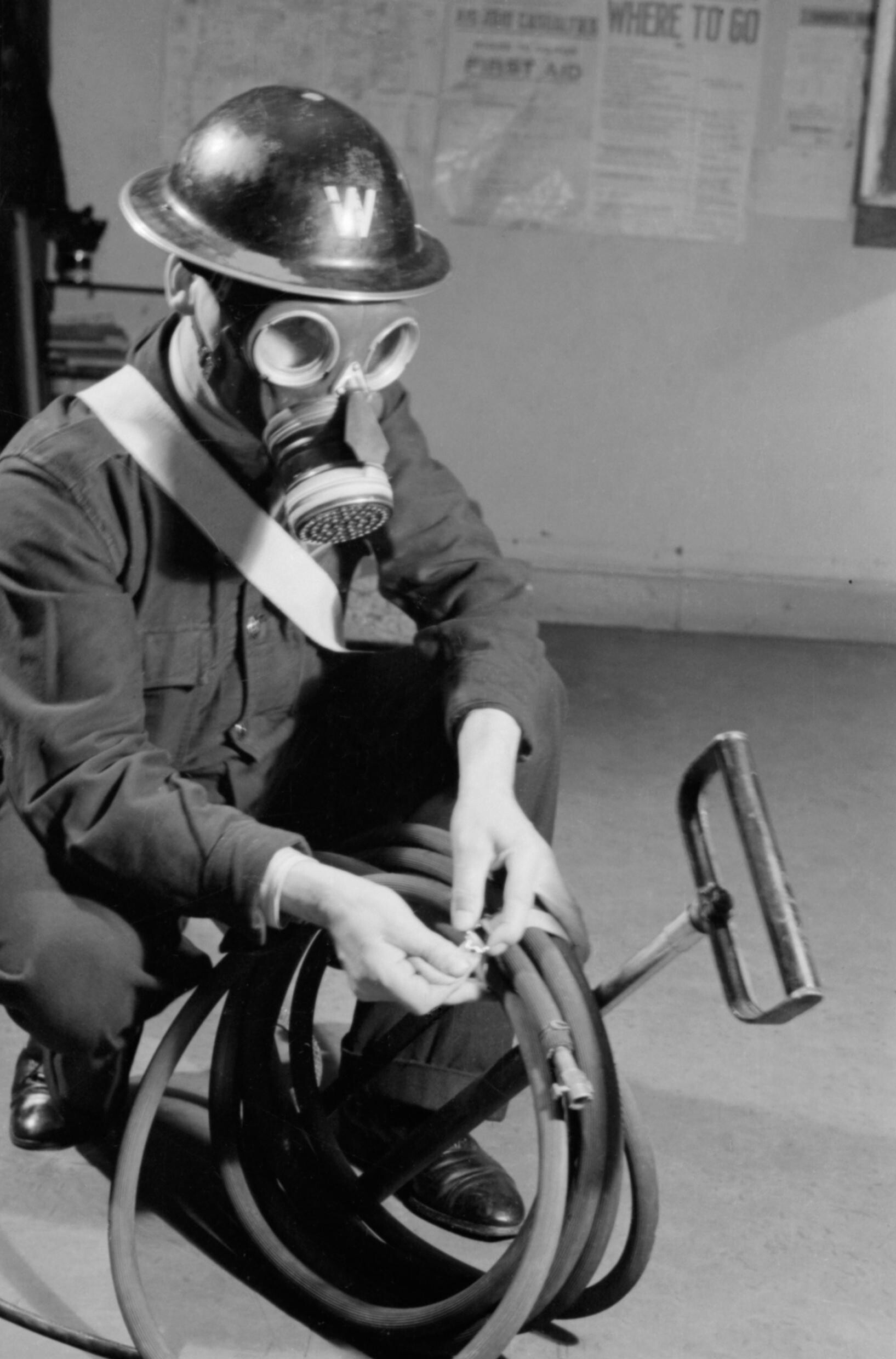
Wardens also dealt directly with incendiary bombs. Enemy raids dropped thousands of small magnesium incendiaries designed to start fires across a wide area, and if left alone they could turn a single hit into a firestorm. Wardens and fire watchers were trained to smother them with sand or douse them before they took hold, work done in the open during a raid with more bombs still falling.
Gas was another constant fear. Poison gas had scarred the memory of the First World War, and the whole population was issued gas masks in expectation that it would be used again. Wardens were responsible for gas precautions in their sector, checking masks, watching for signs of a gas attack, and knowing the decontamination procedures. The gas attacks never came, but the readiness had to be maintained through every raid.
The Scale of Civil Defence
The numbers were enormous. At its height, the Civil Defence organisation drew on roughly 1.4 million people across Britain. The great majority were part-time volunteers, unpaid, who held down ordinary day jobs and then reported for duty in the evenings and through the raids. A minority were full-time and paid. This was a citizen service in the truest sense, staffed by shopkeepers, clerks, teachers, and factory workers who put on a helmet after their shift and went out into the bombing.
That volunteer character shaped everything about the ARP. Wardens knew their neighbours because they were their neighbours. They worked with limited kit, a helmet, a whistle, a torch shielded to a thin beam, a gas mask, and whatever training they had absorbed in church halls and drill nights before the war reached them.
The Human Cost
Civil Defence work was lethal. Nearly 7,000 Civil Defence workers were killed during the war, struck down while they were out reporting incidents, digging for the trapped, and fighting fires in the middle of raids. The danger did not end when the all-clear sounded. Wardens and rescue crews spent hours in the wreckage of bombed houses, tunnelling toward voices, recovering the living and the dead from cellars and collapsed rooms.
The psychological toll of that work is harder to measure but was real and lasting. Men and women who pulled neighbours and children out of rubble, night after night, carried what they had seen for the rest of their lives. There was little language for it at the time and little support afterward. They simply went back on duty the next night.
Resented, Then Relied On
The warden occupied an awkward place in wartime society. Before the bombing began, many people saw the ARP as officious busybodies enforcing tiresome regulations, and the blackout in particular bred resentment. That attitude did not survive contact with real raids. Once the bombs fell and the warden was the person kneeling in the debris of your street organising the rescue, the tin helmet stopped looking like petty authority and started looking like the thing standing between a neighbourhood and chaos.
The Legacy
The ARP system did not disappear with the war. Its structure, local wardens tied to specific sectors, a reporting chain that fed incidents up to coordinated rescue and medical services, and a reliance on trained volunteers, became a model for the civil-defence and emergency-response arrangements that followed. The idea that ordinary citizens could be organised, trained, and deployed to protect their own communities in a crisis outlived the bombers that provoked it.
The wardens themselves asked for little recognition and received little at the time. Their monument is the simple fact that Britain's cities kept functioning through the worst of the bombing, and that when the bombs came down, someone in a tin helmet was already on the street, doing the work.