The Quiz Question
Which newspaper correspondent's graphic dispatches from the Crimea exposed the army's failures and helped spark Florence Nightingale's mission?
- A. William Howard Russell
- B. Alexander Kinglake
- C. Roger Fenton
- D. Henry Clifford
The answer is A. William Howard Russell. Here is the full story.
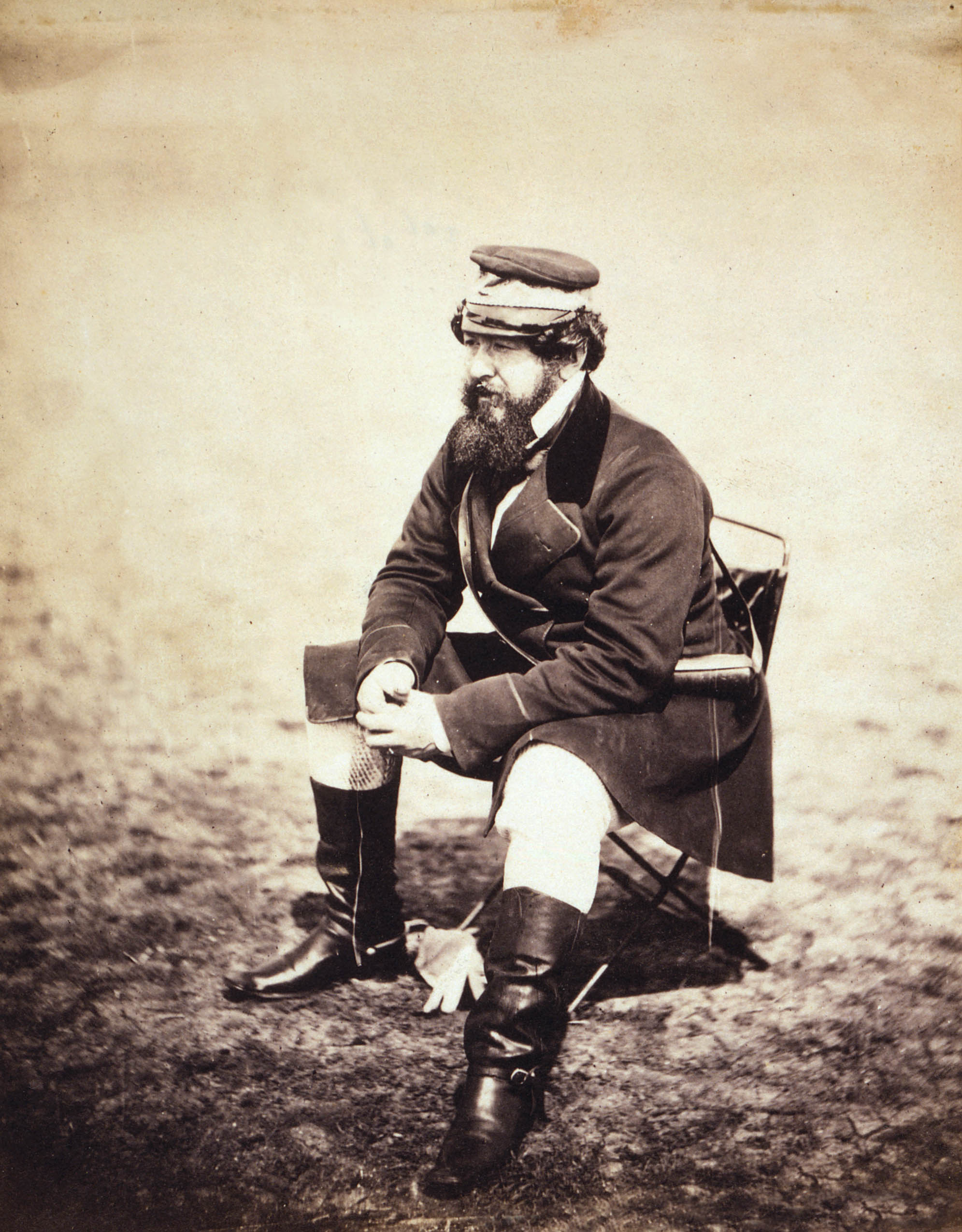
In the autumn of 1854, a large, jovial Irishman climbed a ridge above the port of Balaclava and watched 673 British cavalrymen ride into a valley bristling with Russian guns. What he wrote about it in the following days would shake the British government to its foundations, help launch one of history's most celebrated humanitarian missions, and permanently change the relationship between the press and the military. His name was William Howard Russell, and he was, quite simply, the man who invented modern war correspondence.
The Man Who Made Britain Look Away From Its Own Army
Before Russell, war correspondents were little more than glorified cheerleaders for the British military. Dispatches were vague, flattering, and shaped to suit the army's preferred narrative — readers at home received a sanitised picture of gallant soldiers triumphing under capable officers.
William Howard Russell, born in Lily Vale, County Dublin, on 28 March 1820, changed all of that when The Times sent him to cover the Crimean War in February 1854. His reports were raw, specific, and relentless — naming regiments, describing rotting food, dying men, and absent surgeons with a directness that stunned Victorian readers.
Prime Minister Lord Aberdeen's government would eventually fall in January 1855, partly as a direct consequence of the public fury Russell's writing unleashed. Russell later said he never set out to make trouble. He simply wrote what he saw — and what he saw was catastrophic mismanagement of British soldiers.
Why Britain Was Fighting in the Crimea — and Who Was in Charge
Britain, France, and the Ottoman Empire went to war against Russia in March 1854 to prevent Russian expansion into the crumbling Ottoman territories around the Black Sea. The strategic prize was Sevastopol, Russia's major naval base on the Crimean Peninsula, and the campaign was designed to destroy it.
The British Expeditionary Force was commanded by Lord Raglan, a veteran of Waterloo who had not commanded troops in the field since 1815 — nearly 40 years earlier. The army he led was riddled with purchased commissions, nepotism, and Napoleonic-era logistics. Officers bought their ranks; competence was a secondary consideration.
Supply lines were shambolic from the outset. The army landed at Varna, Bulgaria, before crossing to Crimea in September 1854, with winter clothing and medical supplies left behind or mislaid. No one, it appeared, had given serious thought to what would happen when the Crimean winter arrived.
Russell Reaches the Front — and Cannot Believe What He Sees
Russell arrived with the army in Crimea in September 1854 and immediately began filing detailed, unvarnished reports back to The Times editor John Thadeus Delane. He described soldiers sleeping without tents in driving rain, surviving on salt pork and hardtack biscuit, their uniforms rotting from their bodies in the autumn mud around Sevastopol.
His October 1854 dispatch on the Battle of Balaclava included the first eyewitness account of the Charge of the Light Brigade on 25 October — a catastrophic blunder that killed or wounded 278 of the 673 cavalrymen who rode into the valley. Russell described it not as a glorious sacrifice but as a hideous blunder, caused by a fatally ambiguous order passed between Lord Raglan, his quartermaster-general General Airey, and the cavalry commander Lord Lucan.
He had access that no correspondent had enjoyed before. He rode with staff officers, attended briefings, and moved freely around the camp — giving his reports an authority, and a specificity, that was impossible to dismiss or wave away as mere rumour.
The Dispatches That Shook Britain: The Winter of 1854–55
As winter closed in around Sevastopol, Russell's reports grew increasingly desperate. He described soldiers dying of cholera, dysentery, and frostbite within sight of their officers' warm tents. The contrast between the suffering of ordinary soldiers and the comfortable indifference of the high command was a thread he returned to again and again.
On 14 November 1854, a catastrophic storm struck the Black Sea, sinking supply ships including HMS Prince, which was carrying desperately needed winter clothing, medicine, and ammunition. Russell reported the full horror — ships lost, stores destroyed, men left to face a Russian winter in summer uniforms.
His most devastating dispatches described the base hospital at Scutari — modern Üsküdar in Istanbul — as a charnel house. Men lay on bare floors in filth, without bandages, medicine, or nursing care. Russell wrote that "the commonest accessories of a hospital are wanting; there is not the least attention paid to decency or cleanliness." These words appeared in The Times in October 1854 and provoked an immediate national reaction.
The Times launched a public relief fund — the Crimean War Fund — which raised over £30,000 within weeks, the equivalent of several million pounds today. The public outrage Russell had generated was translating directly into action.
Florence Nightingale: How Russell's Words Opened the Door
Sidney Herbert, the Secretary at War and a personal friend of Florence Nightingale, read Russell's dispatches and wrote to her on 15 October 1854 asking her to lead a nursing party to Scutari. In a remarkable historical coincidence, Nightingale had already written to Herbert on the same day offering her services — their letters crossed in the post.
Nightingale arrived at the Barrack Hospital, Scutari, on 4 November 1854 with 38 nurses. She found conditions that matched Russell's descriptions exactly, and in some cases were worse. The wards were overcrowded, the floors filthy, and the supply of basic medicines almost nonexistent.
She later acknowledged that Russell's reports had given her the public and political backing she needed. Without the national outrage he had generated, the War Office — deeply conservative and resistant to the idea of women in military hospitals — would never have accepted her mission.
By the end of the war in 1856, Nightingale's reforms had helped reduce the death rate at Scutari from around 42 percent to just 2 percent. That transformation was built on the public accountability Russell had created — without the pressure of an informed and furious readership, institutional inertia would almost certainly have prevailed.
The Political Earthquake: A Government Falls
Lord Aberdeen's coalition government collapsed on 29 January 1855 after a vote of no confidence passed 305 to 148. The immediate trigger was a motion by MP John Roebuck demanding a formal inquiry into the army's conduct in Crimea. The political pressure behind that motion had been building for months — fuelled by Russell's dispatches.
During parliamentary debates, MPs read Russell's reports aloud on the floor of the House of Commons and waved copies of The Times to support their arguments. It was an extraordinary moment: the press directly driving parliamentary democracy in real time.
Lord Palmerston replaced Aberdeen as Prime Minister and moved quickly to reorganise the army's supply and medical systems. A new Sanitary Commission was dispatched to Scutari in March 1855, where inspectors discovered that sewers ran directly beneath the hospital, contaminating the water supply — a finding that explained much of the enormous death toll Nightingale had inherited.
The Roebuck Committee's subsequent inquiry directly referenced press reporting as the primary source of public knowledge about conditions in Crimea, cementing a principle that would endure: that a free press was essential to military accountability.
Russell the Man: Who Was This Unlikely Revolutionary?
Russell studied at Trinity College Dublin before drifting into journalism in the early 1840s, initially covering Irish elections for The Times. He was a large, sociable, hard-drinking man who got on well with ordinary soldiers and senior officers alike — a social ease that gave him access at every level of the army that a more prickly personality could never have achieved.
He was not without enemies. Lord Raglan despised him and tried — and failed — to have him removed from the Crimea, calling his reports "infamous" and accusing him of endangering operations by revealing military information. Russell pressed on regardless.
He covered wars for The Times for four decades. He reported on the Indian Rebellion of 1857, travelled to the United States to cover the American Civil War in 1861 and 1862, and later filed dispatches from the Austro-Prussian War of 1866 and the Franco-Prussian War of 1870 to 1871. Each assignment built on the model he had established in Crimea: go to the front, watch, listen, and tell the truth.
He was knighted in 1895 and died on 11 February 1907. By then he was widely — and justly — acknowledged as the founding father of modern war correspondence.
The Legacy: How Russell Invented the War Correspondent
Before Russell, armies controlled their own narratives entirely. His Crimean dispatches established the principle that independent journalists had not just the right but the duty to report the reality of war — including its failures, its waste, and its cruelties.
His model of eyewitness, detail-driven reporting became the template for all that followed, from the Boer War correspondents at the turn of the century to the embedded journalists of Iraq and Afghanistan. The British Army's response to Russell was to begin developing its own press management machinery — the embryonic origins of military public relations that still operate today.
Russell's influence on Nightingale's mission also created something broader: a direct link between press freedom and humanitarian reform. In the rigid world of Victorian military bureaucracy, public accountability was almost the only lever capable of forcing institutional change.
In 2003, a poll by the British Press Gazette named Russell the greatest war correspondent in history — ahead of Ernie Pyle, Martha Gellhorn, and every correspondent of the two World Wars. It is a verdict that is difficult to argue with.
Why Russell's Story Still Matters Today
The Crimean War is most often remembered through Alfred, Lord Tennyson's poem "The Charge of the Light Brigade," published in December 1854. But it was Russell's dispatches that gave Tennyson the facts on which his poem was built. The glory and the horror both flowed from the same source: a journalist on a ridge with a notebook.
Russell showed that ordinary soldiers — working-class British men who had no political voice of their own — deserved to have their suffering reported honestly, not sanitised for public comfort or political convenience. That conviction is the moral foundation of every serious war correspondent who has followed him.
The tension between military secrecy and press freedom that Russell ignited in 1854 remains very much alive today. His Crimean notebooks are held in the National Army Museum in London, where visitors can read his handwritten observations from the slopes above Sevastopol — the raw material from which a government fell and a nursing revolution began.
For anyone who has ever watched a news report from a war zone and wondered how a journalist got there — and why it matters — the answer begins with William Howard Russell, riding through the mud of the Crimea in the autumn of 1854.
If this story resonated with you, we'd love to hear your thoughts in the comments below. And if you know someone who would find Russell's story as remarkable as we do, please share this article — history like this deserves a wide audience.
Further reading
- National Army Museum, London — holds Russell's original Crimean War notebooks and related campaign materials
- The British Library, London — extensive archive of Victorian-era Times newspaper editions, including Russell's original dispatches
- The National Archives, Kew — War Office and Cabinet papers relating to the Crimean War, the Aberdeen government's collapse, and the Roebuck Committee inquiry
- Florence Nightingale Museum, London — documents Nightingale's mission to Scutari and the political context created by press reporting
- Imperial War Museum, London — collections covering the history of British war correspondence from the Crimean War to the present day