The Quiz Question
Which Crimean War clash on 20 September 1854, fought on a river of the same name, is generally regarded as the war's first major battle?
- A. Battle of Inkerman
- B. Battle of the Alma
- C. Battle of Balaclava
- D. Siege of Sevastopol
The answer is B. Battle of the Alma. Here is the full story.
On the morning of 20 September 1854, roughly 60,000 Allied soldiers stood on the north bank of a shallow Crimean river and prepared to attack one of the strongest defensive positions in the war. The Russians were watching from the cliffs above. Civilian spectators had come out to enjoy the show. By nightfall, the landscape was covered in dead and dying men — and the Crimean War had found its brutal rhythm.
A River, a Cliff, and a War That Would Shock the World
The Crimean War (1853–1856) drew Britain, France, and the Ottoman Empire into a grinding conflict against Tsarist Russia that would ultimately claim over 600,000 lives from combat, disease, and exposure. It was a war fought in mud and misery, but it began with grand ambitions and confident declarations in European capitals.
By September 1854, an Allied expeditionary force had landed on the Crimean Peninsula with a single, clear objective: capture Sevastopol, the home of Russia's Black Sea Fleet. Between the landing beaches and that prize stood the Alma River — and on the cliffs above its southern bank, around 40,000 Russian troops waited in prepared positions.
The battle fought on 20 September was the war's first major engagement on land. It would test the Allied army's cohesion, expose dangerous weaknesses in British command, and set the tone for a campaign that nobody back home had expected to last more than a few months. Importantly, it was among the first conflicts reported by telegraph and photographed in the field — the British public followed events with an intensity that put enormous pressure on generals and politicians alike.
Why Were British Troops Fighting in the Crimea?
The roots of the war lay in Russian pressure on the declining Ottoman Empire. Tsar Nicholas I coveted control over the Danube region and access through the Bosphorus Strait — ambitions that alarmed Britain and France, who feared Russian expansion into the Mediterranean would threaten trade routes and the balance of European power.
The trigger came in November 1853, when the Russian fleet destroyed an Ottoman squadron at the Battle of Sinope. Public outrage in Britain was fierce, and Prime Minister Lord Aberdeen declared war in March 1854. An Allied force — around 27,000 British, 30,000 French, and 7,000 Ottoman troops — landed at Calamita Bay on 14 September 1854, just six days before the Alma.
Sevastopol was the strategic prize. The city's naval base housed Russia's Black Sea Fleet; destroying it would cripple Russian maritime power in the region and, the Allies believed, bring the war to a swift conclusion. It was an ambitious plan built on optimistic assumptions — assumptions the Alma would begin to complicate.
The Russian Defences: Prince Menshikov's Stronghold
Russian commander Prince Alexander Menshikov positioned approximately 40,000 men and 120 artillery pieces along the heights above the Alma's south bank. The terrain strongly favoured the defenders: steep cliffs, wide-open ground on the north bank, and the river itself as a natural obstacle for any advancing infantry.
Menshikov was so confident of his position that he reportedly invited civilian spectators — including women from the nearby town of Sevastopol — to watch the anticipated Allied defeat from the heights above. It was a decision that spoke to a dangerous overconfidence.
The centrepiece of the Russian line was the 'Great Redoubt,' a heavily armed earthwork battery positioned to sweep the open slopes with cannon fire. A secondary position, the 'Lesser Redoubt,' guarded the Russian left flank, which Menshikov considered virtually unassailable due to the severity of the cliffs. That assumption would prove costly.
The Allied Plan: Raglan, Saint-Arnaud, and a Dangerous Lack of Coordination
British commander Field Marshal Lord Raglan was 65 years old, a Napoleonic Wars veteran who had lost his right arm at Waterloo in 1815. Respected for his personal courage, he was also regularly criticised for indecision and a reluctance to impose a firm command structure on operations.
His French counterpart, Marshal Armand-Jacques Leroy de Saint-Arnaud, was seriously ill with cholera and proposed that the French conduct a flanking manoeuvre against the Russian left while the British attacked frontally. It was a reasonable concept, but communication between the two commanders was poor, and no unified written battle plan was agreed before the assault.
The British force comprised five infantry divisions and a cavalry brigade. Among the regiments preparing to cross the Alma were the Grenadier Guards, the Coldstream Guards, the Scots Fusilier Guards, the Royal Fusiliers, and the 93rd Sutherland Highlanders of the Highland Brigade — names that would become legend in the campaign ahead. The Allied line stretched roughly three miles across the valley: an imposing sight, but one that exposed every soldier to Russian artillery the moment they stepped into the open.
20 September 1854: The Battle Unfolds — Chaos on the Alma
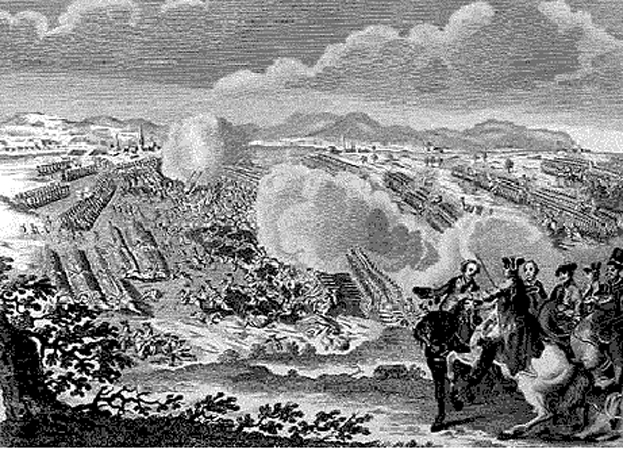
The Allied advance began at around 1:00 pm. Russian artillery opened fire at long range almost immediately, cutting men down before they had even reached the riverbank. The open ground approaching the Alma offered no cover whatsoever.
The Light Division under General Sir George Brown and the 2nd Division under General Sir De Lacy Evans waded into the Alma under fire — the water was chest-deep in places, and men struggled to keep their muskets dry while rounds tore through their ranks. The 7th Royal Fusiliers and the 23rd Royal Welch Fusiliers suffered particularly devastating losses as they charged up the open slopes toward the Great Redoubt.
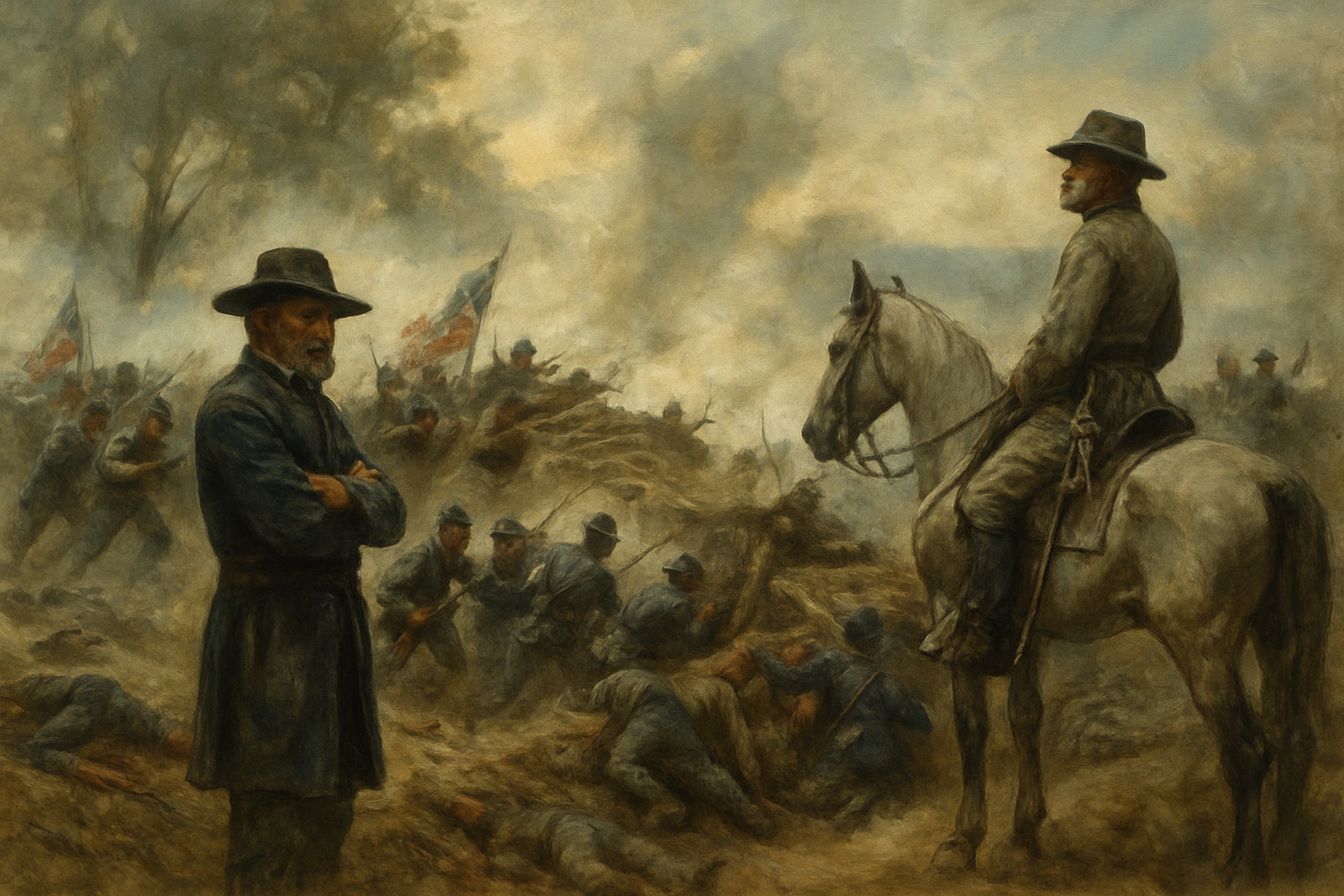
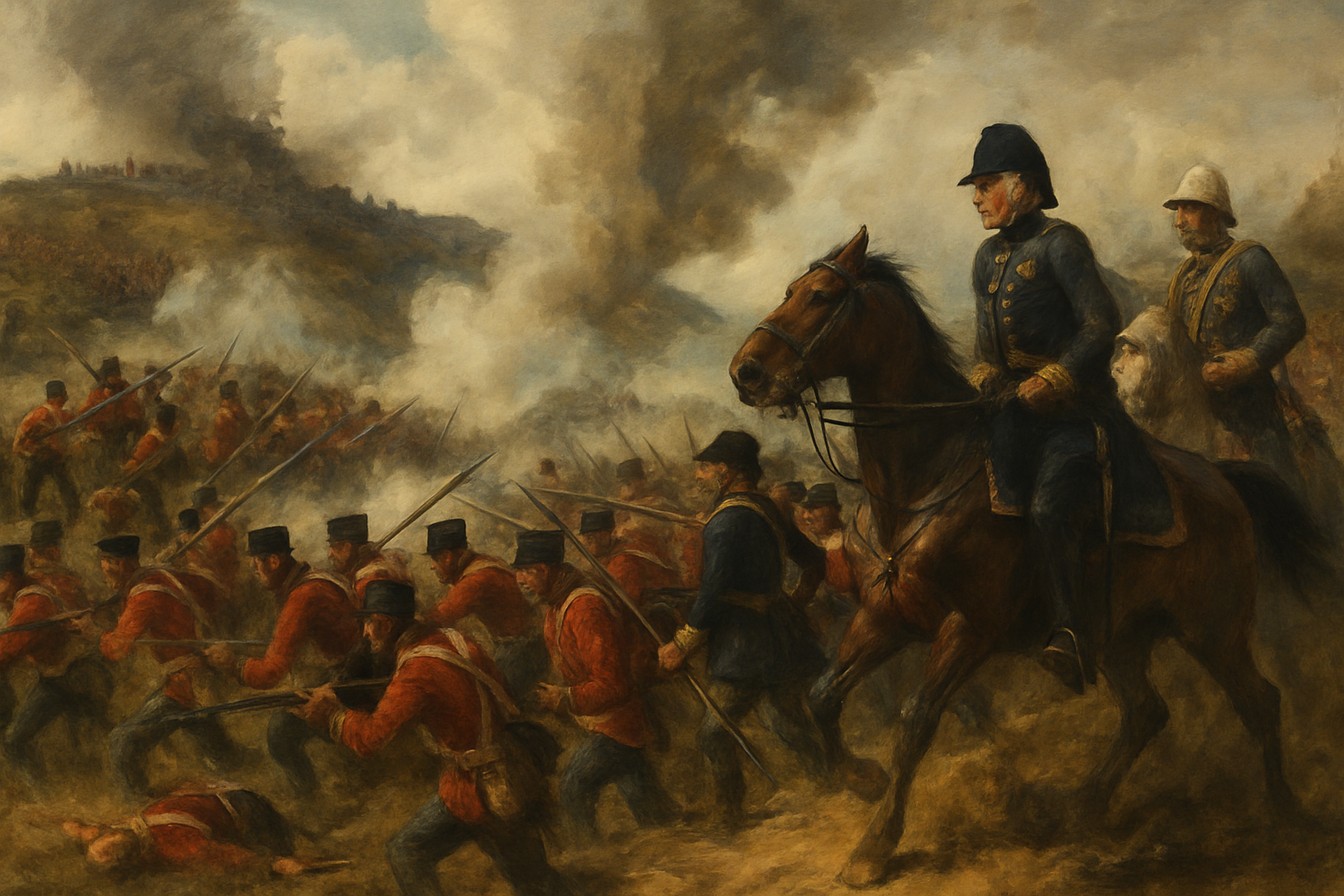
In a moment of extraordinary collective courage, soldiers of the Light Division reached the Great Redoubt and briefly seized it. But with no support arriving quickly enough, a fierce Russian counter-attack drove them back down the slope in disorder. The assault was faltering. This was the moment the battle hung in the balance.
Meanwhile, on the British left, the Highland Brigade under General Sir Colin Campbell was climbing ground that the Russians had judged impassable. The 93rd Sutherland Highlanders and their comrades picked their way up broken cliff faces while Russian gunners scrambled to re-angle their pieces against an attack from an unexpected direction.
The Turning Point: The Guards and the Highlanders Clinch the Victory
With the Light Division repulsed and the advance stalling, Lord Raglan ordered the 1st Division forward. The Brigade of Guards — Grenadier Guards, Coldstream Guards, and Scots Fusilier Guards — advanced in parade-ground order under sustained fire. Their disciplined movement steadied the line and restored momentum to the British assault.
At the same time, Campbell's Highlanders, having scaled the near-vertical ground on the left, began to outflank the Russian right. Menshikov suddenly faced the prospect of encirclement. The Great Redoubt, already shaken, was stormed a second time — and this time the Allies held it.
Menshikov ordered a general retreat. Russian forces withdrew in disorder toward Sevastopol, abandoning their artillery pieces and leaving their dead and wounded behind. The battle was effectively over by around 4:00 pm. Barely three hours of intense fighting had broken a prepared defensive line that the Russian commander had considered impregnable.
The Human Cost: Casualties and the Suffering Left Behind
British casualties at the Alma numbered approximately 362 killed and 1,621 wounded. French losses were lighter — around 60 killed and 500 wounded — reflecting the fact that the flanking French advance faced less concentrated fire. Russian casualties were far heavier, estimated at around 5,700 killed, wounded, or captured.
The disparity tells its own story. Attacking uphill across open ground against prepared artillery positions was a brutal proposition, no matter how well the soldiers fought. Wounded men lay on the open hillside for hours after the fighting ended. Medical provision was catastrophically inadequate — there were almost no stretcher-bearers forward and precious few surgeons. Russian and British wounded lay intermingled on the blood-soaked slopes as night fell.
The suffering witnessed after the Alma directly influenced what came next. The reports reaching London — many of them filed by war correspondent William Howard Russell of The Times — helped inspire Florence Nightingale's mission to Scutari hospital in November 1854, one of the most famous humanitarian interventions in British history.
The Commanders Up Close: Raglan, Campbell, and the Men Who Fought
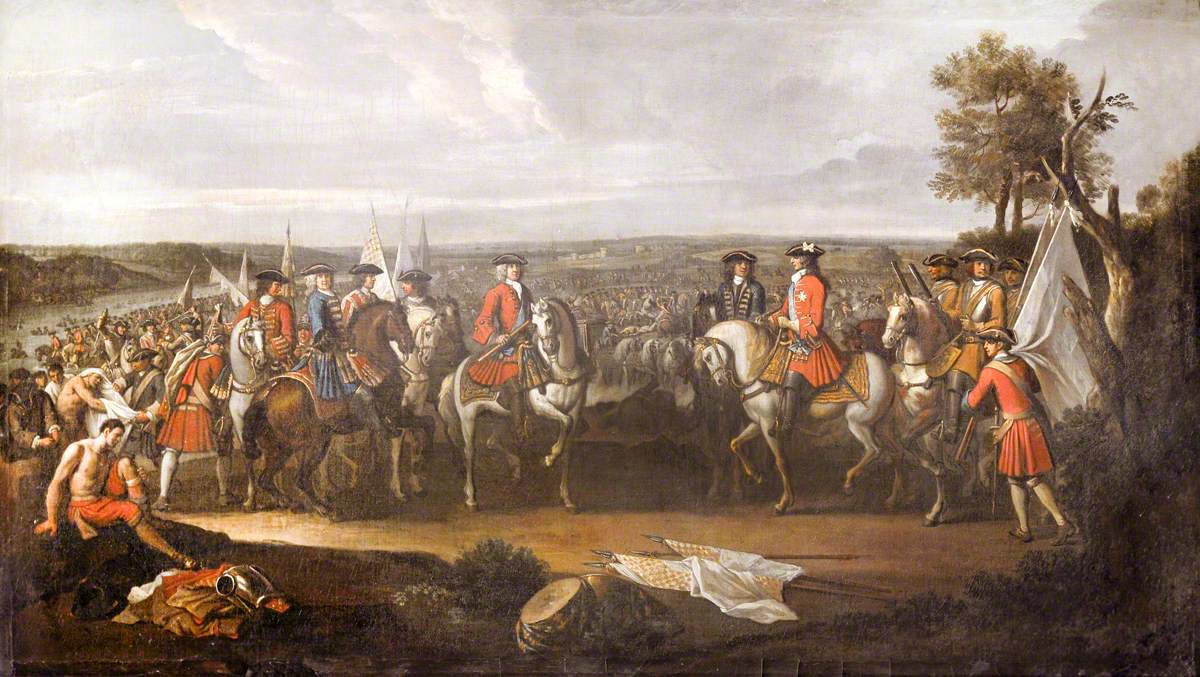
Lord Raglan rode forward to an exposed knoll during the battle to observe Russian troop movements at close range — his personal courage was never in doubt, even when his generalship was heavily criticised. He cut a conspicuous figure on the ridge, seemingly indifferent to the fire around him.
Sir Colin Campbell had risen through the ranks by sheer merit from working-class Scottish origins, and his handling of the Highland Brigade at the Alma cemented his reputation. He would go on to command the famous 'Thin Red Line' at the Battle of Balaclava just weeks later, one of the most celebrated defensive stands in British military history. You can read more about that action in our article on the Battle of Balaclava.
Sergeant Luke O'Connor of the 23rd Royal Welch Fusiliers seized the regimental colour from a fallen officer and carried it up the slope under intense fire. He survived and was later awarded the Victoria Cross for his actions that day — one of the earliest recipients of the newly instituted medal.
It is worth noting that Lieutenant Leo Tolstoy served as an artillery officer in the Crimea during this period. Though not present at the Alma, his experiences of the siege of Sevastopol — recorded in his Sevastopol Sketches — profoundly shaped his understanding of war's human reality, which would later pour into War and Peace. Many of the ordinary British soldiers at the Alma were veterans of campaigns in India and South Africa, tough professionals who anchored the advance when officers fell around them.
Aftermath and Legacy: What the Alma Really Decided
The victory at the Alma was real and hard-won — but its fruits were not fully gathered. Lord Raglan did not pursue the retreating Russians. The Allied cavalry, which might have turned a retreat into a rout, was held back. Military historians have long argued that had the Allies pressed forward immediately after the battle, Sevastopol might have fallen within days.
Instead, the Allied army swung south and began a formal siege of Sevastopol that would drag on for 349 days. The campaign that everyone expected to last weeks consumed years, tens of thousands of lives, and the reputations of several commanders. The Alma had opened the door — and then the Allies paused on the threshold.
Back in Britain, the battle was commemorated with an enthusiasm that quickly became mixed with grief. Streets, public houses, and even children born in late 1854 were named 'Alma' — a tradition that persisted for decades and can still be traced in place names across the United Kingdom today.
The battle also exposed, in stark terms, the organisational failures of the Victorian British Army. Poor medical care, broken supply chains, outdated command structures, and inadequate logistics were all laid bare — and William Howard Russell's dispatches to The Times made sure the British public knew about every failure in detail. The Alma was a victory, but it was a victory that raised as many uncomfortable questions as it answered.
The Battle of the Alma remains a landmark moment in British military history: a hard-won triumph that opened the door to a campaign far longer, far bloodier, and far more controversial than anyone in London had dared to imagine on that sunny September morning in 1854.
If this story of courage, command, and the fog of war resonates with you, we'd love to hear your thoughts in the comments below. Share this article with a fellow history enthusiast — these stories deserve to be remembered and discussed.
Further Reading
- The National Archives, Kew — holds original Crimean War military records, dispatches, and regimental returns
- Imperial War Museum, London — collections covering British conflicts from the nineteenth century onward, including the Crimean War
- The National Army Museum, London — dedicated collections on the Victorian British Army, including the Crimean campaign and individual regimental histories
- The British Library — extensive holdings of contemporary newspaper coverage including The Times dispatches from William Howard Russell
- The National Museum of the Royal Navy, Portsmouth — resources on the naval dimensions of the Crimean War and the strategic importance of Sevastopol