The Quiz Question
No. 303 (Polish) Squadron joined the Battle of Britain only halfway through the fighting, yet still finished with the highest confirmed kill tally of any RAF fighter squadron. How many German aircraft did it claim?
- A. 126
- B. 210
- C. 88
- D. 54
The answer is A. 126. Here is the full story.
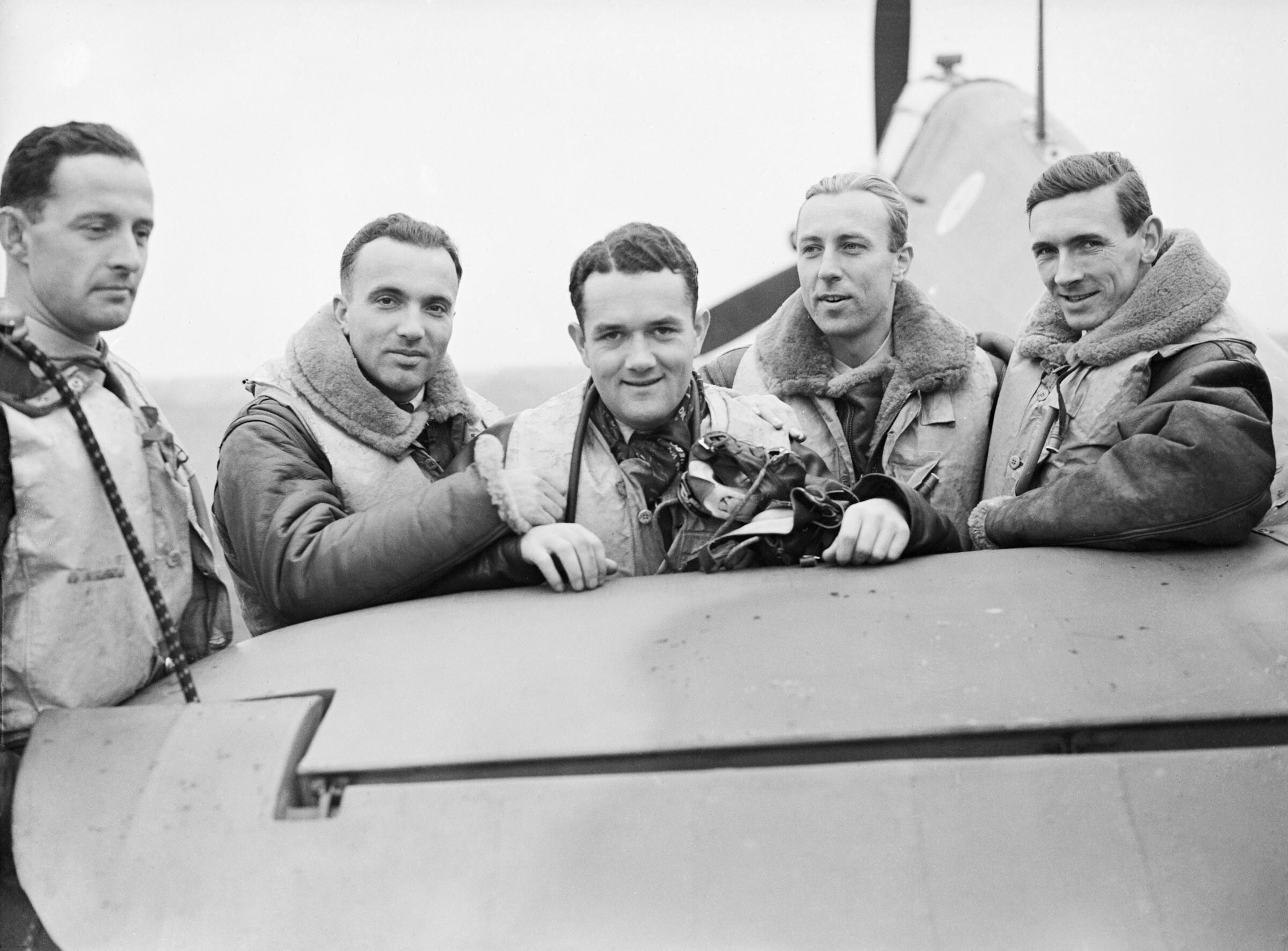
In the summer of 1940, Britain stood alone against Nazi Germany. The Luftwaffe hammered RAF airfields, radar stations, and factories day after day, grinding down Fighter Command's reserves of aircraft and pilots. Yet the squadron that would end the Battle of Britain with more confirmed kills than any other didn't even fly its first operational sortie until six weeks into the fighting. That squadron flew Hurricanes out of RAF Northolt. Its pilots were Polish exiles who had already watched their country die — and they were absolutely furious about it.
The Underdogs Who Outflew Everyone
No. 303 (Polish) Squadron joined the battle officially on 31 August 1940, with the fighting already at fever pitch. The Battle of Britain is formally dated 10 July to 31 October 1940, meaning the Poles arrived with roughly eight weeks of combat remaining.
In that shortened window, the squadron claimed 126 confirmed aerial kills — more than any other RAF fighter squadron across the entire battle. Their nearest rival finished with around 50 fewer confirmed victories. That gap, achieved in less time, is one of the most extraordinary performance statistics in the history of aerial warfare.
The men who built that record were not untested recruits. They were battle-hardened survivors of two military collapses — Poland in September 1939 and France in June 1940 — who brought a cold, precise fury to every engagement they flew.
Poland Falls: Where the Story Really Begins
Germany invaded Poland on 1 September 1939. Within 35 days, the country was carved up between Nazi Germany and the Soviet Union under the Molotov–Ribbentrop Pact. The Polish Air Force had roughly 400 combat aircraft at the outbreak of war, and its pilots fought with tenacity before the inevitable collapse.
As Poland fell, thousands of airmen fled south through Romania and Hungary, making their way to France. There they flew with the Armée de l'Air, claiming approximately 50 to 55 aerial victories during the Battle of France before that country too was overrun in June 1940.
By the summer of 1940, around 8,500 Polish Air Force personnel had reached Britain — one of the largest contingents of Allied airmen available to the RAF. They arrived with combat experience, simmering grief, and a determination to keep fighting that no British-trained pilot could quite match.
Building 303: Distrust, Bureaucracy, and Frustration
No. 303 Squadron was officially formed at RAF Northolt, west of London, on 2 August 1940. It was one of two Polish fighter squadrons stood up that summer, alongside No. 302 Squadron, as the RAF scrambled to make use of its Polish manpower.
The process was not smooth. RAF commanders were initially sceptical of the Poles' abilities, citing language barriers and unfamiliarity with British aircraft and procedures. The squadron was issued Hawker Hurricanes and spent the first weeks of August in intensive conversion training rather than combat operations.
The command structure reflected that wariness. Squadron Leader Ronald Kellett, a British officer, was appointed commanding officer. His deputy was Polish Wing Commander Zdzisław Krasnodębski — an experienced pilot with combat time in Poland and France, kept one step removed from full command by an institution still unsure what it had on its hands.
For the Polish pilots, watching the Battle of Britain rage overhead while they flew training circuits was almost unbearable. They had been fighting Germany for nearly a year. Being kept on the ground felt less like caution and more like an insult.
The Accidental First Kill That Changed Everything
The squadron's real combat debut came not through official orders but through an act of defiance. On 24 August 1940, during a training flight over Hertfordshire, Pilot Officer Ludwik Paszkiewicz broke formation without authorisation. He had spotted a Messerschmitt Bf 110 attacking RAF aircraft below and simply dived to engage it — shooting it down before anyone could object.
Rather than face punishment, Paszkiewicz was quietly praised. His kill was confirmed, and the message was unmistakable: these pilots were ready. There was no further argument about their capabilities.
Within days, on 31 August 1940, No. 303 Squadron flew its first official operational sorties as part of No. 11 Group, Fighter Command. From RAF Northolt, the squadron was positioned at the centre of the most heavily contested airspace in the country — defending London and the south-east against the full weight of Luftwaffe attacks.
Flying and Fighting: The Tactics That Built the Kill Tally
Polish pilots fought differently from their British counterparts, and the difference showed in the results. Where standard RAF doctrine taught deflection shooting at range, the Poles favoured closing to inside 100 yards before firing — sometimes far closer. It was a technique born of hard experience in two previous air campaigns, producing devastating accuracy at the cost of significantly higher personal risk.
The squadron's Hurricanes regularly engaged Heinkel He 111 and Dornier Do 17 bombers alongside their Messerschmitt Bf 109 and Bf 110 escorts. Operating under the direction of No. 11 Group commander Air Vice-Marshal Keith Park, the pilots flew day after day into the congested, dangerous airspace over Kent, Essex, and Greater London.
The squadron's single most intense day came on 15 September 1940 — now commemorated annually as Battle of Britain Day — when the Luftwaffe launched its largest mass raids on London. No. 303 was in the thick of it, contributing significantly to the heavy German losses that effectively convinced the Luftwaffe's high command that air superiority over Britain was not achievable.
The Men Behind the Medals: Key Pilots of No. 303
The most statistically remarkable pilot attached to No. 303 was not Polish at all. Sergeant Josef Frantisek, a Czech aviator who flew with the squadron as an 'adopted' member, became the highest-scoring Allied pilot of the entire Battle of Britain — 17 personal confirmed kills in a matter of weeks. He was killed on 8 October 1940, almost certainly through exhaustion causing a fatal error on a routine flight.
Pilot Officer Jan Zumbach — 'Johnny' to his British colleagues — became one of the most celebrated Polish aces of the war. He was known for the cartoon duck he painted on the nose of his Hurricane, a touch of irreverence that belied the seriousness of what he did in the air. Zumbach survived the war and became a colourful, widely written-about figure in post-war aviation circles.
Wing Commander Zdzisław Krasnodębski, the Polish co-commander, was shot down and badly burned in early September 1940. He survived, but his injuries kept him from flying for months. His willingness to lead from the front set the tone for the entire unit.
Flying Officer Witold Łokuciewski, known as 'Tolo', was one of the squadron's most consistent performers. He survived the entire war, eventually returning to a Poland by then under Soviet control — a homecoming that brought its own complicated grief.
British commanding officer Ronald Kellett never claimed credit for the squadron's success. He spoke openly of his admiration for his pilots, crediting their combat experience and ferocity as the primary reason for the unit's extraordinary record. His frankness was unusual for a senior RAF officer of the era, and it says a great deal about what he witnessed at Northolt.
The Human Cost: Losses and the Weight of Exile
No. 303 Squadron lost eight pilots killed during the Battle of Britain. Given the intensity and volume of action they flew, that figure is proportionally remarkable — a testament both to their skill and to a degree of fortune that did not follow every pilot.
But the losses that statistics cannot capture were the ones happening thousands of miles away. These men fought knowing their families — wives, parents, children — were living under Nazi occupation in a country that no longer formally existed. Letters home were impossible. News from Poland arrived in fragments, censored or distorted. Many pilots would not learn their families' fates for years, and some never would.
British contemporaries frequently remarked on a particular quality in the Polish pilots — a focused intensity, almost a controlled rage, that went beyond professional determination. It made sense. They were not fighting to defend an abstract idea. They were fighting because everything they had ever known had already been taken from them.
The ground crews at Northolt, most of them also Polish, worked punishing hours to keep aircraft serviceable through the relentless operational tempo. Their contribution to that final kill tally was as real as anything done in the cockpit.
After the Battle: Recognition, Betrayal, and the Long Road Home
No. 303 Squadron received the Battle Honour 'Battle of Britain 1940' and many of its pilots were decorated by the British Crown with DFCs and DFMs. They continued to serve with distinction through the rest of the war — over Dieppe in 1942, on D-Day in June 1944, and across the liberation campaigns in Western Europe.
Then came Yalta. In February 1945, the Allied powers effectively agreed to place Poland within the Soviet sphere of influence. For Polish veterans who had spent five years fighting for a free Europe, the agreement was a profound betrayal — one that rendered their sacrifices politically inconvenient.
The Victory Parade in London on 8 June 1946 did not include the Polish Armed Forces. The exclusion came at the request of the Soviet-backed Polish provisional government, and it caused genuine outrage among British veterans and the British public who had fought alongside the Poles. It remains one of the more shameful episodes of the immediate post-war period.
Thousands of Polish airmen — including many No. 303 veterans — chose to remain in the United Kingdom rather than return to a Poland now governed by a communist regime installed by Moscow. They built lives in British towns and cities, remaining part of Polish exile communities that kept their culture and memory alive through the Cold War decades.
Why No. 303 Still Matters: The Legacy of 126 Kills
Air Chief Marshal Sir Hugh Dowding, who commanded RAF Fighter Command throughout the Battle of Britain, said the Polish pilots were 'invaluable' and that without their contribution the outcome might have been different. Coming from a man not given to effusive praise, that assessment carries significant weight.
A memorial to the Polish airmen was unveiled in London in 1948 and later restored in 2009. A dedicated memorial at RAF Northolt — the squadron's wartime home — was unveiled the same year. Poland formally recognises the Battle of Britain veterans as national heroes, and the squadron's story is commemorated each September at events in both Warsaw and London.
The number 126 is more than a statistic. It represents the output of men who had already lost everything once and refused — absolutely refused — to lose again. They flew not just for Britain's survival but for the slim hope that their own country might one day be free. That hope took decades to be realised, and many of them did not live to see it.
No. 303 Squadron's story is ultimately a story about what human beings are capable of when they fight not for territory or orders, but for the people and places they love. That truth does not age.
If this story moved you, share it with someone who deserves to know it — and tell us in the comments: did you have a family connection to the Polish community in Britain, or to the Battle of Britain itself? We'd love to hear from you.
Further Reading
- Imperial War Museum (IWM), London — extensive collections on the Battle of Britain and Polish RAF personnel, including personal testimonies and aircraft exhibits
- The National Archives, Kew — operational records, combat reports, and squadron diaries for No. 303 and No. 11 Group, Fighter Command
- RAF Museum, Hendon — dedicated Battle of Britain collections including Polish squadron history and aircraft of the period
- Sikorski Institute and Museum, London — the primary archive for Polish Armed Forces in exile, holding documents, photographs, and personal papers of Polish airmen
- Polish Institute and Sikorski Museum — holds significant primary source material relating to Polish aviators who served with the RAF during the Second World War