The Quiz Question
What was the codename for the naval and amphibious assault phase of D-Day itself, distinct from 'Operation Overlord', the wider battle for Normandy?
- A. Operation Torch
- B. Operation Husky
- C. Operation Cobra
- D. Operation Neptune
The answer is D. Operation Neptune. Here is the full story.
The Largest Seaborne Invasion in History — And You Might Not Know Its Real Name
Ask most people the codename for D-Day and they'll say "Operation Overlord." They're not wrong — but they're not quite right either. Overlord was the broader Allied campaign to liberate north-west Europe. The naval and amphibious assault that actually put Allied soldiers on the beaches of Normandy on 6 June 1944 had its own distinct codename: Operation Neptune.
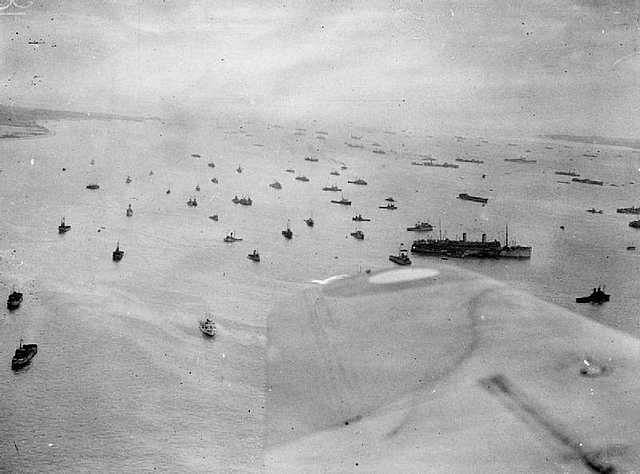
Neptune was the beating heart of D-Day — the plan that governed everything from the minesweepers clearing lanes through the English Channel to the moment landing craft ramps dropped onto French sand. It involved nearly 7,000 vessels drawn from navies across Britain, the United States, Canada, France, Poland, Norway and beyond.
Without Neptune succeeding in its first chaotic hours, there would have been no foothold in Normandy, no liberation of Paris, no road to Berlin. It was, quite simply, the operation on which the entire Western Allied war effort depended.
Overlord vs Neptune: Why Two Codenames?
Operation Overlord was conceived in the wake of the Casablanca Conference in January 1943 and refined at the Quebec Conference in August of that year. It was the overarching strategic plan — the invasion and liberation of north-west Europe as a whole.
Neptune emerged as the naval component's designation at the Tehran Conference in November–December 1943, where Churchill, Roosevelt and Stalin agreed on the invasion's broad shape. The distinction was not merely bureaucratic. Neptune had its own commander, its own chain of command and its own extraordinarily detailed operations order — a document running to some 1,000 pages, covering every vessel, every route, every beach sector and virtually every minute of the crossing.
Keeping the two codenames separate served operational security. Compartmentalising information — ensuring that only those who needed to know a particular detail actually knew it — was essential when planning an operation of this scale in the face of German intelligence efforts. Neptune was the lock; Overlord was the door it opened.
The Man Behind the Fleet: Admiral Sir Bertram Ramsay
No single figure was more central to Neptune than Admiral Sir Bertram Ramsay, appointed Allied Naval Commander Expeditionary Force (ANCXF) in October 1943. He was, by then, already one of the war's great naval organisers. It was Ramsay who had masterminded Operation Dynamo — the miraculous Dunkirk evacuation of May–June 1940 — and who had directed the naval phases of the Allied landings in North Africa and Sicily.
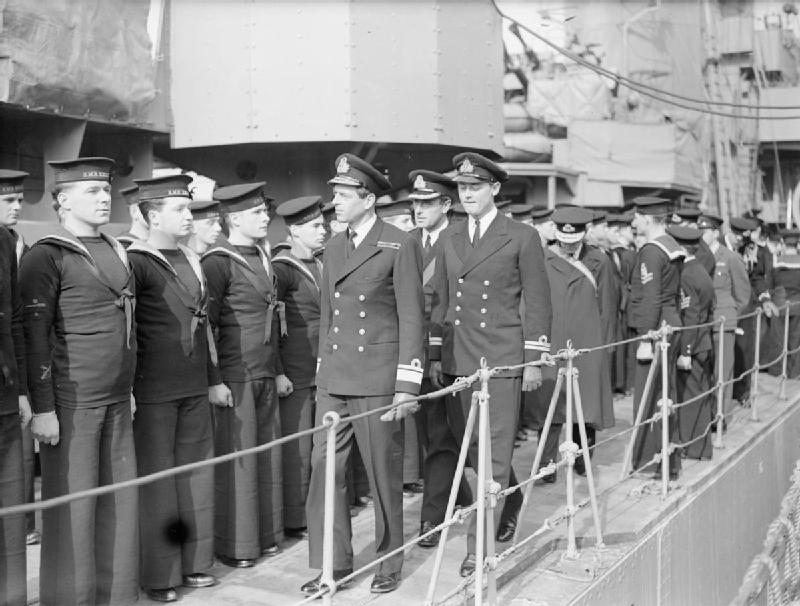
Operating from Southwick House near Portsmouth, which became the nerve centre of Neptune planning, Ramsay coordinated naval forces from eight Allied nations with a meticulous, almost obsessive attention to detail. He insisted on full-scale rehearsals, including Exercise Tiger in April 1944 off Slapton Sands in Devon. That exercise ended in tragedy when German E-boats broke through the escort screen and sank two LSTs (Landing Ship, Tank), killing 749 American servicemen — a disaster kept secret for decades.
Ramsay's true genius lay in logistics: assembling the right ships in the right sequence at the right ports, stretching from Falmouth in Cornwall to Newhaven in East Sussex, without alerting German intelligence to the invasion's scale or timing. Tragically, he was killed in an aircraft accident near Paris on 2 January 1945 and never lived to see the full fruits of what he had built.
Building the Armada: The Ships, Craft and Men of Neptune
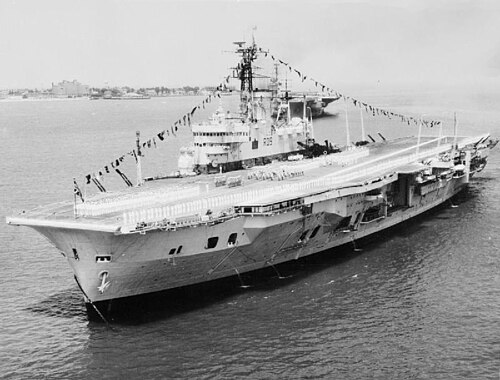
The Neptune fleet was staggering in scale. It comprised 1,213 warships — including 7 battleships, 23 cruisers and 105 destroyers — supported by 4,126 landing ships and craft and around 1,600 merchant and ancillary vessels. Six naval bombardment forces were assembled, covering all five beach sectors: Utah, Omaha, Gold, Juno and Sword.
British and Canadian forces took responsibility for the eastern beaches (Gold, Juno and Sword); American forces handled the western beaches (Utah and Omaha). The Royal Navy's contribution included 79,000 officers and men directly engaged in Neptune operations on D-Day alone.
Among the most storied vessels were HMS Warspite and HMS Ramillies — both First World War veterans whose massive 15-inch guns thundered in support of the British landings at Gold and Sword beaches. USS Augusta served as the flagship of US naval forces under Rear Admiral Alan G. Kirk. Prime Minister Churchill, characteristically, wanted to observe the landings from a warship himself; it took a personal appeal from King George VI to talk him out of it.
Crossing the Channel: The Night of 5–6 June 1944
The crossing itself was an operational miracle. Beginning the night of 5 June, 255 minesweepers worked through darkness and rough seas to cut five swept lanes through the Channel — known collectively as "The Spout" — converging on a mid-Channel assembly area sailors nicknamed "Piccadilly Circus."
German radar, which might have detected this vast armada, was deliberately blinded. Operation Taxable and Operation Glimmer sent RAF bombers dropping "Window" — clouds of aluminium foil strips — combined with small ships towing radar-reflective balloons, creating phantom fleets on German radar screens pointing toward Pas-de-Calais rather than Normandy.
The weather was brutal. Force 5–6 winds and heavy swells left landing craft crews violently seasick and pushed some vessels off course. Eisenhower's agonising decision on the evening of 4 June to delay from 5 June to 6 June bought marginally better — though still punishing — conditions. H-Hour was staggered across the beaches: Utah and Omaha at 06:30, Gold and Sword at 07:25, Juno at 07:45, each timed to exploit tidal conditions that would expose German beach obstacles while leaving enough water for men to wade ashore.
Over 156,000 Allied troops crossed the Channel on D-Day. The crossing was completed largely undetected by the Germans — one of the great operational achievements of the entire war.
Fire and Steel: Naval Bombardment on D-Day Morning
At 05:50 on 6 June 1944, the Allied naval bombardment began. More than 100 warships opened fire along a 50-mile front; the noise was reportedly audible on the southern coast of England. HMS Belfast — today a museum ship moored on the Thames in London — fired among the opening salvoes, targeting German battery positions near La Marefontaine in support of the Canadian landings at Juno Beach.
At Omaha Beach, the bombardment proved tragically insufficient. Low cloud and fears of hitting advancing troops caused heavy bombers to release their loads miles inland, leaving German defensive positions largely intact. The result was catastrophic: American casualties at Omaha on 6 June alone are estimated at between 2,000 and 4,000 men, the bloodiest single beach of the entire landings.
USS Texas brought its 14-inch guns to bear in direct support of US Rangers scaling the cliffs at Pointe du Hoc — one of the most dramatic small-unit actions of D-Day. Destroyers of both the Royal Navy and US Navy made extraordinary decisions, closing to within 800 yards of the shoreline — dangerously shallow for large warships — to provide close-range fire support when the landings threatened to stall, particularly at Omaha.
The Human Cost: Sailors, Coxswains and the Men in the Boats
Behind the statistics were individual human beings making terrifying decisions in real time. LCVP coxswains — many of them very young sailors, some barely out of their teens — had to navigate through beach obstacles, mines and withering enemy fire to drop their ramps at precisely the right moment. Many were killed or wounded in the attempt.
The Duplex Drive (DD) Sherman tank was one of Neptune's boldest technological gambles: tanks fitted with inflatable canvas screens that allowed them to be launched from landing craft at sea, swimming to shore to give infantry armoured support from the waterline. At Omaha, the system met the cruel reality of a Force 5 swell. Of 32 DD tanks launched, 27 sank within minutes, drowning their crews.
Casualties among naval personnel on 6 June are estimated at approximately 1,000 killed and missing — figures that are too often overlooked alongside the better-known Army losses. The men who crewed Neptune's vessels were largely ordinary ratings, petty officers of the Royal Naval Volunteer Reserve (RNVR) and Royal Naval Patrol Service (RNPS) — fishermen, merchant sailors and civilian volunteers who had put on uniform and crossed the most dangerous stretch of water in the world.
After the Beaches: Neptune's Ongoing Mission
Operation Neptune did not end when the first troops reached the top of the bluffs. It continued through June and July 1944, maintaining the supply lifeline across the Channel under constant threat from German U-boats, E-boats, mines and the Luftwaffe. The invasion was only as good as the reinforcements and supplies that followed it.
Among Neptune's most audacious logistical undertakings were the Mulberry Harbours — two prefabricated artificial harbours towed across the Channel in sections. Mulberry A served the American sector at Omaha; Mulberry B was installed at Arromanches for the British. Then, between 19 and 22 June, a ferocious Channel storm destroyed Mulberry A entirely and severely damaged Mulberry B, testing Neptune's supply lines to the point of crisis. The Allied response was to accelerate the capture of Cherbourg, taken at the end of June 1944.
By 30 June 1944 — the formal end date of Operation Neptune, when naval command transitioned to a permanent shore-based structure — the operation had delivered over 850,000 men, 148,000 vehicles and 570,000 tons of supplies to Normandy. It was a logistical achievement without precedent in the history of warfare.
Why Operation Neptune Still Matters — And Deserves to Be Remembered
Neptune represented the moment when Allied sea power — so hard-won through years of suffering in the Battle of the Atlantic — was turned offensively against Nazi Germany on the largest scale ever attempted. The ships that had spent years defending convoys were now leading an army back onto the continent of Europe.
It was a genuinely multinational achievement. The Royal Navy provided the majority of the fleet, but American, Canadian, French, Polish, Norwegian, Dutch, Greek and other Allied navies all had vessels in those swept lanes on the morning of 6 June. A coalition of free nations crossed that Channel together — a fact that deserves to be better remembered than it often is.
The planning innovations of Neptune — lane-swept corridors, staggered H-Hours, the coordination of naval fire support with ground forces in real time — became the foundation of all subsequent NATO amphibious doctrine. Admiral Ramsay's operations order is still studied at staff colleges around the world as a masterclass in large-scale joint operational planning.
Every year on 6 June, when we look at the photographs of those landing craft heading for the beaches — ramps down, men wading forward into fire — we are looking at Operation Neptune in action. It is the codename we rarely use for the day we will never forget.
If this story moved you, share it with someone who loves military history — and tell us in the comments: did you know the difference between Neptune and Overlord before today?
Further Reading
- Imperial War Museum (IWM), London — holds extensive Neptune-related documents, photographs and personal testimonies
- The National Archives, Kew — holds original Admiralty and Allied Naval Expeditionary Force operational records from 1944
- The National WWII Museum, New Orleans — major collections on the amphibious operations of D-Day, including Neptune planning materials
- Mémorial de Caen (Caen Memorial Museum), Normandy — dedicated to the D-Day landings and the Battle of Normandy with significant naval holdings
- Naval History and Heritage Command, Washington D.C. — official US Navy archive covering Operation Neptune and the D-Day naval order of battle