The Quiz Question
Which Royal Navy destroyer, commanded by Lord Louis Mountbatten, was sunk by German dive bombers off Crete on 23 May 1941?
- A. HMS Kingston
- B. HMS Kelly
- C. HMS Kandahar
- D. HMS Kipling
The answer is B. HMS Kelly. Here is the full story.
On the morning of 23 May 1941, one of the Royal Navy's finest destroyers capsized and sank in the waters south of Crete. Her captain was thrown into the sea. Her crew — many of them still below decks — were lost. And a legend was born that would shape British wartime culture for years to come.
A Ship Goes Down — And a Legend Is Born
The sinking of HMS Kelly was not simply a tactical loss. It was one of those rare events in wartime that cuts deep into national memory. Of her crew of around 240 men, roughly half were killed — one of the most devastating single-ship losses the Royal Navy suffered in 1941.
Her captain, Lord Louis Mountbatten, survived — clinging to a Carley float as Stukas continued to circle and strafe the men in the water. He later described being dragged beneath the surface by the suction of the capsizing ship, fighting his way back up through churning sea, and breaking into the open air to find chaos all around him.
From that chaos came one of Britain's most enduring wartime stories — later immortalised in Noël Coward's 1942 film In Which We Serve, which turned HMS Kelly's final hours into a defining piece of British cultural history.
HMS Kelly: The Ship and Her Class
HMS Kelly was a K-class destroyer and lead ship of the 7th Destroyer Flotilla. She was launched on 25 October 1938 at Hawthorn Leslie's yard on the River Tyne — a sleek, powerful warship built for the war that was already beginning to feel inevitable.
She displaced 1,695 tons, measured 356 feet in length, and could reach speeds of 36 knots. Armed with six 4.7-inch guns and ten torpedo tubes, K-class destroyers were among the most capable fleet destroyers Britain possessed when war broke out in 1939.
HMS Kelly was commissioned into the Royal Navy on 23 August 1939 — just ten days before Britain declared war on Germany. Her sister ships in the flotilla included HMS Kashmir, HMS Kandahar, HMS Kelvin, and HMS Kipling, all of which would serve alongside her in the Mediterranean and share in the brutal fighting to come.
Lord Louis Mountbatten: The Man on the Bridge
Louis Francis Albert Victor Nicholas Mountbatten was born on 25 June 1900 — a great-grandson of Queen Victoria and a cousin to King George VI. He was, quite literally, royalty in naval uniform.
He had joined the Royal Navy in 1916 as a teenager and by 1939 had built a reputation as both brilliant and occasionally reckless. Given command of HMS Kelly in August 1939, his charisma and fierce loyalty to his men produced extraordinary esprit de corps aboard the ship.
Mountbatten briefed his crew personally, led from the front, and inspired intense devotion. But critics — including some at the Admiralty — noted that under his command, HMS Kelly had already suffered serious damage twice before she ever reached the Mediterranean. A mine strike in 1939 and a collision in 1940 raised questions about his judgement even as his courage went unquestioned.
The Road to Crete: Two Years of Hard Fighting
HMS Kelly's war began in earnest in September 1939 when she was torpedoed by a German E-boat off the Dutch coast. The hit killed one man and left her badly holed — but she made it home. In May 1940, during operations off Norway, she was damaged again and limped back to dry dock, her crew earning a reputation for bloody-minded determination.
By late 1940 and into 1941, she was repaired and reassigned to the Mediterranean Fleet under Admiral Sir Andrew Cunningham — one of the most demanding and distinguished naval commanders of the war. The Mediterranean was a brutal theatre, and the waters around Crete would prove its most punishing episode.
The Battle of Crete — Operation Merkur — began on 20 May 1941 when German paratroopers of the XI Fliegerkorps descended on the island in history's first large-scale airborne assault. The Royal Navy was tasked with preventing seaborne reinforcement and ultimately evacuating Allied troops. But the RAF had almost no presence in the area, leaving warships dangerously exposed to the Luftwaffe's experienced dive-bomber crews operating from bases in Greece.
23 May 1941: The Final Hours of HMS Kelly
Through the night of 22–23 May, HMS Kelly and HMS Kashmir had been operating off Crete's northern coast, bombarding German-held Maleme airfield. It was the kind of aggressive, close-in work that destroyers were built for — and that made them horribly vulnerable come daylight.
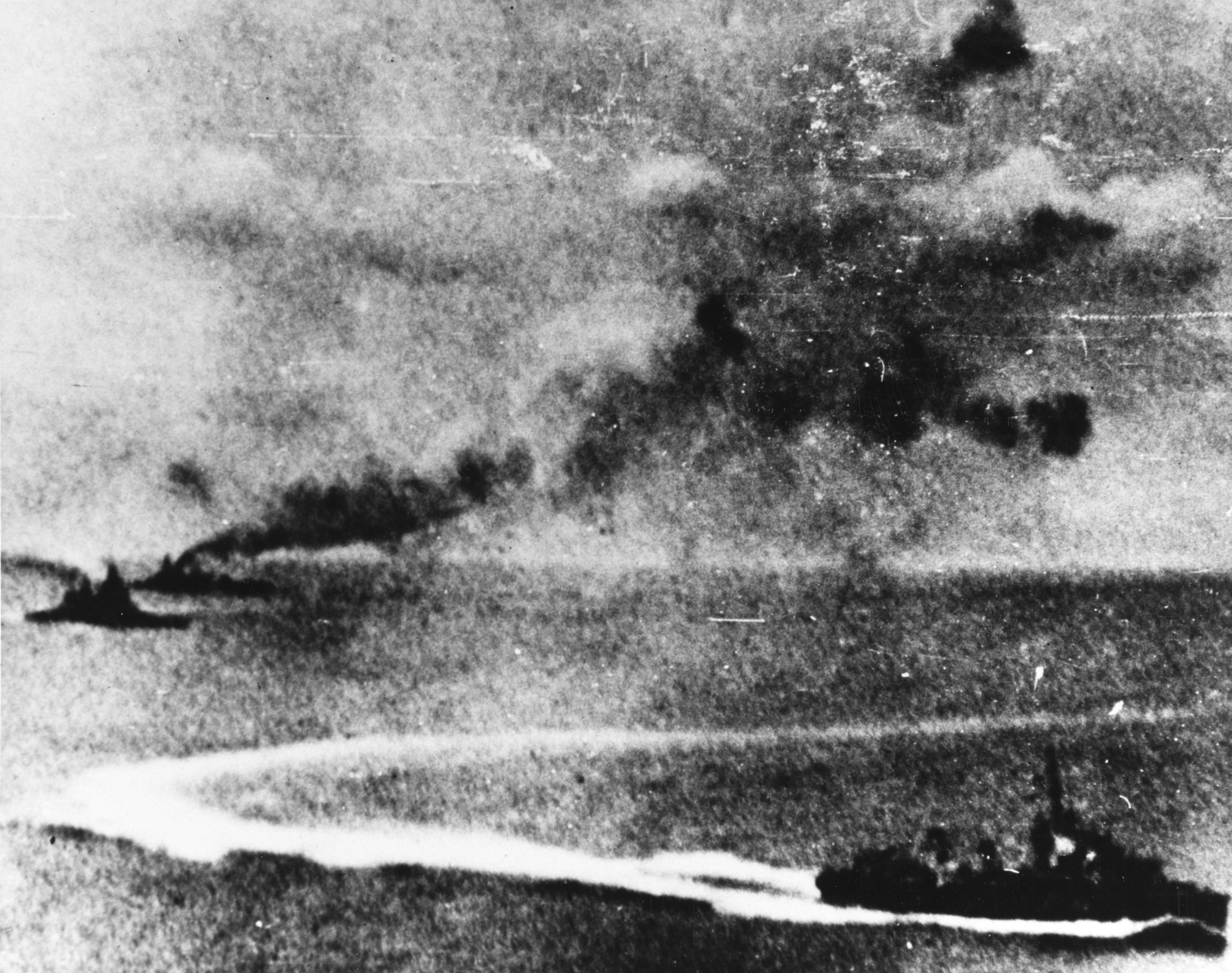
At approximately 07:55 on 23 May, a formation of around 24 Junkers Ju 87 Stuka dive bombers — part of Fliegerkorps VIII — attacked the two destroyers southeast of Crete. HMS Kashmir was hit first and sank in under two minutes. HMS Kelly, manoeuvring at full speed, was struck by a single 500-kilogram bomb on her port side. She capsized within minutes.
Mountbatten was on the bridge as Kelly rolled over. He described being submerged — dragged down by suction — and fighting his way back to the surface through churning water. Around him, men were struggling in oil-covered sea while Stukas continued to circle overhead.
Into this nightmare came HMS Kipling, commanded by Captain Aubrey St. Clair-Ford, who drove his ship into the attack zone under continued bombardment to pull survivors from the water. Kipling rescued 279 men — including Mountbatten — in an act of courage that drew near-misses but, remarkably, no fatal hits. It was one of the finest moments of individual ship bravery in the entire Mediterranean campaign.
The Human Cost: Lives Lost and Lives Saved
Approximately 130 men from HMS Kelly and 29 from HMS Kashmir were killed — many trapped below decks when the ships went down, others machine-gunned in the water by Stuka pilots continuing their attack after the vessels had sunk. Survivors described the strafing of men on Carley floats in terms that left lasting bitterness throughout the Royal Navy.
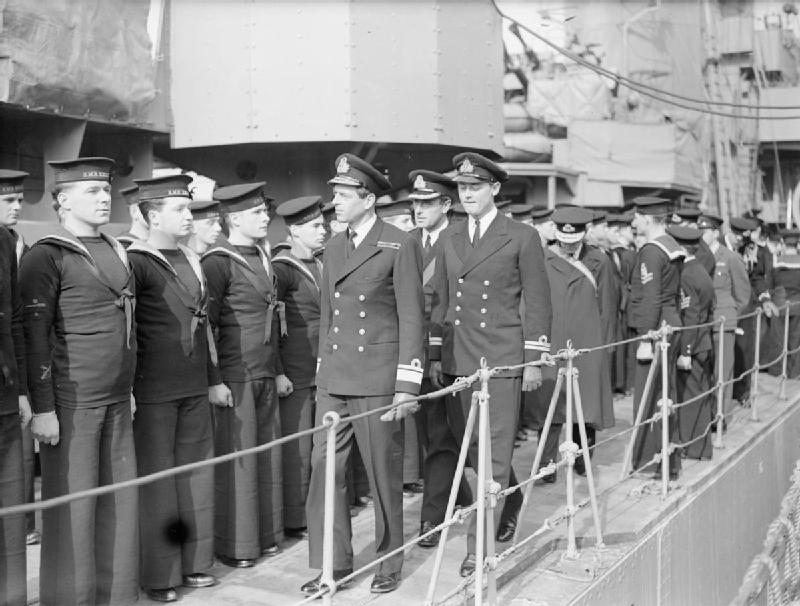
Mountbatten himself swam among the survivors, speaking to his men, keeping spirits up in the oil-slicked water. Multiple accounts from ratings describe his presence in the sea as a stabilising force in what was, by any measure, a scene of horror.
Before Kipling reached Alexandria on 24 May 1941, Mountbatten held a brief service on deck for the men who had been lost. It was a moment of raw grief — a captain mourning his ship and his crew before the wider world had even heard the news.
The sinking of HMS Kelly and HMS Kashmir was part of a catastrophic few days for the Royal Navy off Crete. The cruisers HMS Gloucester and HMS Fiji were also sunk during the same period, and the battleship HMS Warspite was badly damaged — all victims of the same merciless air campaign.
The Battle of Crete: The Wider Context of Sacrifice
Between 20 May and 1 June 1941, the Royal Navy lost three cruisers and six destroyers sunk around Crete, with two battleships, an aircraft carrier, and numerous other vessels damaged. More than 2,000 Royal Navy sailors were killed — one of the costliest episodes for the Senior Service in the entire Second World War.
Admiral Cunningham, faced with pressure from the Admiralty to withdraw the fleet and end the slaughter, responded with words that have entered naval history: "It takes three years to build a ship; it takes three hundred years to build a tradition." He kept the ships fighting and rescuing soldiers even as the losses mounted.
Crete fell on 1 June 1941 — a significant Allied defeat, though German airborne losses had been so severe that Hitler never again launched a major parachute assault. The campaign also demonstrated with brutal clarity the catastrophic vulnerability of surface ships to air attack without fighter cover. It reshaped Royal Navy doctrine for the rest of the war and accelerated thinking about carrier-based air power that would define post-war naval strategy.
'In Which We Serve': How HMS Kelly Captured Britain's Heart
In 1942, Noël Coward — a close personal friend of Mountbatten — wrote, directed, and starred in In Which We Serve, a film directly based on the story of HMS Kelly and her crew. It became one of the most important British films of the entire war.
Coward's character, Captain Kinross, was an unmistakable portrayal of Mountbatten. The film told the ship's story through flashbacks experienced by men clinging to a Carley float — a structure that mirrored the actual experience of Kelly's survivors with haunting accuracy.
The film was praised for its honesty: it showed death, grief, class divisions aboard ship, and the ordinary humanity of sailors at war — not simple propaganda, but something closer to the truth. It won an Honorary Academy Award in 1943 and was a huge hit on both sides of the Atlantic.
Mountbatten reportedly wept at the premiere. The film ensured HMS Kelly would never be forgotten, embedding her story into British cultural memory at a moment when the nation badly needed its heroes and its myths.
Legacy: HMS Kelly, Mountbatten, and What They Left Behind
Mountbatten went on to become Chief of Combined Operations in 1941, Supreme Allied Commander South East Asia in 1943, and the last Viceroy of India in 1947. His wartime reputation — built partly on the Kelly legend — gave him a public authority that followed him through decades of public life.
His end was as violent as any wartime death. On 27 August 1979, he was assassinated by the IRA aboard his fishing boat off Mullaghmore, County Sligo, Ireland. A remote-controlled bomb killed him along with three others. It was a shocking conclusion to a life that had survived Stukas, capsizing ships, and two years of Mediterranean warfare.
HMS Kelly's story did not end with her sinking. Her ship's bell was recovered and is preserved, and the National Museum of the Royal Navy in Portsmouth holds materials commemorating her service. Every year, naval historians and veterans' groups mark 23 May as the anniversary of her sinking — a date that still carries weight for those who study the Mediterranean campaign and the men who fought it.
HMS Kelly endures as one of the defining human stories of the Royal Navy in the Second World War: a ship that fought hard, suffered much, was led by a flawed but electrifying commander, and whose loss struck at the heart of a nation that needed its stories of courage to carry on.
If this story moved you, share it with someone who loves naval history — and leave a comment below telling us what you think of Mountbatten's legacy. Was he a hero, a showman, or something altogether more complicated?
Further Reading
- Imperial War Museum, London
- The National Museum of the Royal Navy, Portsmouth
- The National Archives, Kew
- Australian War Memorial (which holds extensive records on the Crete campaign)
- Naval History and Heritage Command, United States Navy