The Quiz Question
On 21 March 1918, Germany launched Operation Michael, opening its Spring Offensive with over 3.5 million shells fired in five hours. British casualties that single day were surpassed in the entire war only by the first day of which other battle?
- A. The Somme
- B. Loos
- C. Passchendaele
- D. Cambrai
The answer is A. The Somme. Here is the full story.
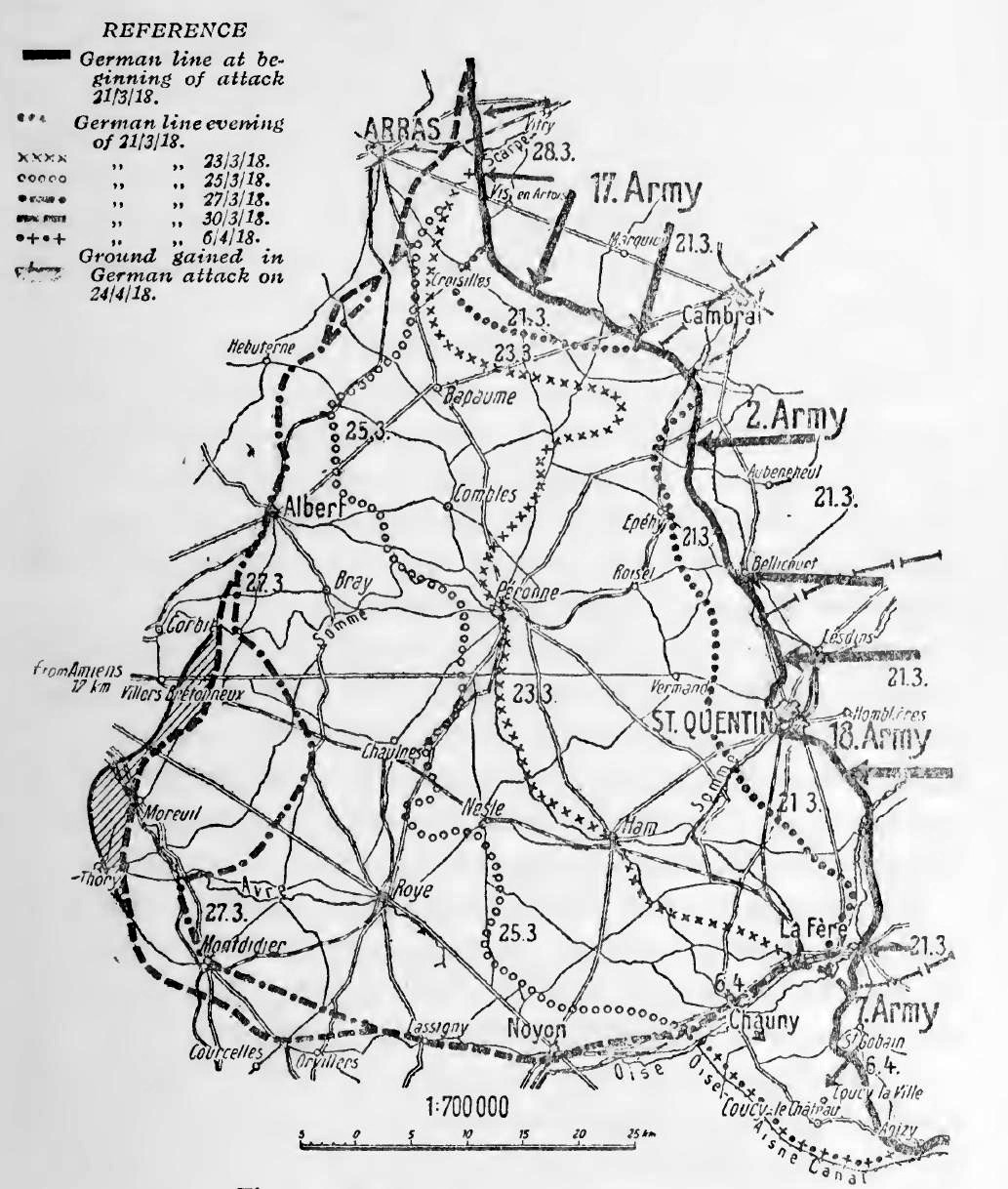
At 4:40 in the morning on 21 March 1918, the ground across a 50-mile stretch of northern France began to shake. More than 6,600 German guns and 3,500 mortars opened fire simultaneously — the most concentrated artillery bombardment the world had ever seen. Over 3.5 million shells fell in five hours. For the British soldiers huddled in their trenches between Arras and La Fère, it was, quite simply, the end of the world as they knew it.
By nightfall, the British Fifth Army was in full retreat. Around 38,000 British soldiers had been killed, wounded, or captured in a single day — a toll matched in British military history only by the catastrophic first day of the Somme on 1 July 1916. What unfolded on 21 March 1918 was not just a military crisis. It was the closest the Western Front came to complete Allied collapse.
Why Germany Gambled Everything in March 1918
To understand Operation Michael, you have to understand the corner Germany had painted itself into. Russia's collapse following the October Revolution of 1917 freed roughly 50 German divisions from the Eastern Front, handing General Erich Ludendorff a brief but tantalising window of numerical superiority in the West.
The window was closing fast. American troops — ultimately over a million strong — were arriving in France in growing numbers. Germany's food supplies had been critically depleted by the Royal Navy's blockade; the so-called "Turnip Winter" of 1916–17 had left German civilians near starvation, and morale on the home front was crumbling. Ludendorff understood the brutal arithmetic: if Germany could not force a decisive victory by autumn 1918, it could not win the war at all.
The plan was stark in its ambition — smash through the British lines, drive a wedge between the British Expeditionary Force and the French armies, and compel a negotiated peace before American weight tipped the balance irreversibly. It was a gamble born of desperation as much as confidence.
The Stormtrooper Revolution: A New Way of War
Germany did not simply throw men at the British trenches. Operation Michael was built on a genuinely revolutionary approach to infantry combat. Specially trained Stoßtruppen — stormtroopers — had been developed and refined through the work of Captain Willy Rohr and tested in the field at Riga in 1917. These were not ordinary infantry.
Instead of advancing in rigid lines toward fixed objectives, stormtroopers were trained to bypass defended strongpoints, flood through gaps in the line, and strike deep into British rear areas — command posts, artillery batteries, communication networks. They carried light machine guns, flamethrowers, and grenades, prizing speed and disruption over brute force.
The artillery plan that preceded them was equally radical. Colonel Georg Bruchmüller — nicknamed "Durchbruchmüller," or Breakthrough Müller — devised a short, ferocious hurricane bombardment mixing high-explosive, gas, and smoke shells. The goal was not to destroy every trench, but to blind, disorient, and paralyse the defenders so completely that the stormtroopers could be among them before resistance could be organised. It worked with horrifying efficiency.
The British Fifth Army: Overstretched and Overwhelmed
General Hubert Gough's Fifth Army was holding a 42-mile front with just 12 divisions — a dangerously thin deployment caused partly by a recent extension of the British line at French insistence. British High Command had also adopted a new "defence in depth" system modelled on German practice, but it had been implemented hastily. Many officers and men simply did not understand it well enough to use it effectively under pressure.
Nature itself seemed to conspire against the defenders. A thick, unseasonable fog blanketed the battlefield on the morning of 21 March, smothering British machine-gun positions that had been carefully sited to cover open ground. When the stormtroopers came, they appeared through the mist like shadows — already inside the wire before anyone could respond.
The 16th (Irish) and 36th (Ulster) Divisions — bitter political rivals at home but proven comrades on the Somme — were both shattered in the opening hours, losing thousands of men to encirclement and bombardment. By midday, the front line had been broken completely in several sectors. By evening, forward British units were cut off in their hundreds, surrendering not because they had given up fighting, but because there was simply no line left to fight for.
The Day the Western Front Broke Open
The scale of what happened on 21 March 1918 is almost impossible to absorb. Roughly 7,500 British soldiers were killed, around 10,000 wounded, and an extraordinary 21,000 taken prisoner — all in a single day. The prisoner toll was particularly shocking. It reflected not cowardice, but the cold reality of infiltration tactics: units cut off, surrounded, and given no choice.
The fog, the gas, the speed of the stormtroopers — all of it combined to produce something the British Army had never encountered before. This was not a frontal assault to be met with steady fire. It was a flood, seeping through every gap, drowning every island of resistance in turn.
By nightfall on 21 March, the Fifth Army was falling back across ground that British and Australian soldiers had bled for across two years of grinding warfare. The Western Front, which had barely moved since 1914, had cracked open in a single morning.
Comparing the Carnage: Michael and the Somme's First Day
The comparison with 1 July 1916 is inescapable — and it is not made lightly. On the first day of the Battle of the Somme, the British Army suffered approximately 57,470 casualties, including around 19,240 killed. It remains the bloodiest single day in the entire history of the British Army.
21 March 1918 was the second-worst. Around 38,000 casualties in one day, across a 50-mile front, unfolding not in a single devastating morning but throughout the entire day as defences unravelled from north to south. Where the Somme's losses were concentrated and sudden, Michael's were spread, relentless, and cumulative.
What makes 21 March particularly haunting is the nature of the losses. The high prisoner count tells the story of a battlefield where command, communication, and cohesion all failed at once — something the Somme, for all its horror, never quite produced in the same way. Together, these two dates — 1 July 1916 and 21 March 1918 — stand as the darkest days the British Army has ever endured.
The Men Who Lived It: Voices from the Breakthrough
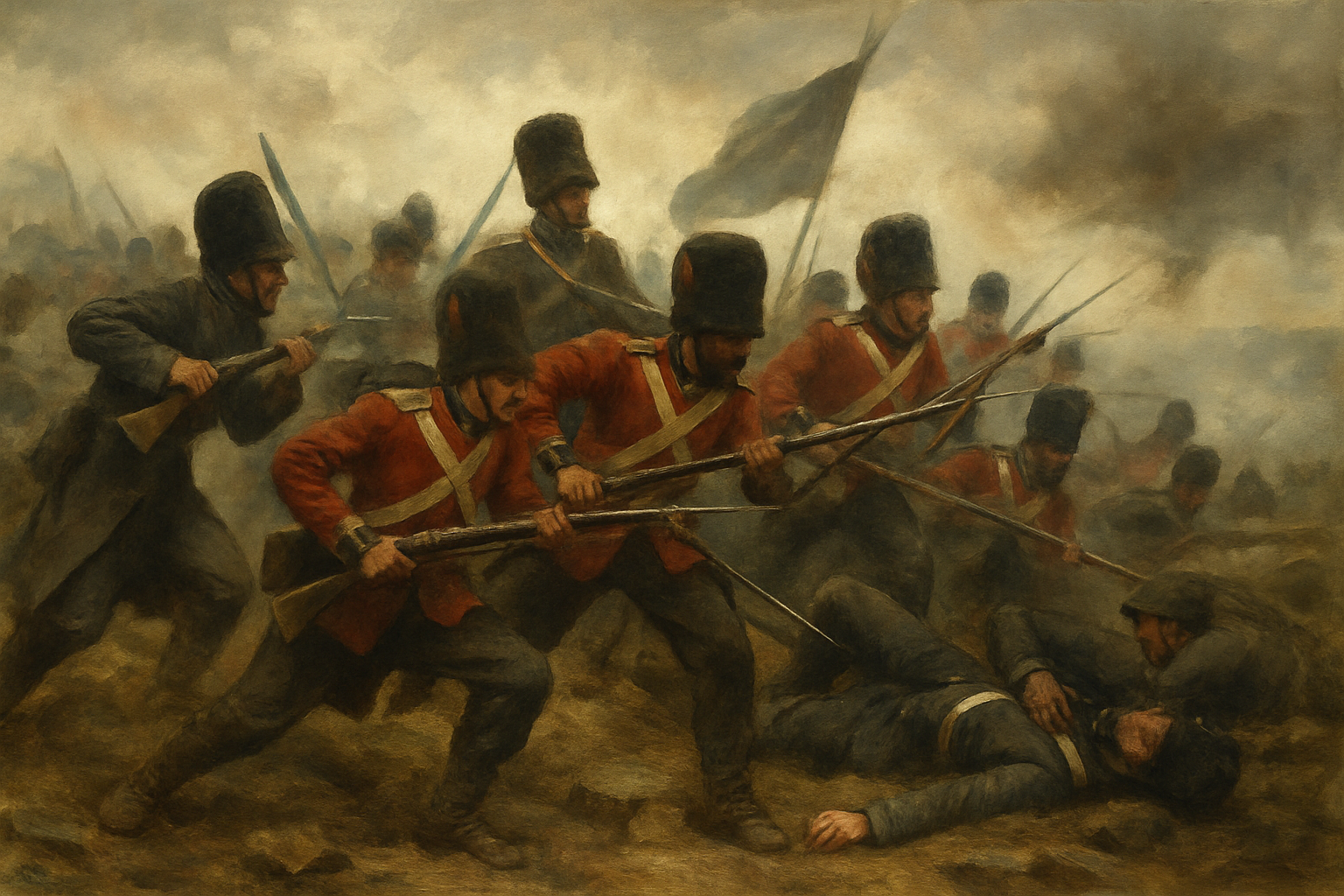
The human reality behind the numbers was vivid and terrible. Brigadier-General Hubert Essame, then a young officer with the Northamptonshire Regiment, later recalled stormtroopers emerging from the fog "like ghosts that carried machine guns" — he barely escaped encirclement. German stormtrooper Ernst Jünger, who fought in the offensive and later wrote the memoir Storm of Steel, described the intoxicating, terrifying momentum of the breakthrough with visceral honesty — the exhilaration of forward movement after years of stagnation, mixed with the chaos of a battle that quickly outran anyone's ability to control it.
For the thousands of British soldiers taken prisoner on 21 March, the war effectively ended that day. They would spend the remaining months in German prison camps, many watching their captors grow visibly thinner as Germany's food situation deteriorated into genuine collapse. For these men, Operation Michael was both defeat and, in a grim sense, deliverance.
Crisis at the Top: Haig, Pétain, and the Birth of Unified Command
As the British line buckled in the days that followed, the Allied command structure began to fracture at the seams. Field Marshal Sir Douglas Haig feared the BEF might be driven all the way to the Channel coast. French Commander-in-Chief Philippe Pétain confided to Haig that he expected the French Army might need to fall back to protect Paris — which would mean the two Allied armies physically splitting apart. It was the nightmare scenario Ludendorff had planned for.
On 26 March 1918, an emergency conference was convened at Doullens in northern France. Allied political and military leaders — including Haig, Pétain, French President Poincaré, and British War Minister Lord Milner — agreed to appoint General Ferdinand Foch as Supreme Commander of all Allied forces on the Western Front. For the first time in the war, British and French armies were placed under a single unified command.
It was one of the most consequential command decisions of the entire conflict, yet it is rarely given the prominence it deserves in popular histories. Haig, frequently criticised for inflexibility, pragmatically supported the appointment, understanding that without coordination the Allies faced genuine catastrophe. The Doullens conference of 26 March 1918 helped save the war.
How Operation Michael Was Finally Stopped
Despite gains that seemed almost miraculous after four years of stalemate — up to 40 miles of territory recaptured in some sectors, more ground than either side had taken in a single operation since 1914 — Germany's advance began to falter by late March. The stormtroopers had outrun their supply lines. Horses and wagons could not keep pace with the advance, leaving leading units without food, ammunition, or artillery support.
Australian and British reserve divisions rushed to the front and made fierce stands at critical points, most notably around Villers-Bretonneux and Amiens. The city of Amiens — a vital rail hub whose fall might genuinely have split the Allied armies — held. On 5 April 1918, Ludendorff officially called off Operation Michael. The offensive had failed in its fundamental objective.
The cost to Germany was catastrophic. Over 250,000 German casualties had been suffered, including a disproportionate number from the elite stormtrooper units — men who had taken years to train and could not be replaced. Germany had broken the trench line, but it had also broken itself.
Legacy: Why 21 March 1918 Still Matters
Operation Michael's legacy is one of history's great ironies. The stormtrooper tactics that nearly broke the British Army were studied, absorbed, and ultimately turned against Germany. The infiltration methods and combined-arms thinking that Ludendorff unleashed in March 1918 fed directly into the Allied operational approach during the Hundred Days Offensive — the relentless campaign from August to November 1918 that finally ended the war.
The near-disaster of March 1918 also produced the unified Allied command under Foch — a model of coalition warfare that directly inspired the integrated command structures of NATO during the Cold War era. Born in crisis, it became a template for how democracies fight together.
For the British public in 1918, the Spring Offensive shattered any comfortable sense that the war was nearly over. Newspaper headlines spoke of crisis and retreat. Prime Minister David Lloyd George faced fierce political pressure over the withholding of reinforcements. Towns and villages recaptured by Germany in March 1918 — many liberated at enormous cost in blood during 1916 and 1917 — had to be fought over yet again in the autumn, compounding the war's already unbearable toll.
Ludendorff's gamble ultimately accelerated Germany's defeat. The exhaustion of his finest troops in the spring offensives left the German Army structurally unable to resist the Allied counteroffensives that followed. By November 1918, the German Army was collapsing not because it lacked courage, but because it had spent everything it had in that desperate spring — and it had not been enough.
If you found this story as gripping as we did, we'd love to hear from you — share this article with a fellow history enthusiast, or leave a comment below telling us which aspect of the Spring Offensive you think deserves more attention. Which day do you think was the true turning point of 1918?
Further Reading
- Imperial War Museum (IWM), London — holds extensive collections of personal diaries, letters, and oral histories from soldiers who served on the Western Front in 1918
- The National Archives, Kew — war diaries of British Army units engaged in Operation Michael are held within the WO 95 series
- Australian War Memorial, Canberra — documents the role of Australian divisions in halting the German advance at Villers-Bretonneux and Amiens
- Historial de la Grande Guerre, Péronne — a leading museum of the First World War situated on the Somme battlefield, with significant holdings relating to the 1918 offensives
- The Bundesarchiv-Militärarchiv, Freiburg — Germany's federal military archive, holding records of German Army operations including the Spring Offensive of 1918