The Quiz Question
Which Crimean War battle, fought in thick fog on 5 November 1854, became known as the Soldiers' Battle because officers lost control and small units fought on their own initiative?
- A. Battle of the Alma
- B. Siege of Sevastopol
- C. Battle of Inkerman
- D. Battle of Balaclava
The answer is C. Battle of Inkerman. Here is the full story.
A Battle Born in Fog and Chaos
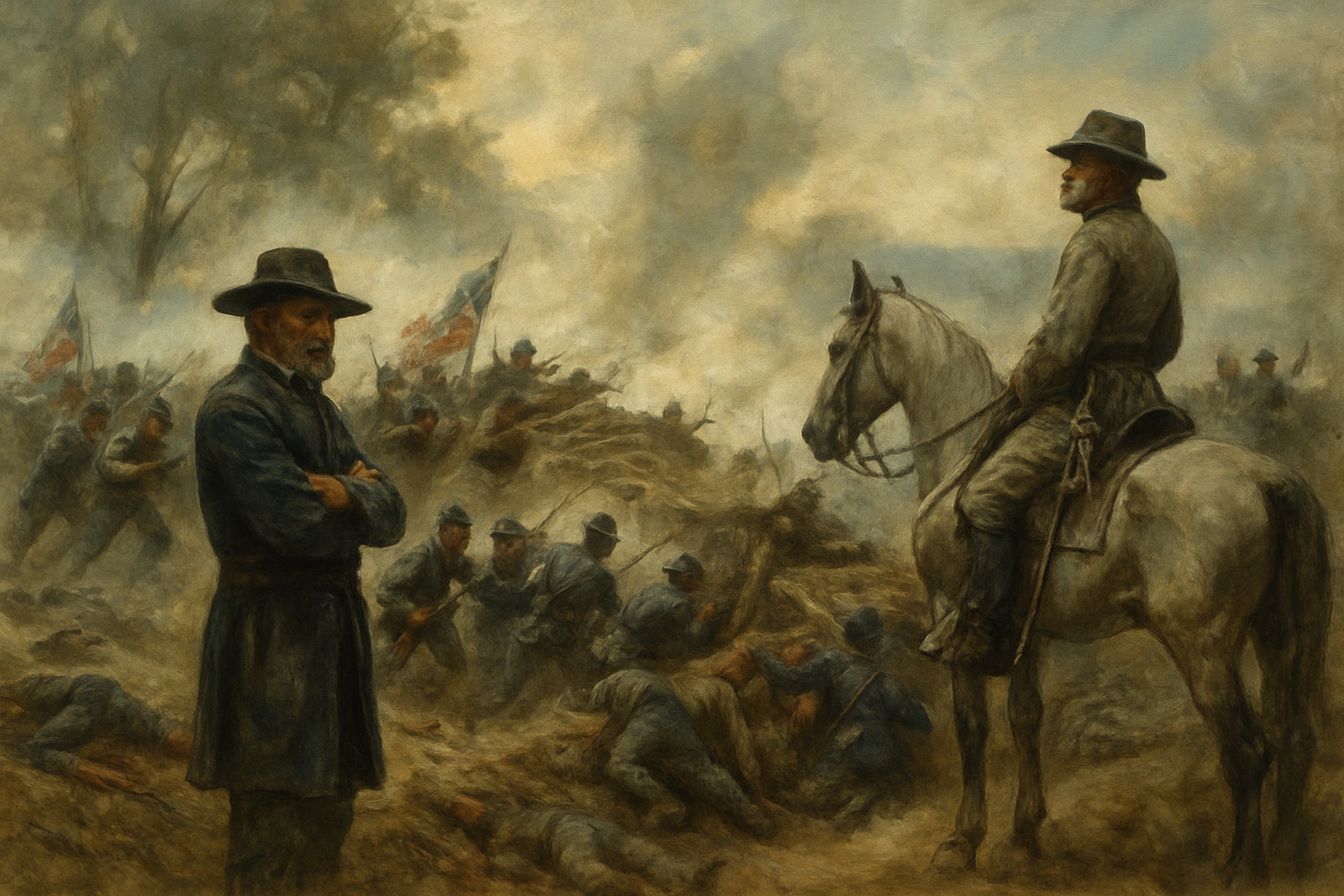
At dawn on 5 November 1854, a dense Crimean fog smothered the heights above Inkerman Ridge. Visibility collapsed to just a few yards. Men could hear boots crunching on frost-hardened scrub before they could see the faces of whoever was wearing them — and in the confusion of that morning, it was often an enemy face.
Russian forces launched a surprise assault with over 35,000 men against roughly 7,500 British troops holding the ridge. The fog shattered any chance of coordinated command from the moment the first shots were fired. Generals could not see their own men, let alone direct them against an enemy appearing and disappearing through the murk.
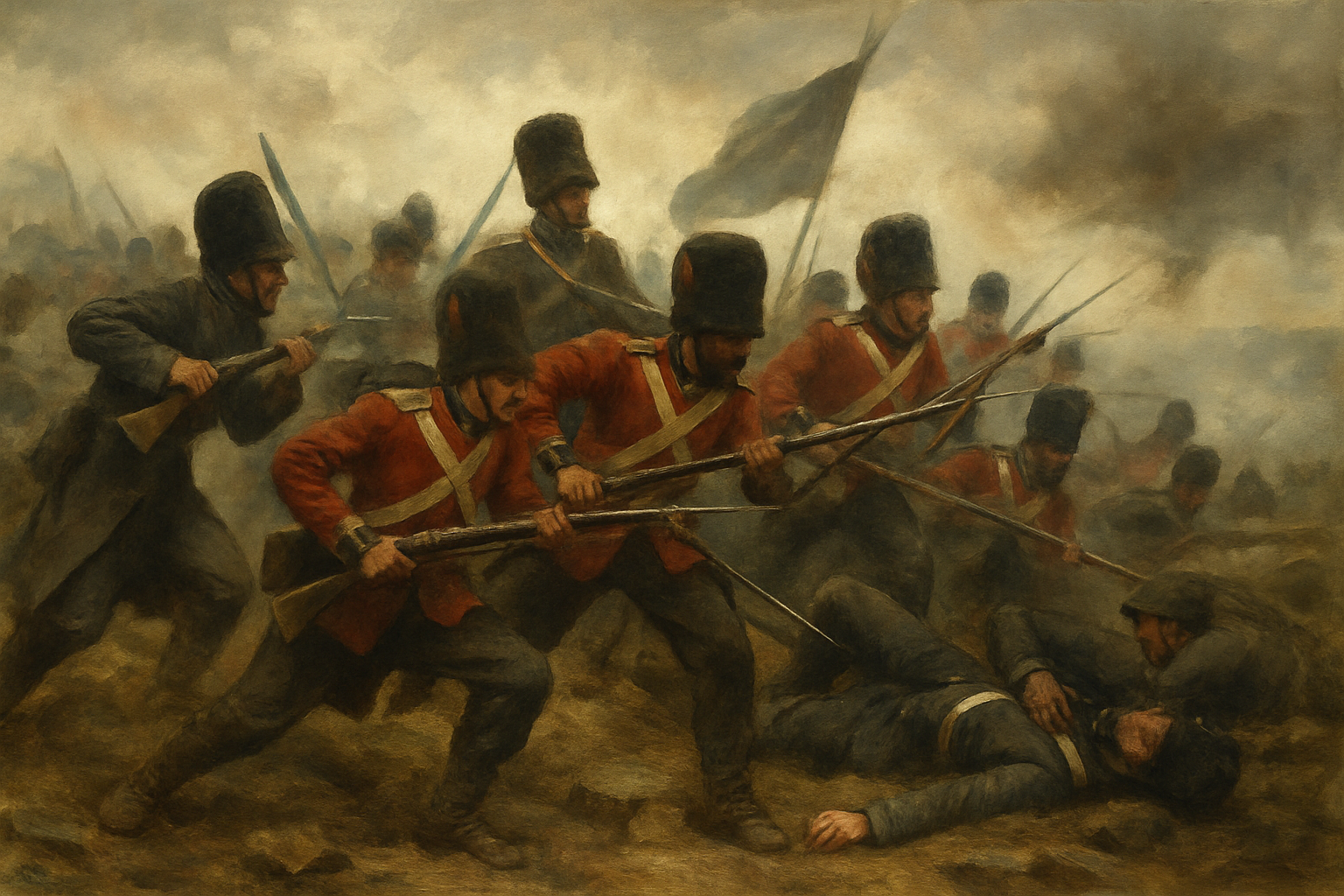
Small groups of British soldiers — sometimes as few as a dozen men — made life-or-death decisions entirely on their own initiative. Sergeants commanded what should have been officers' jobs. Corporals led charges. Private soldiers organised firing lines and chose when to stand and when to fall back. Inkerman became the defining example of the British infantryman's courage, discipline, and capacity to fight without orders.
The Crimean War: Why Britain Was There at All
Britain, France, and the Ottoman Empire declared war on Russia in March 1854 to halt Russian expansion into the crumbling territories of the Ottoman Empire. The strategic prize was Sevastopol — Russia's powerful Black Sea naval base on the Crimean Peninsula, capable of projecting Russian power deep into the Mediterranean and the Near East.
After Allied forces landed in September 1854, they won a sharp engagement at the Battle of the Alma on 20 September, pushing south toward Sevastopol. But the siege that followed quickly stalled. Supply lines stretched thin, disease hollowed out the ranks, and a bitter Crimean winter was closing in.
The Russian high command, under Prince Alexander Menshikov, saw an opportunity. A bold offensive strike before winter entrenched the Allied besiegers might shatter the British siege lines entirely. Inkerman Ridge was the chosen point of attack — the most exposed shoulder of the British position, held by too few men with too little cover.
The Ground: Inkerman Ridge and Why It Mattered
Inkerman Ridge sits northeast of Sevastopol, forming the right flank of the British siege position. The terrain was treacherous — broken scrub and deep ravines carved by the Careening Bay ravine and the Tchernaya River valley below. It was not ground where a general could see his battle and direct it like a chess match.
The ridge was held by the British 2nd Division under General Sir John Pennefather, with fewer than 3,000 men on the key ground. A network of rough tracks — the Post Road and Shell Hill — offered Russian columns a covered approach onto the plateau under the darkness of a November dawn.
British entrenchments were poor, pickets were inadequate for the ground they needed to cover, and accurate maps of the area simply did not exist. The Army was fighting blind before the fog even descended. It was a position that invited exactly the kind of sudden, overwhelming assault the Russians were planning.
The Russian Plan: A Hammer Blow at Dawn
Menshikov's plan combined three separate attacking forces. General Fedor Soimonov led approximately 19,000 men directly from Sevastopol up onto Shell Hill before first light. A second column under General Pyotr Pavlov — around 16,000 strong — crossed the Tchernaya River via the Inkerman Bridge to attack from the east, threatening to curl around the British flank.
A third diversionary force under General Timofeev threatened the French and British lines closer to Sevastopol, intended to pin Allied reserves and prevent reinforcement of the ridge. Russian artillery — around 22 guns deployed on Shell Hill — was to soften the British position before the infantry went in.
The plan depended entirely on speed, surprise, and the sheer weight of numbers overwhelming a thin British line before help could arrive. On paper it was sound. What Menshikov could not fully control was the fog — and what the British soldier would prove capable of within it.
The Fog Rolls In: The Soldiers Take Over
By 6 a.m. the fog was impenetrable. British pickets of the 2nd Division first heard, then stumbled directly into Russian infantry pushing up through the scrub. The fighting began not with trumpet calls and formed lines but with startled men firing at shapes that materialised a few feet away.
General Pennefather made a decision that would define the battle. Rather than pull his men back to a consolidated defensive line — the conventional choice — he fed every available man forward into the fog, ordering his troops to fight the Russians at close quarters wherever they found them. It was a gamble that suited the ground and, crucially, suited the men he commanded.
Regiments including the 30th, 41st, 49th, 55th, 57th, and 77th Foot were committed piecemeal as the fighting surged back and forth across the ridge. Officers were cut down or simply lost in the fog. Sergeants took command of companies. Corporals led sections of men in charges they organised themselves. The chain of command dissolved — and the British soldier stepped into the gap.
At the Sandbag Battery — a small, incomplete earthwork fortification on the ridge — ownership changed hands repeatedly during savage hand-to-hand fighting throughout the morning. It became the symbolic heart of the battle: a scrap of ground worth dying for, taken and retaken by men who could barely see who they were fighting.
The Men Who Held the Line: Courage Under Pressure
The human cost among British officers was immediate and brutal. Brigadier General Sir George Cathcart brought up part of the 4th Division but was killed leading a counter-attack at approximately 8 a.m. — one of four British general officers to fall that day. Command did not so much pass downward as fracture into dozens of isolated engagements.
General Pennefather, directing the battle almost entirely by instinct and the sound of firing, later recalled giving orders to men whose faces he could not see through the fog. His insistence on pressing forward rather than retreating was arguably the single most important command decision of the day.
Colour Sergeant John Park of the 77th Regiment rallied a small group of men and held a ravine approach against repeated Russian pressure until relief arrived — the kind of action that was being repeated in a dozen different places across the ridge simultaneously. Private John Byrne of the 68th Regiment won one of the earliest Victoria Crosses for saving a wounded officer while under heavy fire during the battle.
The critical intervention came from the French. General Pierre Bosquet's reinforcements arrived around 9 a.m. and delivered a flanking attack that finally halted Pavlov's eastern column. Without Bosquet, the sheer weight of Russian numbers pressing from the east might eventually have turned the British position regardless of the gallantry displayed on the ridge itself.
The Turning Point: Russia's Attack Breaks Apart
General Soimonov was mortally wounded early in the fighting, throwing his northern column into confusion at precisely the moment it needed aggressive, coordinated leadership. The column faltered, lost its momentum, and never recovered it.
The broken terrain that made Inkerman Ridge so difficult to defend worked just as badly against the attackers. Russian columns that looked formidable on a map could not deploy their numbers effectively on the narrow, scrub-covered ridge. Mass became a liability. Men bunched together and presented targets to British riflemen firing from the scrub at close range.
The British Minié rifle made a decisive difference. More accurate and with greater effective range than the Russian smoothbore muskets, it allowed small British groups to inflict casualties out of all proportion to their numbers. A dozen men in a good position with Minié rifles could stop a column cold.
By around 1 p.m. the fog began to lift. With it went Russia's cover and Russia's last real hope. The broken formations had no answer to the open ground and accurate British fire that now confronted them. The withdrawal began — first as a retreat, then in places as a rout. Total Russian casualties are estimated at between 10,000 and 12,000 killed and wounded. British losses stood at approximately 2,600; French losses at around 1,700. The scale of Russian casualties reflected how badly the attack had fractured against determined resistance.
The Aftermath: A Hollow Victory and a Hard Winter
The Battle of Inkerman on 5 November 1854 ended in a British and Allied tactical victory, but the strategic situation remained deeply grim. Sevastopol had not fallen. The siege lines held, but the army holding them was exhausted, under-supplied, and about to face a Crimean winter with inadequate clothing, shelter, and food.
Just two weeks after Inkerman, the Great Storm of 14 November 1854 wrecked Allied supply ships in Balaclava harbour, destroying stores and equipment that could not be quickly replaced. The winter crisis that followed — men dying of cold and disease in conditions that shocked Victorian Britain — was partly rooted in the failures the Crimean campaign had already exposed.
The catastrophic breakdowns in supply, medical care, and military administration fuelled the public outrage that brought Florence Nightingale to the hospital at Scutari and forced the British government to act. Inkerman's aftermath helped change British nursing and military medicine permanently.
The battle also exposed fatal weaknesses in British Army command and staff work that could no longer be politely ignored. Those lessons contributed, over the following decades, to the sweeping Cardwell reforms of the 1860s and 1870s that modernised the Army's structure, abolished the purchase of commissions, and rationalised the regimental system. Sevastopol itself finally fell on 8 September 1855 — nearly a year after the fog lifted on Inkerman Ridge.
Why Inkerman Still Matters: The Legacy of the Soldiers' Battle
Inkerman entered British military legend precisely because it stripped away every trapping of generalship and revealed the raw character of the ordinary British soldier. There were no brilliant manoeuvres here, no decisive cavalry charges, no commanding view from a hilltop. There was fog, broken ground, and men fighting alone or in tiny groups with no clear picture of what was happening ten yards to their left or right.
The phrase "Soldiers' Battle" — coined almost immediately after the fight — became a lasting part of British military vocabulary, used to describe similar engagements in later wars where initiative from below proved more decisive than direction from above.
Eleven Victoria Crosses were awarded for acts of gallantry at Inkerman, among the earliest ever presented after the medal was established by Royal Warrant in January 1856. The sheer concentration of recognised acts of individual bravery from a single day's fighting speaks to how extraordinary the conduct of ordinary soldiers had been.
The battle is commemorated on the colours of several successor regiments of the infantry units that fought on the ridge, including regiments tracing their lineage to the 57th and 77th Foot. The name Inkerman appears on colour after colour — a reminder carried into every subsequent generation that the regiment's character was tested and proven in that fog.
For anyone who has grown up on stories of British resilience and quiet courage under pressure, Inkerman remains a powerful symbol. Not of grand strategy, not of brilliant generalship, but of ordinary men doing extraordinary things when the plan fell apart entirely — and doing them well.
If this story of courage in the fog moved you, we'd love to hear your thoughts in the comments below. Share it with anyone who appreciates the real history behind famous British battles — there may be more to Inkerman than they ever knew.
Further Reading
- The National Archives, Kew — holds British Army campaign records, casualty returns, and dispatches from the Crimean War period
- The National Army Museum, London — collections covering the Victorian British Army, the Crimean War, and the early Victoria Cross recipients
- The Imperial War Museum, London — holds material relating to Victorian military campaigns and the broader history of British soldiers in combat
- The Victoria Cross and George Cross Association — records and background on Victoria Cross recipients including those honoured for Inkerman
- The British Library — holds contemporary accounts, illustrated newspapers, and regimental histories covering the Crimean War campaigns of 1854–1855