The Quiz Question
The Second Battle of Ypres in April 1915 is remembered as the first time which weapon was used on a large scale on the Western Front, when German forces released 168 tons of it against French and Algerian troops?
- A. Mustard gas
- B. Flamethrowers
- C. Phosgene gas
- D. Chlorine gas
The answer is D. Chlorine gas. Here is the full story.
At 5:00 pm on 22 April 1915, soldiers holding the Allied line near Ypres, Belgium, noticed something they had never seen before. A low, yellow-green cloud was drifting silently towards them from the German trenches. Within minutes, French and Algerian troops were choking, clawing at their throats, and dying in the mud. The world had just changed forever.
A Yellow-Green Cloud on the Horizon: The Day Everything Changed
The men of the French 45th (Algerian) Division and the 87th Territorial Division had no frame of reference for what was rolling towards them. Nothing in their training, nothing in human military experience, had prepared them for this. The cloud — 168 tons of chlorine gas released simultaneously along a six-kilometre front — killed and incapacitated thousands within minutes.
Witnesses described scenes of pure horror. Men turned blue-grey as oxygen was driven from their lungs. Entire units fled in blind panic, many collapsing before they could reach safety. A four-mile gap — the largest breach in the Allied line since the war began — was torn open in an instant.
Astonishingly, the Germans failed to fully exploit it. Unprepared for the sheer scale of their own success, and uncertain whether to trust a weapon they had never used in combat before, they hesitated. That hesitation may have saved the Allied cause at Ypres. But the larger consequence — the opening of a new, terrifying chapter in the history of warfare — could not be undone.
Ypres in 1915: Why This City Mattered So Much
The Belgian city of Ypres — known affectionately and grimly to British troops as "Wipers" — sat at the heart of a strategic nightmare. The Ypres Salient was a bulge in the Allied line, surrounded on three sides by German-held high ground. Holding it was a matter of honour as much as strategy; losing it would hand the Germans a clear route to the Channel ports.
The First Battle of Ypres, fought from October to November 1914, had already gutted the original British Expeditionary Force — the professional army that had crossed to France in August. By early 1915, the salient was held by a patchwork of British, Canadian, French, and Algerian colonial troops, a multinational line stretched dangerously thin.
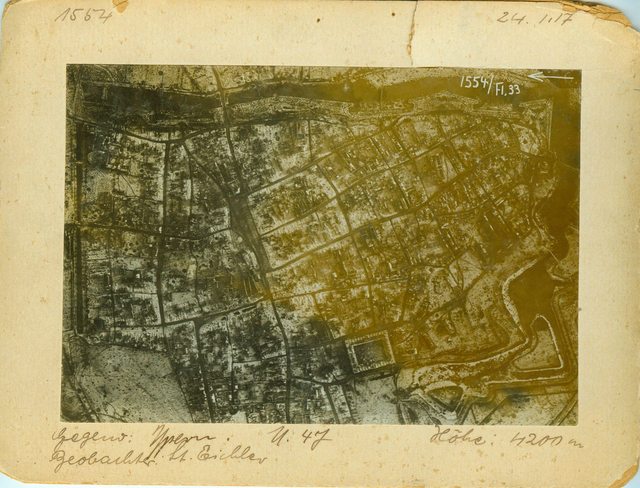
German Chief of Staff General Erich von Falkenhayn saw a spring offensive here as an opportunity: straighten the front, relieve pressure elsewhere, and — crucially — test a new weapon under real battlefield conditions. The famous Cloth Hall of Ypres was already a roofless ruin from artillery fire. The town had become a monument to the war's indiscriminate destruction before the gas ever arrived.
The Science of Slaughter: What Chlorine Gas Actually Does
Chlorine gas was selected for a grimly practical reason: it could be stored as a liquid under pressure in steel cylinders, then released as a gas without requiring specialised shell technology that Germany had not yet perfected. It was a weapon that could be deployed immediately, at scale, using existing infrastructure.
When inhaled, chlorine reacts with moisture in the respiratory tract to form hydrochloric acid. It destroys lung tissue rapidly, causing victims to effectively drown in the fluid their own bodies produce. Death, in severe cases, came within hours. Survivors frequently suffered permanent damage to their lungs and eyesight.
Chlorine's yellow-green colour and sharp bleach-like smell gave some warning — but in April 1915, no Allied soldier had been trained to recognise a gas attack, let alone respond to one. Recognition, in those first terrible minutes, offered no practical escape.
Operation Disinfection: How Germany Planned the Attack
The operation carried the deliberately mundane German codename Desinfektion — "Disinfection." The name was almost certainly chosen to obscure the cylinders' true purpose from anyone who might intercept communications. Behind the lines, German pioneer troops had spent weeks burying approximately 5,730 cylinders along the front near Langemarck and Pilckem Ridge.
Each cylinder weighed around 90 pounds. Positioning them in the forward trenches — at constant risk from Allied artillery — was dangerous, exhausting work. The entire operation required a favourable wind blowing towards Allied lines, and commanders endured repeated delays through April waiting for the right meteorological conditions.
General Berthold von Deimling commanded the German IV Corps responsible for the assault. Overseeing the scientific preparation was Fritz Haber, the chemist whose vision had made the attack possible. Specially trained gas pioneer detachments operated directly under his supervision.
Tragically, some warning did reach the Allies. German prisoners captured before the attack reportedly described the cylinders and their purpose to Allied officers. Those warnings were dismissed as unverifiable or implausible. The price of that scepticism was paid on 22 April.
22 April 1915: Hour by Hour Through the Gas Cloud
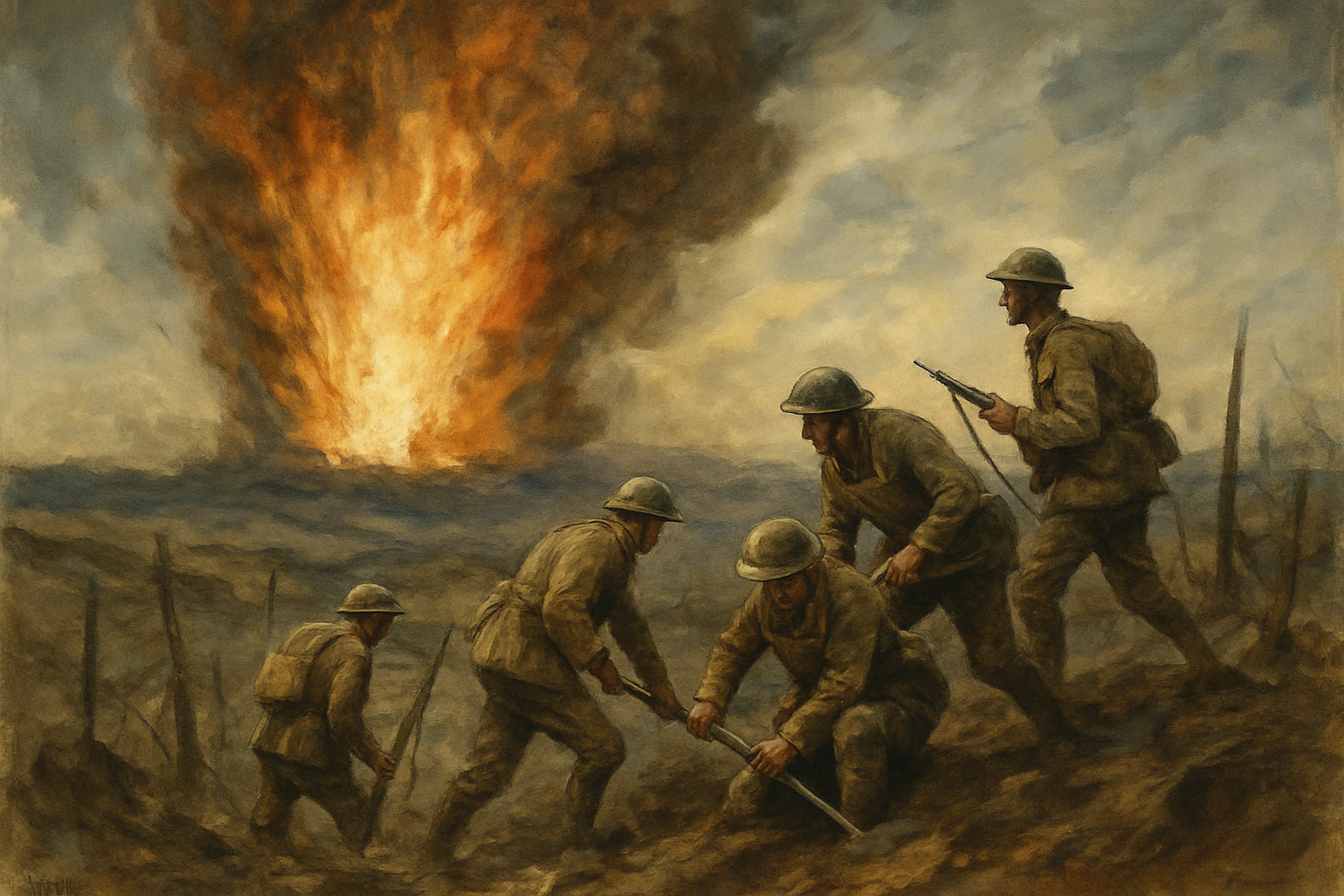
At approximately 5:00 pm, German soldiers opened the cylinder valves simultaneously along the front. A gentle north-easterly wind carried the chlorine cloud towards Allied lines. Within ten minutes, the 45th (Algerian) Division — directly in the cloud's path — had effectively ceased to exist as a fighting force. Companies collapsed or fled, leaving a gaping hole in the line between the Canadian 1st Division and the remaining French units.
Canadian troops on the right flank of the gas cloud, including the 13th Battalion (Royal Highlanders of Canada) and the 15th Battalion (48th Highlanders), found themselves suddenly exposed on their left. They held. Their determination to stand fast — rather than retreat to safety — was the single factor that prevented a complete Allied collapse that evening.
Improvised remedies spread with desperate speed through the surviving troops. Officers urged men to urinate on their handkerchiefs and press them over their mouths and noses. The ammonia in urine offered partial neutralisation of chlorine — crude, undignified, and in many cases life-saving.
By nightfall, German forces had advanced up to two miles in places and captured the village of Langemarck. But the gap was not exploited decisively. The window that might have broken the entire Allied line at Ypres slowly closed.
The Canadians Hold the Line: Courage in the Chaos
For the 1st Canadian Division, 22 April 1915 was their first major engagement of the war. Their left flank was now, in military terms, "in the air" — with nothing between them and the advancing Germans except ground already abandoned. They responded not by withdrawing but by counter-attacking.
Brigadier-General Arthur Currie, commanding the 2nd Brigade, ordered his men forward into the gap at enormous cost. Currie would go on to become one of the finest commanders of the war, but his reputation was forged in these desperate hours near Ypres. The Princess Patricia's Canadian Light Infantry and other units fought through the night of 22–23 April in close-quarters combat that few of them had been trained to expect.
The Second Battle of Ypres continued until 25 May 1915. Canadian casualties across the battle totalled approximately 6,035 men killed, wounded, or missing — nearly a third of the division's entire strength. It was a staggering price for a unit that had only recently arrived in France.
The Canadian stand became a defining moment of national identity. It was in this same salient, just weeks later, that Lieutenant-Colonel John McCrae wrote the opening line: "In Flanders fields the poppies blow / Between the crosses, row on row." No poem has better captured the cost of that ground.
Fritz Haber: The Man Behind the Gas and His Terrible Legacy
Fritz Haber was, by any measure, one of the most consequential scientists of the twentieth century. His development of the Haber-Bosch process for synthesising ammonia from atmospheric nitrogen made possible the mass production of fertilisers that today help feed roughly a third of the world's population. It is one of history's great scientific achievements.
It is also inextricably linked to one of history's most troubling scientific legacies. Haber personally supervised the gas release on 22 April 1915, travelling to the front line to oversee operations. He genuinely believed chemical weapons might shorten the war, reasoning that a swift, decisive shock could end the slaughter more humanely than years of attrition. His contemporaries and subsequent historians have never accepted that rationalisation.
His wife, Clara Haber, was herself a pioneering chemist — the first woman to earn a doctorate from the University of Breslau. She was also a committed pacifist, horrified by her husband's work on chemical weapons. On the night of 1–2 May 1915, days after Ypres, she shot herself with his military pistol in the garden of their home. He left for the Eastern Front the next morning.
In 1918, Haber was awarded the Nobel Prize in Chemistry for his nitrogen fixation work. Allied scientists protested furiously, calling it a scandal. The Nobel Committee proceeded regardless. Haber died in 1934, a Jewish refugee fleeing the Nazi regime he had once served with patriotic devotion. The Zyklon B pesticide developed by his company, Degesch, would later be used in the Holocaust — murdering many of his own relatives in the camps.
The World Reacts: Gas Masks, International Outrage, and Escalation
Germany's legal position was carefully constructed. The Hague Convention of 1899 had prohibited the use of projectiles filled with asphyxiating gases — but cylinder release, Germany argued, was technically not covered. The distinction was almost universally condemned as a fig leaf, but it gave Berlin a position to defend.
The Allied response was immediate and practical. Within weeks, British chemists and the War Office were developing protective equipment. The first improvised respirators — cotton pads soaked in sodium hyposulphite — were being issued by May 1915. Proper box respirators followed as the technology rapidly evolved under pressure of necessity.
By the Battle of Loos in September 1915, Britain retaliated in kind, releasing chlorine from cylinders along its own front — almost exactly replicating the German method at Ypres. The genie was emphatically out of the bottle. Phosgene, introduced later in 1915, proved far more lethal than chlorine. Mustard gas, deployed by Germany from 1917, caused horrific blistering of skin, eyes, and lungs without immediately killing — designed to overwhelm medical systems and demoralise survivors.
By the armistice in November 1918, an estimated 1.3 million gas casualties had been recorded across all sides, with approximately 90,000 deaths. Chemical warfare had become a permanent feature of the modern battlefield.
Ypres and Gas: Why It Still Matters 110 Years Later
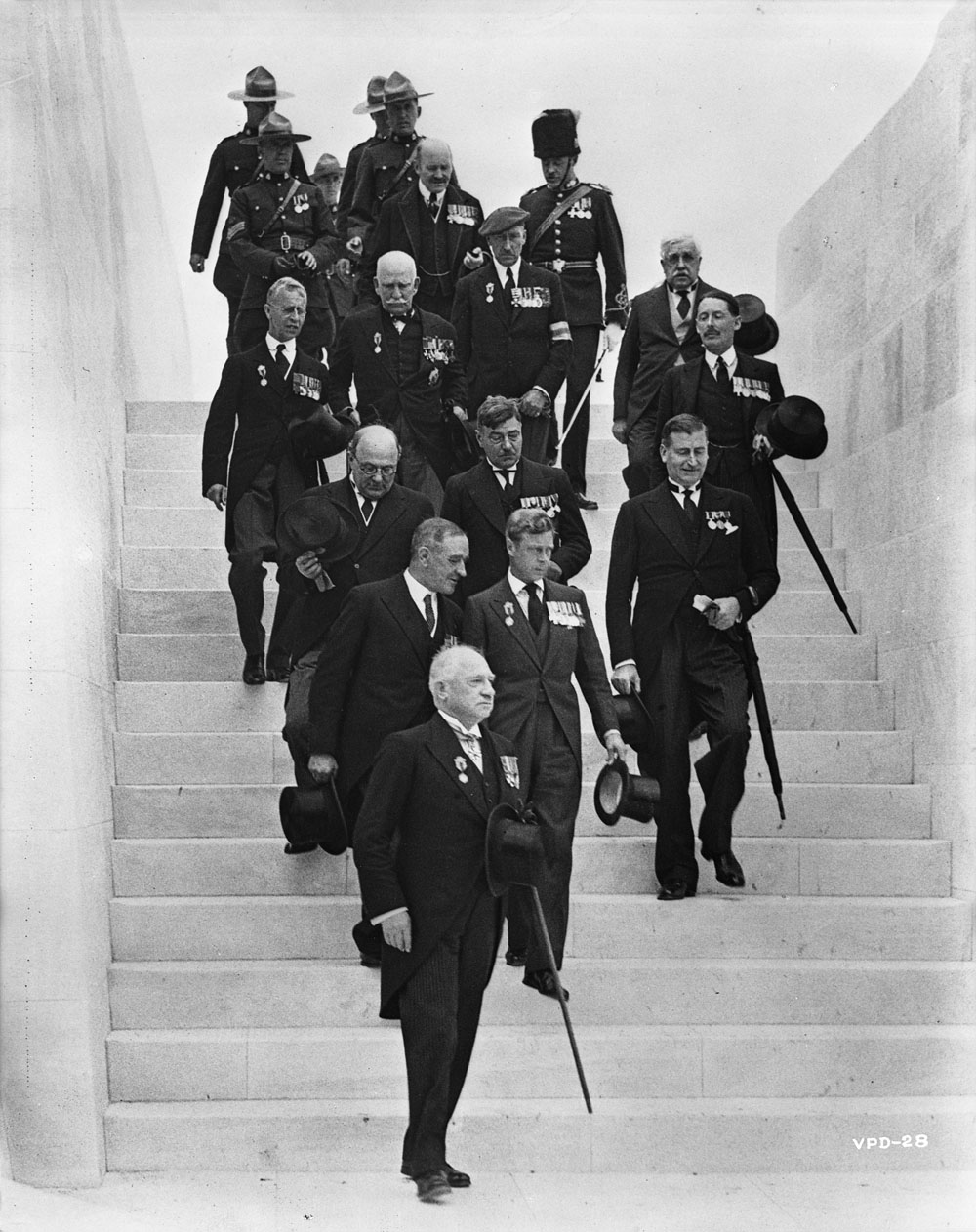
The Menin Gate Memorial in Ypres, unveiled in 1927, bears the names of 54,896 British and Commonwealth soldiers who died in the Ypres Salient and have no known grave. Many were casualties of one of the three great battles fought for this tortured ground. Standing beneath those panels of names remains one of the most affecting experiences any visitor to the Western Front can have.
The 1925 Geneva Protocol, drawn directly from the lessons of chemical warfare in the First World War, prohibited the use of biological and chemical weapons in armed conflict. It was a landmark of international humanitarian law — but one that took further atrocities and decades of pressure to gain anything approaching universal adherence.
Chemical weapons have been used again. Iraq deployed them against Kurdish civilians at Halabja in 1988. Syria used them against its own people in the 2010s. The international community's response in each case demonstrated, painfully, that the laws built on the ruins of Ypres still rely on political will to enforce them.
Every evening at 8:00 pm, buglers of the Ypres fire brigade sound the Last Post beneath the Menin Gate. The ceremony has continued since 1928, interrupted only by the German occupation from 1940 to 1944. It is among the most enduring acts of remembrance anywhere in the world — proof that the city of Ypres has never forgotten what was done there, or who paid the price.
The Second Battle of Ypres stands as a permanent reminder that technological innovation without moral restraint carries consequences that echo across generations. The scientists and generals who made the decisions on 22 April 1915 were nowhere near the yellow-green cloud. The men who breathed it in were.
If this story moved you, share it with someone who deserves to know it — and leave a comment below telling us what aspect of the Ypres Salient you find most compelling. We read every one.
Further Reading
- Imperial War Museum, London — extensive collections on chemical warfare and the Ypres Salient, including personal testimonies and artefacts
- In Flanders Fields Museum, Ypres (Ieper), Belgium — dedicated to the history of the Western Front with a focus on the Ypres Salient
- The National Archives, Kew — holds original British military records, war diaries, and government correspondence relating to the Second Battle of Ypres
- Library and Archives Canada — primary sources on the 1st Canadian Division's role at Ypres, including unit war diaries and casualty records
- Organisation for the Prohibition of Chemical Weapons (OPCW) — historical background on the development and prohibition of chemical weapons from the First World War to the present day