On the evening of 7 September 1940, the sky over the Thames turned red. Londoners watching from rooftops and windows saw something they had never seen before and would never forget — their city on fire. What followed was 57 consecutive nights of German bombing that killed tens of thousands, flattened whole neighbourhoods, and tested the resilience of ordinary people in extraordinary ways. This is the story of how London burned, endured, and refused to break.
A City on Fire: The Night the Blitz Began
The attack that launched the Blitz was staggering in its scale. On 7 September 1940, the Luftwaffe sent 348 bombers escorted by 617 fighters across the Channel in two waves — the largest air assault ever launched against a city to that point. The East End bore the full weight of it.
Silvertown, Stepney, and the great docks along the Thames were engulfed in flame. Warehouses packed with paint, rubber, sugar, and rum caught fire and created an inferno visible from thirty miles away. Fire crews poured in from across London, but there was simply too much burning to fight.
By nightfall, over 430 civilians were dead and 1,600 seriously injured — in a single night. When Winston Churchill visited the bombed East End the following morning, witnesses reported that he wept openly as he walked through the rubble. The Blitz had arrived.
Why Hitler Turned His Bombs on London
The shift from targeting RAF airfields to bombing civilian cities was rooted in revenge. On 25 August 1940, the RAF bombed Berlin — a raid that enraged Hitler and stung Göring's pride. Within days, the order came: turn the bombers on London.
This was a catastrophic strategic blunder. The Luftwaffe had been slowly grinding down Fighter Command during the air war over Britain — a few more weeks of sustained attacks on RAF bases might have broken British air defences entirely. By switching targets to London, Hitler handed the RAF precisely the breathing room it needed to recover.
Nazi strategy assumed ordinary people would crack under sustained bombardment and force Churchill to sue for peace. The Port of London handled roughly a third of Britain's imports, making it a legitimate military target — but the broader calculation about civilian morale proved disastrously wrong. Londoners did not crack. If anything, they hardened.
57 Nights Without Pause: The Scale of the Assault
From 7 September to 2 November 1940, German bombers attacked London every single night without exception. The rhythm of destruction became almost routine — sirens at dusk, bombers overhead, fires burning until dawn.
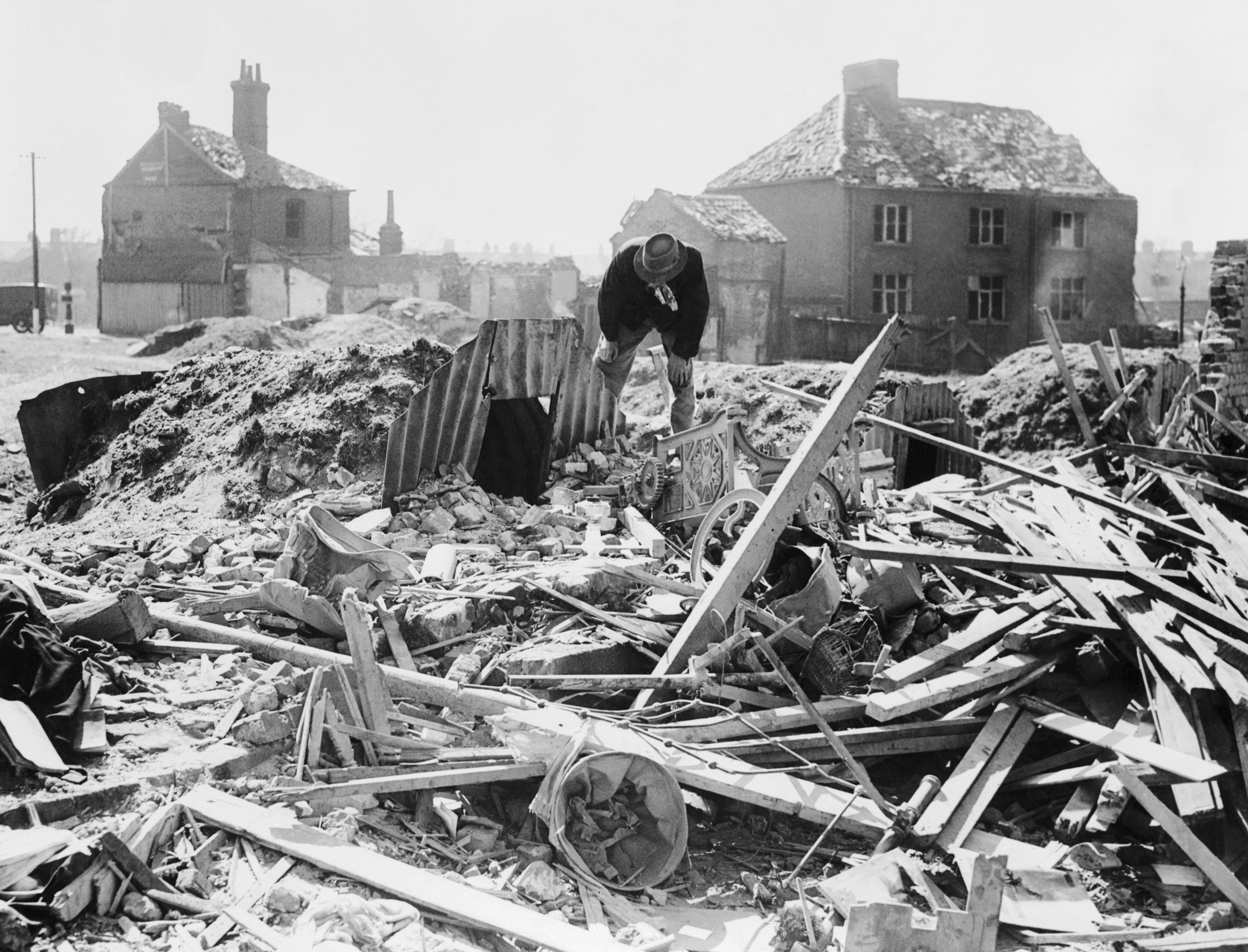
The heaviest single raid during this period came on 15 October 1940, when 410 bombers dropped 538 tonnes of high explosives alongside nearly 70,000 incendiary devices across the city. Gas mains ruptured. Water mains burst. Streets that had stood since the Victorian era simply ceased to exist.
When the Blitz officially ended in May 1941, over 43,000 British civilians had been killed — nearly half of them in London. More than one million London homes were damaged or destroyed during the eight-month campaign. The Imperial War Museum records that the Luftwaffe flew an estimated 41,000 individual sorties over Britain during the entire Blitz period.
Underground and Unbroken: Life in the Shelters
Faced with nightly terror from above, Londoners did something entirely practical — they went underground. At the peak of the Blitz, around 177,000 people sheltered every night in the London Underground, with stations like Aldwych and Elephant & Castle becoming famous impromptu refuges.
The government had actually discouraged this, fearing mass panic would disrupt the rail network. Londoners largely ignored the advice and simply bought platform tickets. By late afternoon, families were already chalking out their patches of platform, bringing blankets and food, turning the tunnels into something resembling a subterranean village — complete with sing-songs, card games, and community gossip.
For those without access to the Underground, the Anderson shelter became a lifeline. These corrugated steel backyard bunkers were issued free to households earning under £250 a year, and 2.1 million were erected across Britain. From 1941, Morrison shelters — heavy steel indoor tables designed to protect occupants when a house collapsed around them — were distributed and saved thousands of lives.
The People Who Held London Together
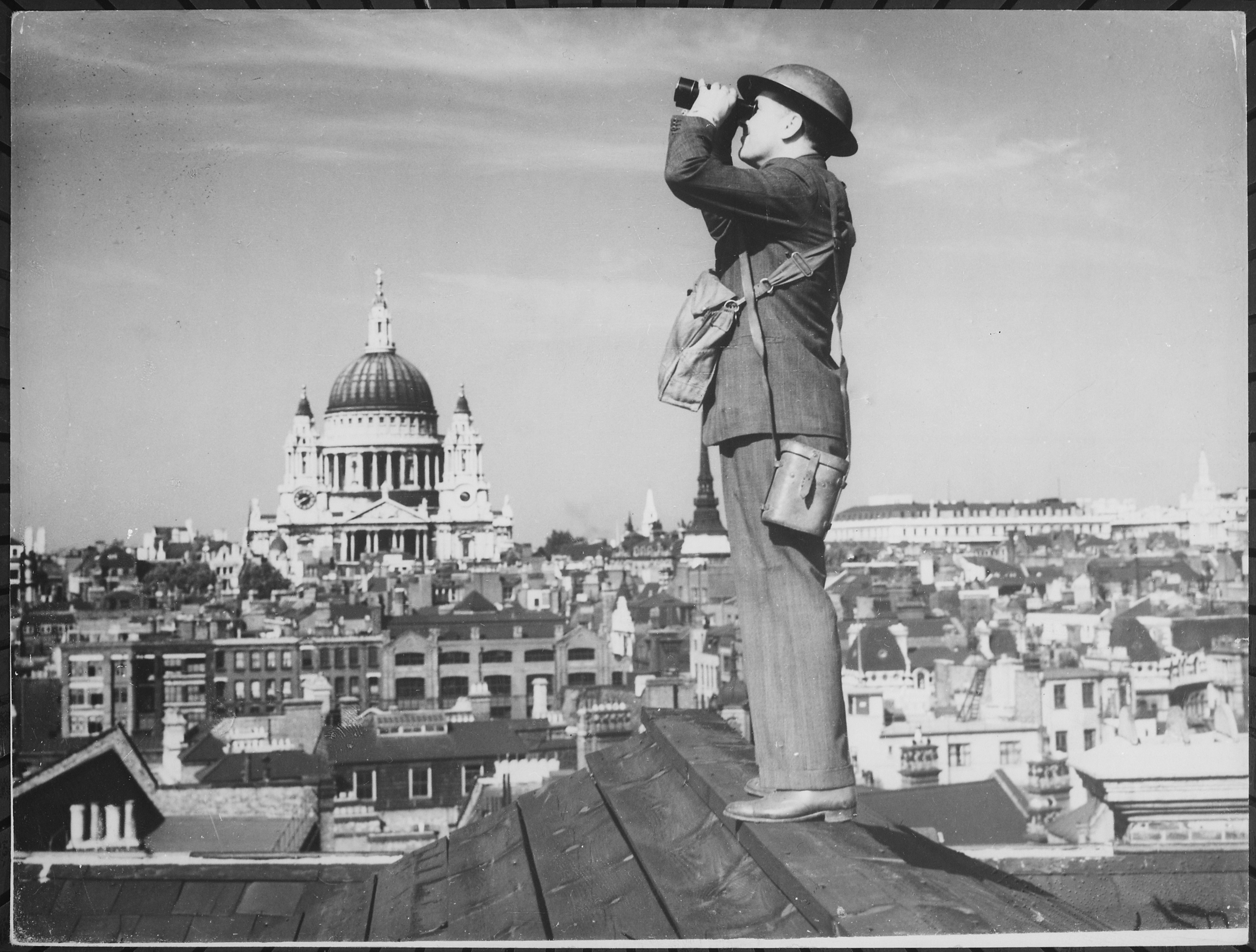
The survival of London was not accidental. It depended on thousands of largely unsung individuals who worked through the worst nights the city had ever seen. London's 2,300 Air Raid Precaution (ARP) wardens patrolled blacked-out streets, guided rescue teams through rubble, and enforced the blackout that kept the bombers from finding easy targets.
The Auxiliary Fire Service — many of them civilian volunteers with minimal training — fought fires in shifts lasting twenty-four hours during the heaviest raids. By war's end, 327 of them had died in action. Just as the most decorated soldiers of the war carried psychological scars alongside their medals, so too did the men and women who fought London's fires night after night.
Nurse Gladys McBean of St Thomas' Hospital continued treating patients even as the building around her absorbed direct hits. The hospital never closed throughout the entire Blitz. In Stepney, Communist councillor Phil Piratin led a famous protest march of East End residents to the Savoy Hotel, demanding that its luxury basement shelter be opened to local bomb victims. The hotel reluctantly complied.
Perhaps the most powerful symbol of solidarity came from the Palace itself. King George VI and Queen Elizabeth chose to remain at Buckingham Palace, which was bombed nine times during the Blitz. The Queen's comment — that she could now look the East End in the face — captured exactly why the gesture mattered so much.
Children, Evacuation, and the Families Torn Apart
Operation Pied Piper had already moved 1.5 million children out of Britain's cities by September 1939 — but a surprising number had drifted home by the time the Blitz began. The quiet months of the "Phoney War" had convinced many families that the threat had been exaggerated. September 1940 proved them wrong.
A second wave of evacuation began immediately. London County Council relocated 89,000 children within weeks of the first raids, dispatching them to the countryside and to families they had never met. Children who remained in London often slept fully clothed, ready to run for the shelter at a moment's notice. Some didn't undress for weeks.
The East End's Barnardo's homes were bombed repeatedly during the campaign; staff and children moved constantly from building to building to stay ahead of the destruction. Letters between evacuated children and their parents, preserved in the Imperial War Museum archive, capture the heartbreaking texture of these separations — children asking why they couldn't come home, parents trying to explain a danger they could barely describe.
Propaganda, the Press, and the Birth of 'Blitz Spirit'
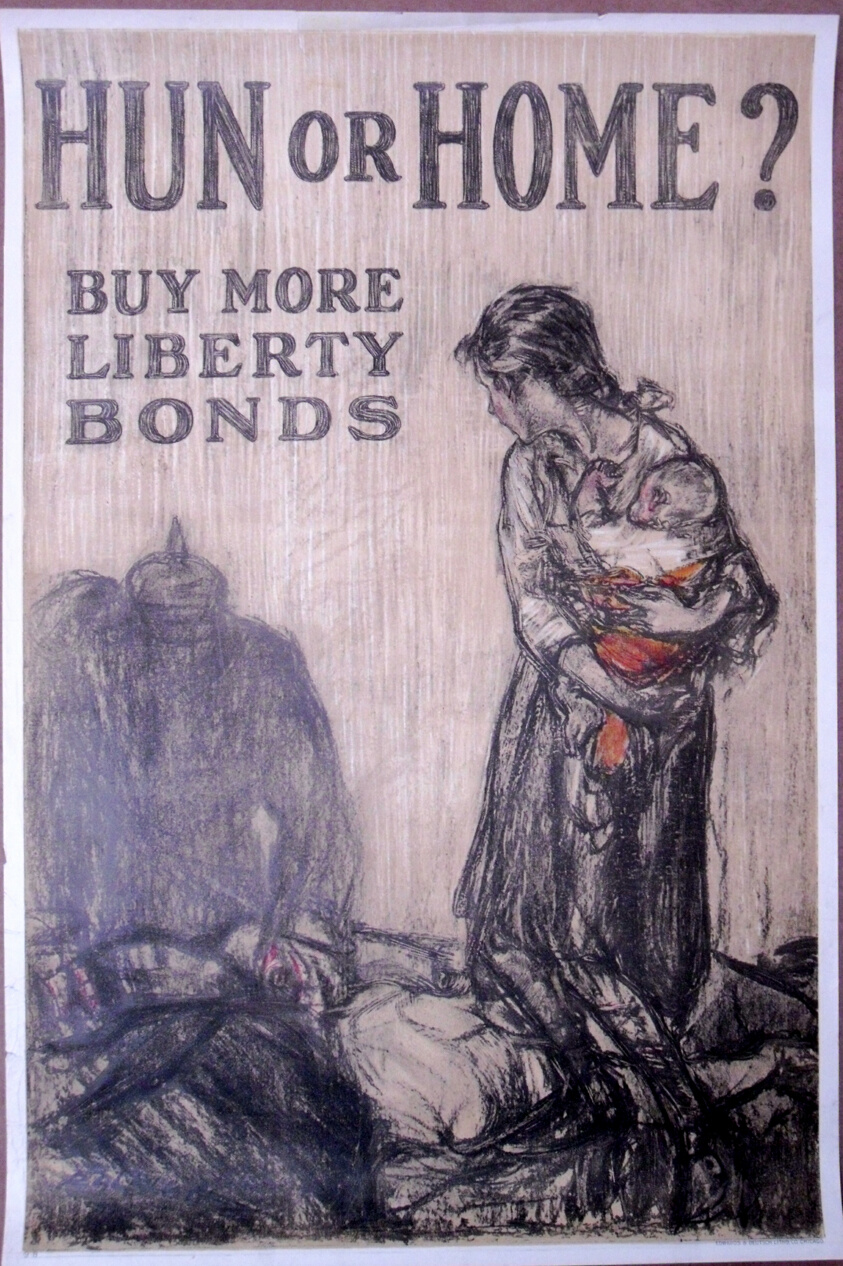
Not everything printed about the Blitz during the war years was the full story. The Ministry of Information carefully controlled press photography — images of mass panic, bodies in the street, or widespread destruction were suppressed. What reached the public was curated to sustain morale rather than record reality.
The most famous image of the entire Blitz — St Paul's Cathedral standing serenely above rolling smoke during the great fire raid of 29 December 1940 — was actively promoted by the government as a symbol of national defiance. It worked. The photograph ran on front pages around the world and became one of the defining images of the Second World War.
Across the Atlantic, CBS broadcaster Ed Murrow's live radio reports from London — opening with his signature "This… is London" — shaped American public opinion profoundly, building sympathy for Britain at a critical moment. Picture Post and the Daily Mirror ran cheerful stories of cockneys making tea in bombed-out kitchens. The resilience was real. The curation was equally deliberate.
The phrase "Blitz Spirit" is largely a post-war construction, applied retrospectively to a more complicated reality. Looting did occur. Class tensions surfaced sharply when wealthy Londoners retreated to country houses while East Enders huddled in tunnels. But the genuine community solidarity forged in those Underground stations — the shared fear, the gallows humour, the looking out for neighbours — was entirely authentic.
The Deadliest Nights: Disasters the Headlines Buried
Some of the Blitz's worst moments were actively concealed at the time. On 14 October 1940, a bomb penetrated Balham Underground station, rupturing a water main and killing 66 sheltering civilians. The disaster was censored and not fully reported until after the war ended.
29 December 1940 became known as the Second Great Fire of London. Incendiary bombs rained down on the City of London in such volume that a true firestorm developed, destroying eight Christopher Wren churches and four railway stations in a single night. The damage to London's historical heart was irreversible.
On 8 March 1941, the Café de Paris — marketed as London's safest nightclub because it sat deep below street level — took a direct hit. Thirty-four people died, including bandleader Ken "Snakehips" Johnson. The brutal arithmetic of aerial bombing made no distinctions between military targets and dance floors.
The Blitz extended far beyond London, too. On 14 November 1940, 515 German bombers descended on Coventry in a single night, killing 568 people and devastating the medieval city centre. And on the final major raid of 10 May 1941, 1,436 Londoners died in a single night — the deadliest single night of the entire campaign.
Legacy: What the Blitz Left Behind — and What It Means Today
The Blitz did not just reshape London's skyline. It reshaped British society. The shared suffering of the bomb years cut across class lines in ways that peacetime Britain rarely managed, and the inequalities it exposed — in shelter quality, evacuation billets, and healthcare — created powerful political demand for change.
William Beveridge began drafting his landmark 1942 Social Insurance report — the blueprint for the post-war welfare state and ultimately the NHS — during the Blitz years, directly inspired by the poverty and vulnerability the bombing had laid bare. The courage shown by ordinary working-class Londoners made the case for a fairer settlement impossible to ignore.
The bomb-cleared East End was rebuilt in the post-war decades — council estates rising where the docks and terraced streets had stood. Some of those estates still stand today. The Port of London that Hitler had tried to destroy was eventually transformed beyond recognition, not by bombs but by containerisation and economic change.
The war generation's stoicism became a defining element of British national identity, invoked in political speeches and cultural moments for eight decades since. Whether that invocation always honours the genuine complexity of the Blitz experience is another question. But the courage of those 57 nights — the nurses who kept working, the wardens who kept walking, the families who kept singing underground — deserves to be remembered on its own terms, not just as a slogan.
The Blitz experience is carefully preserved at the Churchill War Rooms, the Museum of London Docklands' Blitz exhibition, and the Imperial War Museum. If any piece of history deserves to be walked through in person, it is this one.
Further reading
- Imperial War Museum — London (extensive Blitz collections, oral history archive, and permanent Second World War galleries)
- The National Archives, Kew — holds original Air Raid Precautions files, Ministry of Information records, and Home Front civil defence documents
- Museum of London Docklands — dedicated Blitz exhibition focusing on the East End and the Thames docks during the bombing campaign
- Churchill War Rooms, London — the underground Cabinet War Rooms where Churchill directed the wartime government, preserved as they were in 1945
- BBC Archive — original wartime broadcasts including Ed Murrow's London reports and BBC Home Service coverage of the Blitz period