The Home Guard is best remembered today through the gentle comedy of the sitcom Dad's Army. The real force was a serious response to a real threat: in the summer of 1940, with a German invasion of Britain widely expected, more than a million and a half men who were outside the regular armed forces volunteered to defend their towns and villages.
Eden's Appeal and the Rush to Enrol
On 14 May 1940, days after the German offensive in the West began, Secretary of State for War Anthony Eden made a radio broadcast asking for men aged 17 to 65 who were not in military service to enrol in a new force, the Local Defence Volunteers. The response was immediate: within weeks around 1.5 million men had come forward. In July 1940 the force was renamed the Home Guard on Winston Churchill's suggestion.
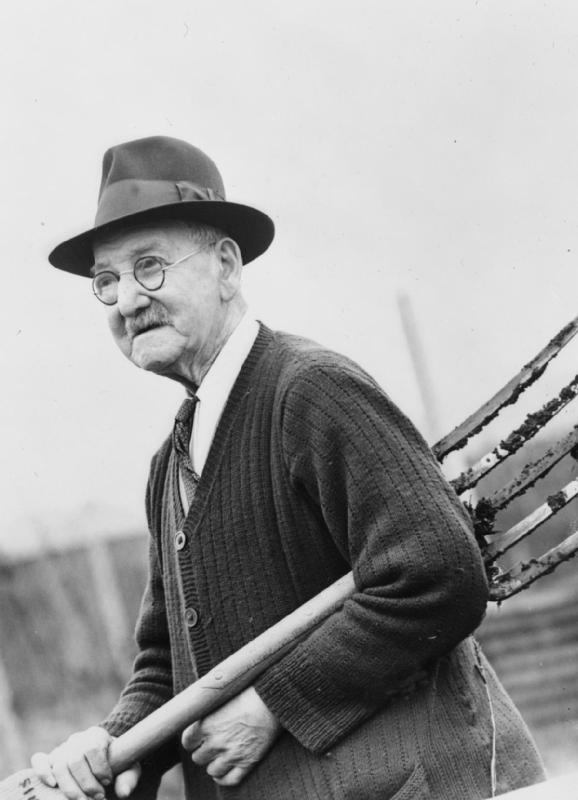
The volunteers came from every walk of civilian life, many of them older men or those in reserved occupations that kept them out of the regular forces. They trained in the evenings and at weekends around their ordinary jobs.
The Weapons Shortage Was Real
The popular image of men drilling with broom handles and improvised weapons is not pure invention. After the evacuation from Dunkirk, Britain had lost a great deal of equipment, and there were not enough rifles to go round. In the early months some units genuinely trained with shotguns, obsolete rifles, and whatever was available while they waited to be properly armed.
Over time the situation improved. Consignments of rifles arrived from the United States, and the Home Guard was gradually equipped with rifles, machine guns and other weapons. As it became better armed and better organised, it took on a real share of home defence duties.
What the Home Guard Actually Did
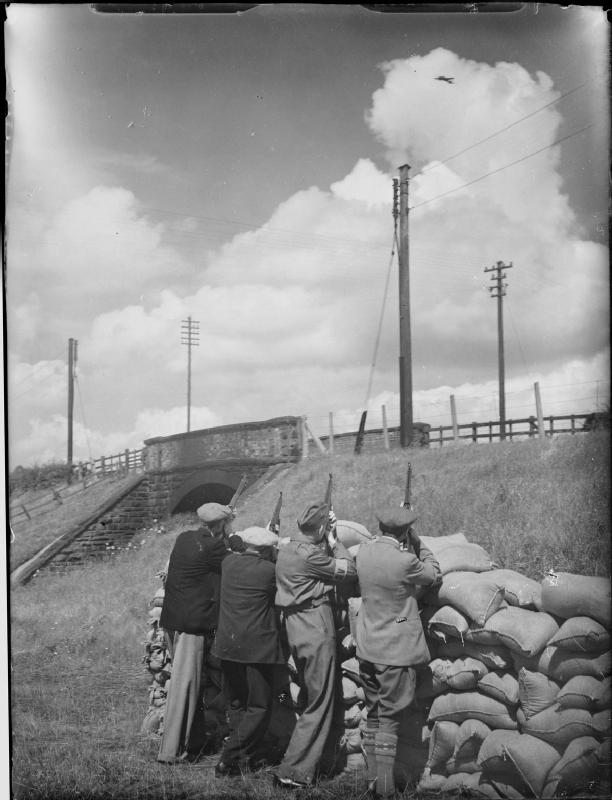
The Home Guard's role went well beyond standing watch. Its members guarded factories, airfields, railways and other key sites, manned roadblocks and observation posts, and took part in anti-invasion exercises. Later in the war, Home Guard units also crewed anti-aircraft and rocket batteries, freeing regular soldiers for other duties.
The work was not without cost. More than 1,200 members of the Home Guard died on duty during the war, from enemy action, air raids, and accidents with weapons and equipment. The force was formally stood down in December 1944, once the threat of invasion had passed, and disbanded at the end of 1945.
The Auxiliary Units: A Separate, Secret Force
Distinct from the Home Guard proper was a small, secret organisation often confused with it: the Auxiliary Units. These were Churchill's "stay-behind" parties, trained to operate as a resistance and sabotage force in the event that Germany invaded and occupied part of Britain.
Members of the Auxiliary Units were issued Home Guard uniforms as cover, which is the source of much of the later confusion, but they were not an arm of the Home Guard. They operated from hidden underground bases, trained in demolition and sabotage, and their existence was kept secret for decades after the war. Because an invasion never came, they were never called upon to fight.
Comedy and Reality
Dad's Army has fixed the Home Guard in national memory as a band of well-meaning amateurs, and there is some truth in the affection behind that image. But the force was created in a genuine emergency, it grew into a serious and reasonably well-armed component of home defence, and its members gave up their evenings and weekends, and in more than a thousand cases their lives, to it. The comedy and the history sit alongside each other rather than in place of one another.