The Quiz Question
Captain Noel Chavasse, an army doctor, holds a unique First World War distinction. What was it?
- A. The only man awarded the Victoria Cross twice in WW1
- B. The youngest VC of WW1
- C. The first VC of WW1
- D. The only VC awarded at sea in WW1
The answer is A. The only man awarded the Victoria Cross twice in WW1. Here is the full story.
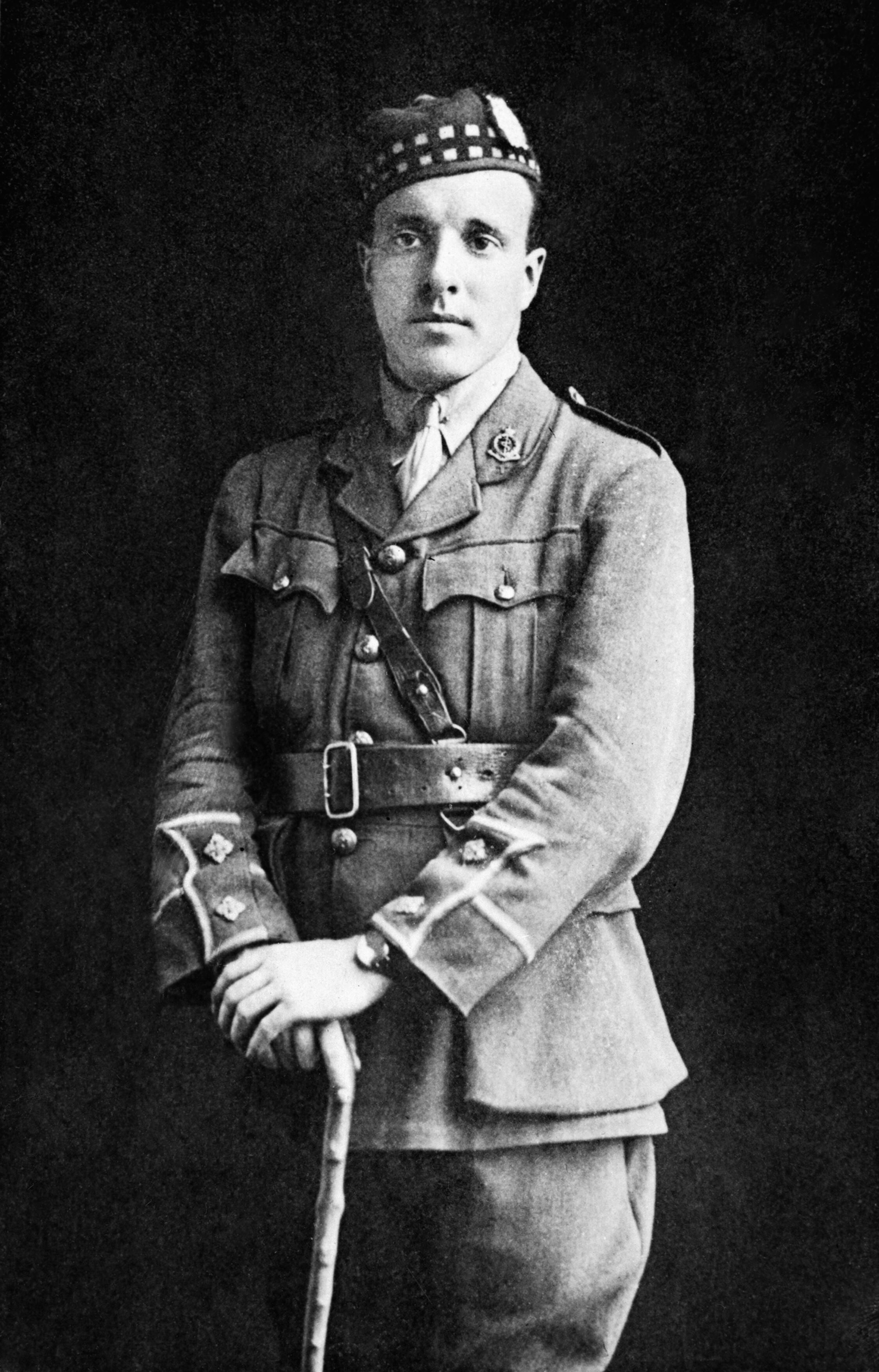
There is a particular kind of courage that has nothing to do with weapons or glory. It is the courage of a man who runs toward the shells when every instinct screams to run away — not to fight, but to pull another human being out of the mud before he bleeds to death. Captain Noel Chavasse, a doctor in the Royal Army Medical Corps, did exactly that. He did it in 1916 and earned the Victoria Cross. Then he did it again in 1917, earned a second, and died in the process. In the entire history of the Victoria Cross, only three men have ever received the decoration twice. Chavasse is the only one from the First World War.
The Man Who Did the Impossible — Twice
The Victoria Cross and Bar — the informal name for two Victoria Crosses awarded to the same man — is among the rarest distinctions in British military history. Only three recipients have ever achieved it: Chavasse in the First World War, and two men in earlier conflicts. What makes Chavasse's case remarkable even within that tiny group is that he won both crosses not by leading charges or destroying enemy positions, but by saving lives in No Man's Land under fire so heavy that trained infantrymen had been forced to pull back.
His second Victoria Cross was awarded posthumously. He died on 4 August 1917, aged 32, at a Casualty Clearing Station in Belgium, of wounds sustained while — characteristically — still trying to treat others. His story cuts to the heart of what the word "courage" actually means when stripped of romance: not the desire for glory, but the refusal to abandon the people in your care, even when it costs you everything.
Who Was Noel Chavasse? A Life Before the War
Noel Godfrey Chavasse was born on 9 November 1884 in Oxford, the son of Francis Chavasse, who would later become the Bishop of Liverpool. It was a deeply religious household, rooted in Christian duty and public service — values that would shape Noel's decisions every day of his short life. He had a twin brother, Christopher, and the two were close throughout their lives; Christopher served in the war as a clergyman while Noel served as a doctor.
Educated at Magdalen College School in Oxford and later Liverpool College, Noel won a place at Oxford University to study medicine — a vocation that suited his blend of scientific precision and deep compassion for others. He was also a gifted athlete. In 1908, he represented Great Britain in the 400 metres at the London Olympics, competing at the highest level while still a medical student. He qualified as a doctor in 1912 and joined the Royal Army Medical Corps as a Territorial officer before war broke out in 1914. By the time he crossed to France, he was already an exceptional man.
The RAMC on the Western Front: Medicine in the Mud
The Royal Army Medical Corps operated Regimental Aid Posts just behind the front line — close enough to hear every shell, often close enough to catch one. Medical officers and stretcher-bearers faced the same machine-gun fire and artillery barrages as the infantry, but they were unarmed. The Geneva Convention offered theoretical protection; the Western Front offered very little of it in practice.
Chavasse was attached to the 1/10th Battalion, King's (Liverpool Regiment), a Territorial unit that drew its men from the city he had made his home. By 1916, he had already been through Loos, the early stages of Ypres, and the grinding attrition of a front that consumed men in industrial quantities. He knew exactly what he was going back to every time he returned from leave. He went back anyway.
First Victoria Cross: Guillemont, August 1916
The Battle of the Somme was in its second month when the 1/10th King's Liverpool attacked the village of Guillemont on 9 August 1916. The assault was part of the wider British effort to grind through the German defensive network, and it was brutal. Casualties mounted rapidly as German artillery and machine guns cut into the advancing infantry.
Chavasse spent the entire day moving through No Man's Land under fire, tending to wounded men where they had fallen, often crawling on his hands and knees to avoid being shot. That evening, when most men had sought whatever shelter they could find, he went back out into the darkness — twice — to search for survivors. He recovered approximately 20 wounded men who would almost certainly have died without him. He was wounded himself during this period but refused to seek treatment until the men in his care were safe.
His citation, gazetted on 26 October 1916, described his "untiring energy" and "devotion to duty." Those words are an understatement. What Chavasse did at Guillemont went far beyond duty — it was a sustained act of will over an entire day and night, conducted under conditions designed to kill him.
Back to the Front: A Man Who Could Have Stayed Home
After Guillemont, Chavasse was a celebrated figure. A Victoria Cross, an Olympic appearance, a distinguished family name — he had every credential needed to accept a safer posting, a training role in Britain, or a position well behind the lines. He refused. He returned to the 1/10th King's Liverpool and to the forward aid posts where the need for him was greatest.
Letters he wrote to his fiancée Gladys — his cousin, to whom he had been engaged since before the war — reveal a man entirely clear-eyed about the danger and entirely committed to staying. He wrote of "his boys," the Liverpool men he had served with throughout the war, and made plain that he could not leave them. He was promoted to Captain and continued working through the bitter winter of 1916 and into the spring and summer of 1917. Colleagues consistently described him as tireless, warm, and apparently indifferent to the risk to himself.
Second Victoria Cross: Wieltje, July–August 1917
The Third Battle of Ypres — better known as Passchendaele — opened on 31 July 1917 in the Ypres Salient in Belgium. The 1/10th King's Liverpool attacked near Wieltje, a small hamlet north-east of Ypres, in some of the most ferocious fighting of the entire war. German defensive fire was devastating. Mud, waterlogged shell-craters, and relentless shellfire made the evacuation of casualties a nightmare.
Over three days, Chavasse worked almost without pause. He treated men in the open, guided stretcher-bearers through the chaos, and repeatedly went forward into ground swept by fire to reach soldiers who could not be moved without help. He was struck by a shell fragment and sustained a serious head wound — but continued working for more than 24 hours after being hit.
When stretcher-bearers finally reached him on 2 August, he was still attempting to assist the wounded around him. He was evacuated to the Casualty Clearing Station at Brandhoek, a few miles west of Ypres. He died there on 4 August 1917 — the third anniversary, to the day, of Britain's declaration of war on Germany.
The Posthumous VC and Bar: How the Second Award Was Made
The second Victoria Cross — formally recorded as a "Bar" to the original decoration — was gazetted on 14 September 1917, six weeks after Chavasse's death. It was one of a small number of posthumous Victoria Crosses issued during the war. The physical distinction was subtle but unique: a small silver cross device added to the ribbon of the original VC, marking Chavasse out as a double recipient in a way no other WW1 soldier ever was.
King George V personally expressed his regret at Chavasse's death, and the Palace moved swiftly to ensure the posthumous award was processed and recognised. Chavasse's twin brother Christopher, who had survived the war, accepted the Bar on behalf of the family. The full medal group — the VC and Bar together — is now held at the Museum of the Order of St John in London, where it is considered one of the most significant medal collections in British military history.
Grief, Legacy, and a Family Shattered by War
Noel's death was not the only loss Bishop Francis Chavasse had suffered. Another of his sons, Aidan, had already been killed earlier in the war. The toll on the family was immense, and Francis — already in his seventies — had to bear the weight of two sons lost and a nation's grief added to his own. He died in 1928, having spent his final years honouring Noel's memory through the institutions he had helped build in Liverpool.
Gladys, Noel's fiancée, never married. She had waited for him throughout the war and devoted much of her later life to keeping his memory alive. Noel is buried at Brandhoek New Military Cemetery, Belgium, and his grave has become a place of quiet pilgrimage for visitors to the Ypres Salient — people who come not for tourism, but to stand in front of a headstone that marks something that feels almost impossible to comprehend.
The surviving men of the 1/10th King's Liverpool mourned him as irreplaceable. Tributes from soldiers who had served alongside him described a man who seemed constitutionally unable to put his own safety above that of the men around him. Christopher Chavasse survived the war and went on to become the Bishop of Rochester — carrying forward the family's tradition of faith and service into the next generation.
Why Noel Chavasse Still Matters Today
Liverpool has not forgotten him. Chavasse Hall at the University of Liverpool bears his name, and a bronze statue of him stands in Abercromby Square, unveiled in 2008 to mark the centenary of his appearance at the London Olympics. The city that provided the regiment he served with, the regiment he refused to leave, has claimed him as one of its own for over a century.
His story is taught in schools, commemorated in memorials across Liverpool and Oxford, and marked in Belgium at the cemetery where he lies. He represents something important at a moment when the First World War is sometimes reduced to a single image of mud and futility: the extraordinary humanity that existed alongside the horror, the individual acts of stubborn love for other human beings that continued even when the industrial machinery of modern war did everything it could to grind them out.
Chavasse was not a general. He was not a fighter pilot or a decorated infantry officer. He was a doctor who had taken an oath to preserve life, and who kept that oath in the most demanding circumstances imaginable, until it killed him. That, in the end, is what the two crosses on his ribbon represent — not a military achievement, but a moral one.
If Noel Chavasse's story moves you — and it should — share it with someone who has never heard his name. And if you have a connection to Liverpool, the King's Regiment, or the Ypres Salient, we'd love to hear about it in the comments below.
Further Reading
- Imperial War Museum, London — holds extensive records, photographs, and archive material relating to RAMC personnel and Victoria Cross recipients of the First World War
- The National Archives, Kew — service records and official war diaries for the 1/10th Battalion, King's (Liverpool Regiment)
- Museum of the Order of St John, London — home to the Chavasse VC and Bar medal group
- Commonwealth War Graves Commission — maintains Brandhoek New Military Cemetery and records of all Commonwealth casualties, including Chavasse's grave details
- National Army Museum, London — collections covering the Royal Army Medical Corps and its role on the Western Front