The Quiz Question
Which April 1942 forced march, in which starving and exhausted American and Filipino prisoners of war were driven for days by their Japanese captors with thousands dying along the way, followed the fall of the Bataan Peninsula in the Philippines?
- A. The Bataan Death March
- B. The Sandakan Death March
- C. The March to the Sea
- D. The Long March
The answer is A. The Bataan Death March. Here is the full story.
In April 1942, on a dusty road running north through the Philippine jungle, thousands of starving, sick and beaten men shuffled toward an uncertain fate. What happened to them over the following days became one of the most harrowing episodes in American military history — and one of the worst war crimes of the entire Pacific War.
A Defeat That Shook America to Its Core
On 9 April 1942, the Bataan Peninsula fell. It was the largest surrender of American-led forces in United States history — roughly 76,000 troops captured in a single catastrophic moment. The blow landed just four months after the Japanese attack on Pearl Harbor, and for a nation still reeling from that shock, the news was devastating.
Among the captured were approximately 12,000 Americans and 64,000 Filipino soldiers, all serving under the joint United States Armed Forces in the Far East (USAFFE). Brigadier General Edward King made the agonising decision to surrender on the morning of 9 April, knowing his men had no ammunition reserves, no food and no hope of relief from the outside world.
That last point cut deepest. President Roosevelt had ordered General Douglas MacArthur to evacuate to Australia in March 1942, a decision that left the defenders of Bataan feeling abandoned. MacArthur's famous words — "I shall return" — offered cold comfort to the men he left behind.
How Did 76,000 Men End Up Trapped on Bataan?
Japan launched its invasion of the Philippines on 8 December 1941, just hours after Pearl Harbor, and immediately destroyed much of the US Far East Air Force on the ground. Without air cover, the Philippines were effectively indefensible.
MacArthur enacted War Plan Orange-3, withdrawing forces into the Bataan Peninsula to create a defensive perimeter and buy time while awaiting a relief fleet. That fleet never came. The US Navy, staggered by Pearl Harbor, could not fight its way through Japanese-controlled waters to reach the Philippines.
By January 1942 the defenders were already on half-rations. By February, they had been cut to quarter-rations — roughly 1,000 calories a day for men doing hard physical labour in tropical heat. Soldiers ate monkeys, iguanas and pack mules to survive. Tropical disease ran rampant: malaria, dysentery, beriberi and dengue fever swept through the ranks, and by March, over 24,000 men were hospitalised.
Despite fierce resistance — including the brutal Battle of the Pockets in January and February 1942, where Filipino and American forces encircled and destroyed Japanese units that had broken through their lines — the exhausted, starving garrison could not hold on indefinitely. When Japan launched a massive fresh offensive in early April 1942, the end came within days.
The March Begins: 65 Miles of Suffering
The march began on 9–10 April 1942 from Mariveles, at the southern tip of Bataan, with prisoners directed north toward the town of San Fernando in Pampanga province — a distance of roughly 65 miles (105 km). Men who had already spent months starving and fighting disease were now expected to walk that distance in brutal tropical heat with virtually no food or water provided.
Japanese commanders had catastrophically miscalculated. They expected around 25,000 prisoners and received more than three times that number. The logistical provisions — already inadequate by any measure — were overwhelmed before the march had properly begun.
Prisoners were organised into columns of approximately 100 men, each guarded by Japanese soldiers who had themselves been fighting continuously for months and who had little sympathy for those who struggled to keep pace. The rules, such as they were, were brutally simple: keep moving, or suffer the consequences.
Men who fell behind, collapsed from exhaustion or could not maintain the pace were beaten with rifle butts, bayoneted where they lay, or shot by the roadside. Some were beheaded by officers wielding swords. Solidarity itself became dangerous — helping a fallen comrade could mean death for both men.
Atrocities Along the Road: What the Survivors Witnessed
The so-called "sun treatment" became one of the march's most notorious tortures. Guards forced prisoners to sit in direct tropical sun for hours, without water or shade, as deliberate punishment. For men already dehydrated and malnourished, it was lethal.
Water became an obsession that drove men to desperate choices. Those who broke from the column to drink from roadside ditches or irrigation canals were beaten or killed. Some drank water contaminated with human waste and the bodies of the dead — and then died of the illnesses that followed.
On 12 April 1942, near the Pantingan River, Filipino officers were singled out and executed en masse. Estimates from later investigations suggest as many as 400 Filipino officers were killed in a single incident, suspected by their captors of being resistance fighters or guerrilla leaders.
American Sergeant Leon Beck later gave testimony that he witnessed Japanese guards bayoneting prisoners who stopped to help fallen comrades. Bodies lined the road in the tropical heat. Survivors described the stench and the sight of weakened men being run over by Japanese military vehicles as they collapsed in the path of oncoming traffic.
The Men Who Endured It: Faces of the Death March
Lieutenant Colonel William Dyess of the 21st Pursuit Squadron was one of the march's most important witnesses. He survived both the march and subsequent imprisonment, eventually escaping in April 1943 and smuggling a firsthand account to US authorities — the first detailed testimony of the atrocities to reach the outside world.
Lester Tenney, a young Army tanker from the 192nd Tank Battalion, endured the march and then spent three years in Japanese labour camps. He went on to become one of the most prominent survivors and advocates for official recognition and apology, testifying before Congress and speaking publicly well into his nineties.
Filipino soldiers — members of the Philippine Army and Philippine Scouts — made up the vast majority of prisoners and suffered disproportionately. Many were executed on suspicion of being guerrilla fighters. Brigadier General Vincent Lim, a Filipino-American officer and one of the most senior Filipino commanders, was among those who perished, his fate representing the deliberate targeting of Filipino military leadership by Japanese forces.
The US Army Nurse Corps members who had served on Bataan — known as the Angels of Bataan — were not part of the death march itself, having been captured separately. They were interned at Santo Tomas University in Manila, where they endured three years of harsh imprisonment before liberation in 1945.
Camp O'Donnell: The Suffering Didn't End at the March
When survivors reached San Fernando after the overland march, they were crammed into steel railway boxcars for the next leg of the journey — approximately 100 men per car, in blistering heat, with no ventilation. Men suffocated and died standing upright, too tightly packed to fall.
From Capas station, prisoners marched a final eight miles to Camp O'Donnell, a barely completed Filipino Army training base that had been hastily converted into a prison camp. It had virtually no sanitation infrastructure, almost no food supply and no meaningful medical facilities.
Death rates at O'Donnell were catastrophic. American prisoners died at an estimated rate of 50 per day during May 1942. Filipino prisoners fared even worse — mortality reached approximately 500 per day at the camp's peak. By the time conditions began to improve in mid-1942, an estimated 1,500 to 2,500 Americans and between 26,000 and 30,000 Filipino prisoners had died at O'Donnell alone.
Survivors were eventually dispersed to prison camps across the Philippines and to Japan, Korea and Manchuria, where they were used as forced labour in mines, factories and dockyards — conditions that continued to kill men for the next three years.
The World Finds Out: Breaking the Story
For over a year, the full truth of what had happened on Bataan was suppressed. Both the US and Japanese governments, for very different reasons, kept the story from the public. The American government feared the details would demoralise a nation already at war; Japan denied any wrongdoing had occurred.
When William Dyess escaped from a Japanese prison camp in April 1943 and brought his account to US authorities, the government held the story for months before finally allowing publication. The full account broke in American newspapers in January 1944, and the public reaction was one of profound outrage.
War bond sales spiked dramatically in the weeks following publication. The story of Bataan — of men betrayed, abandoned and then systematically brutalised — galvanised American public opinion and hardened the national resolve to see the Pacific War through to total victory.
Justice and Its Limits: The War Crimes Trials
General Masaharu Homma, commander of the Japanese 14th Army and the officer responsible for the Philippines campaign, was tried by a US Military Commission in Manila in January 1946. Homma argued that he had been unaware of the conditions and atrocities during the march — a claim the tribunal rejected. He was convicted of war crimes and executed by firing squad on 3 April 1946.
The trial was not without controversy. Former President Herbert Hoover and several legal observers argued that the proceedings lacked adequate procedural protections and set a troubling precedent for how command responsibility was defined and applied. The debate over the legal standards used at Homma's trial has continued among military law scholars ever since.
Many of the individual guards and junior officers who committed specific atrocities during the march were never identified, prosecuted or punished — a reality that remained a source of deep and lasting bitterness for survivors and their families. Yet the legal principles established at these trials — that commanders bear responsibility for the acts of their subordinates — directly influenced the development of the Geneva Conventions and the foundations of modern international humanitarian law.
Legacy: Why the Bataan Death March Still Matters
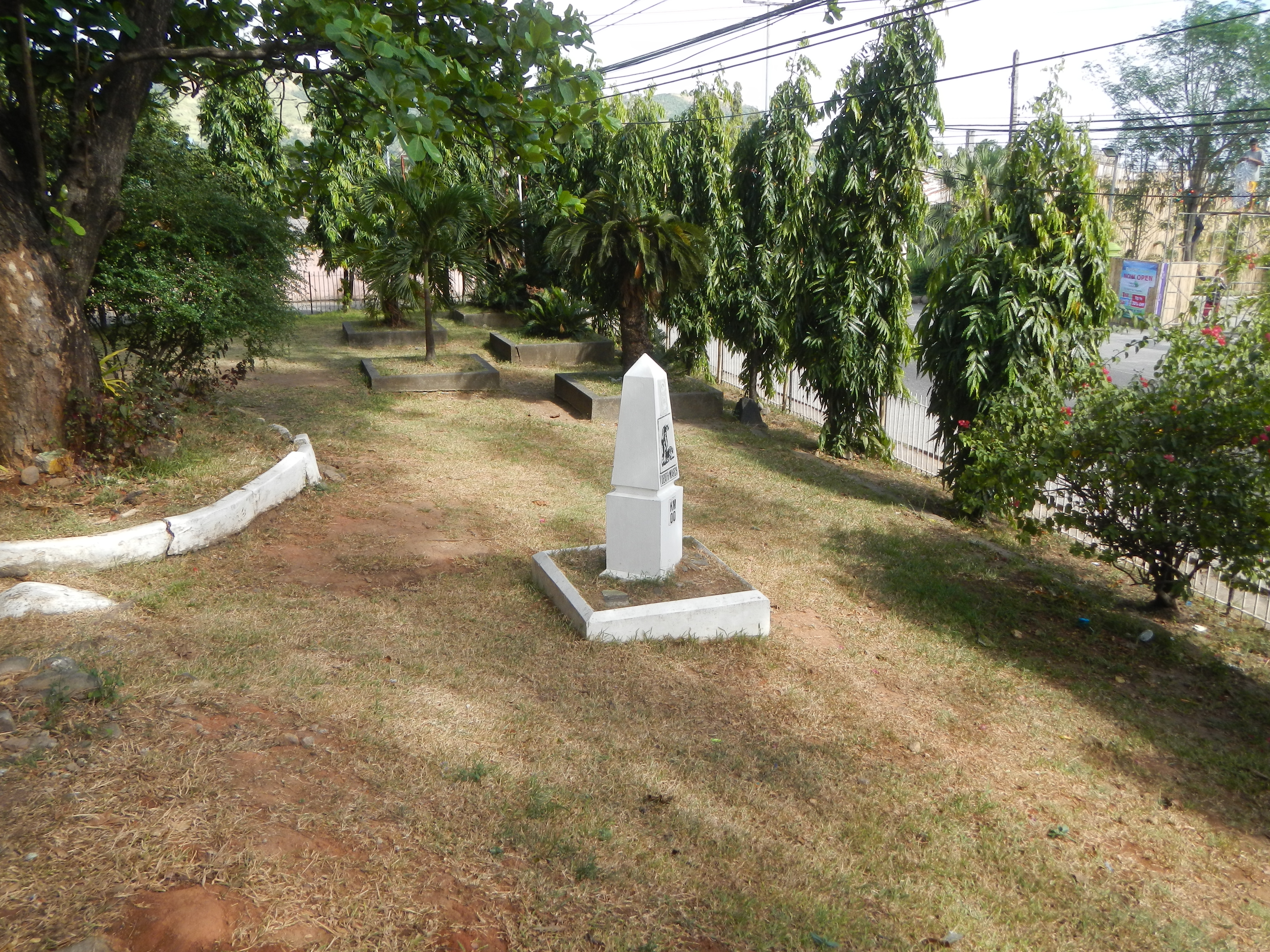
The Bataan Death March Memorial National Historic Site in the Philippines preserves portions of the original route. The Capas National Shrine in Tarlac province stands as a permanent memorial to the Filipino dead of both the march and Camp O'Donnell — a reminder that the majority of those who suffered and died were Filipino soldiers fighting alongside their American allies.
Every April, the Bataan Memorial Death March at White Sands Missile Range in New Mexico draws thousands of participants — active military, veterans and civilians — completing a 26-mile route in honour of those who had no choice in the matter. It is one of the most emotionally resonant military memorial events held annually in the United States.
Survivors like Lester Tenney campaigned for decades for a formal Japanese apology. In 2009, the Japanese government extended a private apology to surviving American former prisoners of war — a gesture that came far too late for most, but carried real meaning for the diminishing number still alive to receive it.
Ben Steele, an Army Air Corps private from Montana, survived the march and the camps that followed and used drawing to record what he witnessed — haunting images of skeletal men, beatings and death that preserved what no camera had captured. He died in 2016 at the age of 98, one of the last American survivors to carry the memory firsthand.
The Bataan Death March endures as one of the defining atrocities of the Pacific War — not as an abstraction, but as a story of specific men, on a specific road, in a specific April heat, doing what they could to survive one more hour. It is a permanent warning about what happens when human beings are systematically stripped of their humanity by those who hold power over them.
If this story moved you, share it with someone who deserves to know it — and leave a comment below telling us whether you had a family member who served in the Pacific War. These stories deserve to be heard.
Further Reading
- The National World War II Museum, New Orleans — extensive Pacific War archives and survivor testimony collections
- The US National Archives and Records Administration — holds official military records, trial transcripts from the Homma proceedings, and USAFFE unit records
- The Library of Congress Veterans History Project — includes recorded testimonies from Bataan survivors
- The American Battle Monuments Commission — documents American military casualties and commemorative sites in the Philippines
- The Imperial War Museum, London — holds broader Pacific War records including Allied prisoner of war documentation and contemporary accounts