The Quiz Question
Which African American infantry regiment, nicknamed the 'Harlem Hellfighters' by the Germans, spent 191 continuous days on the front line, longer than any other American regiment in World War 1?
- A. 369th Infantry Regiment
- B. 92nd Infantry Division
- C. 761st Tank Battalion
- D. 24th Infantry Regiment
The answer is A. 369th Infantry Regiment. Here is the full story.
They spent 191 days on the Western Front without relief. They never surrendered a prisoner. They never gave up a yard of French soil. And when the war ended, they were among the first Allied soldiers to reach the Rhine. The men of the 369th Infantry Regiment — the Harlem Hellfighters — wrote one of the most remarkable chapters in American military history. It is a story of extraordinary courage performed in the face of two enemies: Imperial Germany and the institutionalised racism of their own country.
The Regiment America Didn't Want — But France Did
The 369th Infantry Regiment arrived in France in January 1918 as one of the first African American combat units deployed to Europe in World War 1. Almost immediately, they ran into a wall. The US Army had no intention of integrating Black soldiers into white American units, and the 369th found itself effectively homeless within the army it had volunteered to serve.
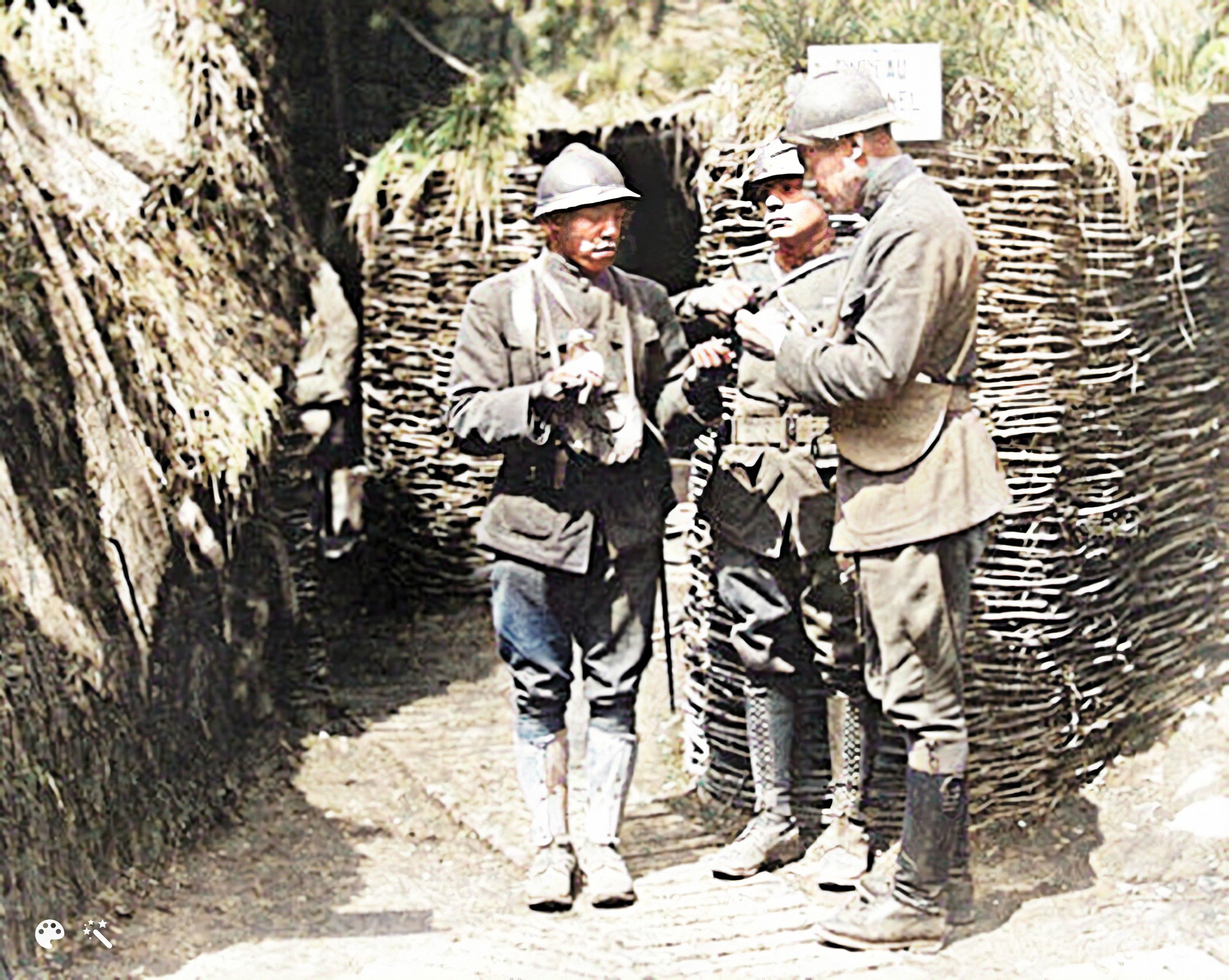
The solution came from an unexpected direction. General Henri Gouraud, commanding the French 4th Army, accepted the regiment into his ranks without hesitation. The men were issued French Lebel rifles, French rations, and French Adrian helmets. They trained alongside French poilus and took their orders from French officers. For an American unit, this arrangement was essentially unprecedented.
It was, in the cruelest irony, the making of them. Freed from the prejudice of the US Army command structure, the 369th was treated as soldiers — full stop. The handover to Gouraud's 4th Army gave them the chance to prove themselves on the most brutal battlefield in history, and they seized it with both hands.
Who Were the Men of the 369th?
The regiment began life in 1916 as the 15th New York National Guard Infantry, drawing recruits heavily from Harlem's vibrant, working-class Black community. Dock workers, labourers, musicians — men who had spent their civilian lives navigating segregation at every turn — filled its ranks. The regiment also included men from Puerto Rico, a reflection of Harlem's genuinely diverse population in the early twentieth century.
Colonel William Hayward, a white officer, commanded the regiment. He was, by the accounts of his time, a genuine advocate for his men — repeatedly clashing with US Army brass to secure proper training, equipment, and eventually combat assignments. His persistence mattered enormously.
Among the regiment's officers was Lieutenant James Reese Europe, one of the most celebrated jazz bandleaders in New York before the war. Europe led the regimental band and, during rest periods in France, introduced French audiences to jazz for what many historians consider one of the first times. The cultural ripple effects of those performances echoed through European music for decades.
Double V: Fighting Racism at Home Before Fighting the Enemy Abroad
Before the 369th ever reached a French trench, they endured hostility on American soil. During training at Camp Wadsworth in Spartanburg, South Carolina, the men were refused service at local restaurants and barred from facilities that served white soldiers. The town's hostility was open and official.
The US War Department's initial response to the regiment was to assign them to labour duties — digging, hauling, and building — rather than combat. This was not an oversight. It was deliberate policy, part of a broader system that viewed Black soldiers as unfit for the demands of front-line warfare. Colonel Hayward and community leaders in Harlem fought back, arguing plainly that their men had enlisted to fight.
When the regiment finally shipped out from Hoboken, New Jersey, in December 1917, they did so knowing they were likely to be transferred to French command — effectively cut adrift from the American military they had volunteered to serve. Every act of bravery that followed was performed in the shadow of that knowledge.
Into the Trenches: 191 Days That Made History
From April 1918, the 369th held a section of the front line in the Champagne region of France — a sector defined by relentless German raiding parties and near-constant artillery fire. Most American units rotated out of the line after thirty to sixty days. The 369th stayed for 191 consecutive days, from April to November 1918, longer than any other American regiment in the war.
In the autumn of 1918, the regiment fought in the Meuse-Argonne Offensive, one of the largest and bloodiest Allied operations of the entire conflict. More than a million American troops were involved across the broader offensive. The 369th advanced alongside French units through shattered villages and shell-cratered farmland, pushing German forces back across the Aisne river.
By the Armistice on 11 November 1918, the regiment had suffered approximately 1,500 casualties — killed and wounded. That figure, drawn from regimental records held in US military archives, is the arithmetic of what 191 days on the Western Front actually cost.
Henry Johnson and Needham Roberts: Heroes of No Man's Land
On the night of 14–15 May 1918, Private Henry Johnson and Private Needham Roberts were on sentry duty near Séchault when a German raiding party of at least twenty men hit their position. Both soldiers were wounded in the opening moments of the attack — Roberts so severely that he could do little more than pass grenades up to Johnson from the ground.
Johnson, a former railway porter from Albany, New York, fought the entire patrol alone. When his ammunition was exhausted, he used his rifle as a club. When the rifle broke, he drew his bolo knife and fought in savage hand-to-hand combat, reportedly rescuing Roberts from being dragged away as a prisoner. He suffered twenty-one wounds that night.
France awarded Johnson the Croix de Guerre with Gold Palm — among the highest honours the French military could bestow — making him one of the first Americans to receive it in the war. The United States Army gave him nothing. It took until 2015 for President Barack Obama to posthumously award Henry Johnson the Medal of Honor, following a decades-long review of WWI decorations believed to have been denied on racial grounds.
The Nickname That Defined Them
German soldiers who encountered the 369th in raids and assaults reportedly coined the nickname Höllenkämpfer — Hellfighters — as an acknowledgment of the regiment's ferocity. It was fear expressed as a compliment. The name travelled back across the Atlantic and took hold in New York, where the Black press — particularly the New York Age and the Chicago Defender — followed the regiment's exploits closely and made them heroes at home long before any official recognition came.
The regiment was also known among some French units as the Black Rattlers, a reference to their tenacity in defence. Whatever the name, the reputation was the same: the line the 369th held would hold.
They never surrendered a single prisoner to the Germans throughout the war. They never lost a foot of the French territory assigned to them. These were not minor footnotes — they were points of fierce, justified pride for men who had been told, repeatedly and officially, that they were not up to the task of fighting.
First to the Rhine: The Final March
When the guns fell silent on 11 November 1918, the 369th was selected to join the Allied occupation force advancing into Germany — an honour that spoke clearly to how highly General Gouraud's 4th Army regarded them. On 17 November 1918, the regiment crossed the Rhine at Oppenheim, becoming the first Allied unit of any nation to reach the river.
The decision to place the 369th at the head of that advance was Gouraud's, and it was deliberate. It was the French Army's way of saying, in the most visible manner possible, that these men had earned their place at the front of the column.
The soldiers marched into Rhineland Germany still carrying their French Lebel rifles and still wearing their French helmets — physical reminders of the unusual, Franco-American path their war had taken. For the men of the 369th, the Rhine was not merely a river. It was proof, measured in miles marched and battles won, of what they were capable of.
A Hero's Welcome — and the Bitter Reality of Return
On 17 February 1919, the 369th marched up Fifth Avenue in New York City before an estimated one million spectators — one of the largest public celebrations the city had ever staged. When the column turned into Harlem, the crowd thickened and the noise became overwhelming. Lieutenant James Reese Europe's regimental band played jazz all the way up the avenue, the music announcing something new and defiant in American culture.
The French government had, by this point, awarded the Croix de Guerre to the regiment as a collective unit — recognising their performance at the Battle of Séchault in September 1918. It was a collective honour rare in the annals of the war.
Within weeks of the parade, reality closed back in. Jim Crow laws governed nearly every aspect of American life. Employment discrimination was open and unapologetic. During the Red Summer of 1919, racial violence swept through American cities, targeting Black communities including veterans still wearing their uniforms. The country these men had fought for had not changed.
Henry Johnson, the regiment's most decorated hero, returned to Albany unable to work, struggling with his wounds and what we would today recognise as severe post-traumatic stress. He died in 1929, in poverty, largely forgotten. The Medal of Honor he deserved was still eighty-six years away.
Legacy: What the Harlem Hellfighters Mean Today
The record of the 369th became one of the most powerful arguments in the long campaign for civil rights. Veterans and activists pointed to Séchault, to the Rhine, to 191 days on the front line, and asked plainly how a nation could justify segregating the armed forces of men who had demonstrated that courage was not a racial characteristic.
When President Harry S. Truman signed Executive Order 9981 in 1948, desegregating the US military, the moral case built by regiments like the 369th across two world wars was part of the foundation beneath that decision.
Henry Johnson's posthumous Medal of Honor in 2015 — awarded alongside that of Sergeant William Shemin, another WWI veteran whose decoration had been denied on racial grounds — came as part of a broader congressional review of WWI awards. It was long overdue, and everyone involved said so.
The regiment's story has been told in graphic novels, documentary films, and a permanent exhibit at the New York State Museum in Albany. The 369th Infantry Regiment itself still exists today as part of the New York Army National Guard, still headquartered in Harlem, still carrying the lineage and honours of the Hellfighters forward.
Their story is not a footnote to the American experience of World War 1. It is, in many ways, the sharpest and most revealing part of it.
If the story of the Harlem Hellfighters moves you — or if you have a family connection to the men who served — we'd love to hear from you in the comments below. And if you think this history deserves a wider audience, please share this article with someone who needs to read it.
Further Reading
- New York State Museum, Albany — permanent collection on the 369th Infantry Regiment
- National Archives and Records Administration (NARA), Washington D.C. — WWI regimental records and Medal of Honor review documentation
- Smithsonian National Museum of African American History and Culture, Washington D.C.
- Imperial War Museum, London — Western Front collections covering Allied forces 1914–1918
- Library of Congress, Washington D.C. — historical newspaper archives including the Chicago Defender and New York Age coverage of the 369th