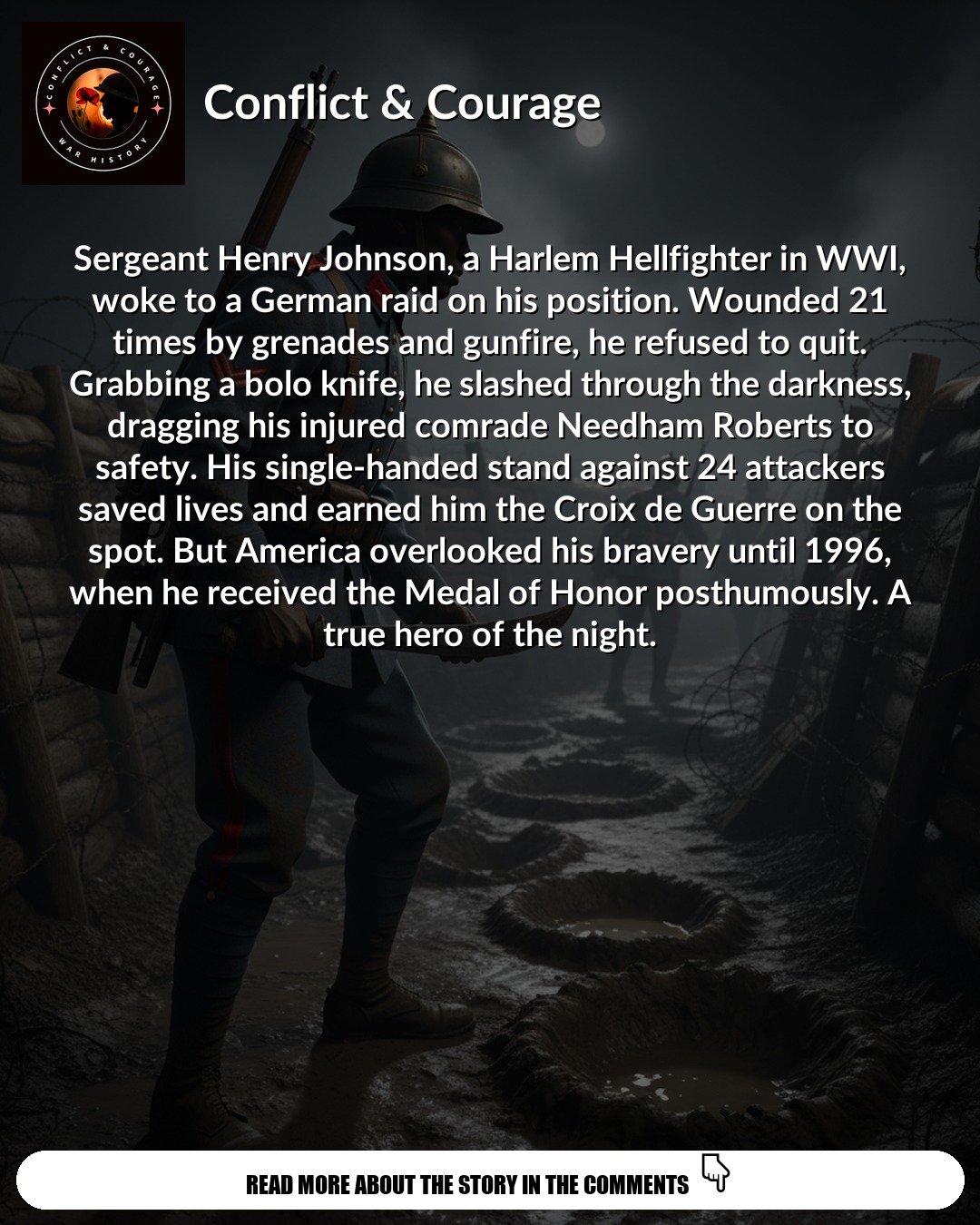
In the predawn darkness of May 15, 1918, Sergeant Henry Johnson gripped his rifle and peered into the Argonne Forest's ghostly mist. What happened next would make him a legend—but it would take America 97 long years to properly honor his extraordinary courage.
The Night That Changed Everything
The 369th Infantry Regiment, known as the Harlem Hellfighters, had drawn one of the war's most dangerous assignments: night watch duty in No Man's Land. These Black soldiers, fighting alongside French forces because America wouldn't integrate its military, faced constant threat from German raids.
Johnson, a former railroad porter from Albany, New York, found himself paired with Private Needham Roberts in an isolated listening post. The eerie quiet of the French countryside masked the approaching danger—24 German raiders moving silently through the darkness, wire cutters in hand, grenades at their belts.
As the Germans began cutting through the barbed wire perimeter, Johnson heard the telltale snip-snip that every frontline soldier dreaded. The attack was about to begin.
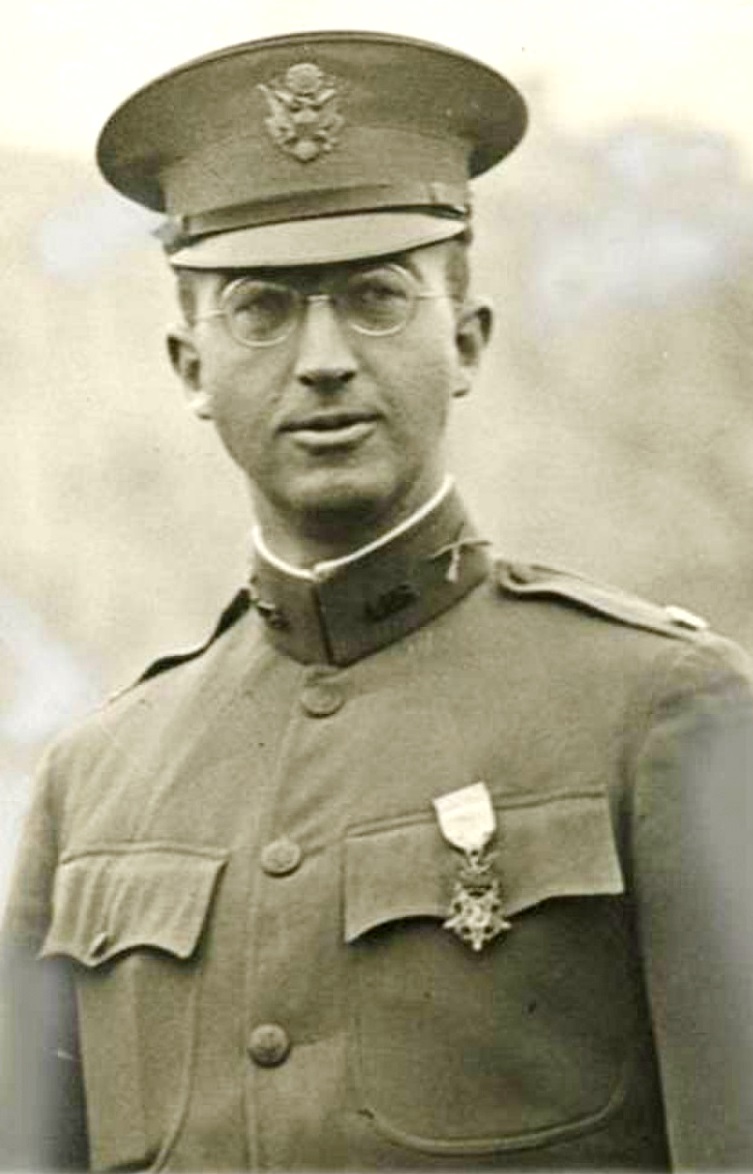
Against Impossible Odds
The German raiders struck like lightning in the darkness. Roberts fell early, wounded by grenade fragments that left him unable to fight. Suddenly, Johnson stood alone against nearly two dozen enemy soldiers determined to capture American prisoners.
When his rifle jammed after firing just three shots, Johnson made a decision that would define his legacy. He drew his bolo knife—a long, heavy machete-like blade—and charged into the melee with nothing but raw courage and determination.
The hand-to-hand combat was brutal and desperate. Johnson swung his bolo knife with deadly precision, fighting off multiple attackers while protecting his wounded comrade. Despite suffering 21 wounds himself, he refused to surrender or retreat.
His fierce resistance broke the German assault. The raiders, stunned by Johnson's ferocious defense, abandoned their mission and fled back to their lines.
The Harlem Hellfighters' Forgotten Hero
The 369th Infantry Regiment became America's most decorated World War I unit, but their heroism came with a bitter irony. Segregation meant these Black soldiers couldn't serve alongside white American troops, so they were assigned to French divisions who welcomed their skill and courage.
Johnson's background was humble—he'd worked as a railroad porter, earning modest wages while supporting his family. Military service offered both opportunity and purpose, but America's racial prejudices followed him to the battlefield.
The French immediately recognized Johnson's valor, awarding him the Croix de Guerre with Palm, their highest military honor. American military leadership, however, remained conspicuously silent about his heroism.
A Hero's Welcome That Wasn't
When Johnson returned to Harlem in 1919, the community gave him a hero's welcome. Thousands lined the streets for a triumphant parade, celebrating their local boy who had become a war legend.
But the parade couldn't change the harsh reality of segregated America. Despite his proven courage and sacrifice, Johnson received no American military recognition. The wounds from that night in the Argonne continued to trouble him, but he found no support from the Veterans Administration.
The personal cost was devastating. Johnson struggled with his injuries and the pain of being forgotten by the country he'd served so bravely. He died in 1929, still waiting for America to acknowledge his heroism.
The 97-Year Wait for Justice
For decades, historians and advocates worked to secure proper recognition for Johnson and other forgotten Black veterans. Like other heroes whose recognition was delayed by prejudice, Johnson's story slowly gained the attention it deserved.
The campaign intensified in the early 2000s as researchers documented the systematic exclusion of Black soldiers from America's highest military honors. Johnson's case became a symbol of this historical injustice.
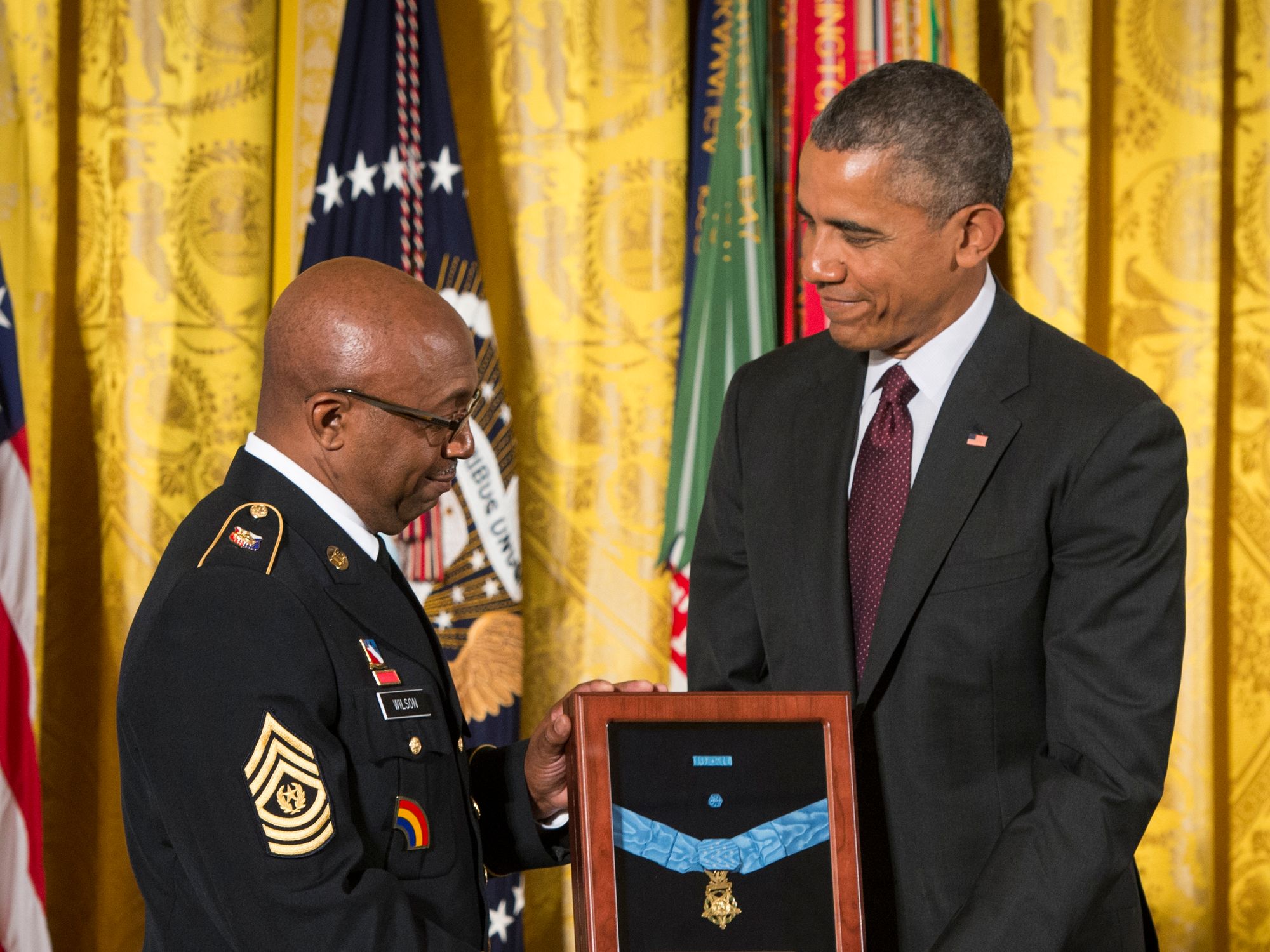
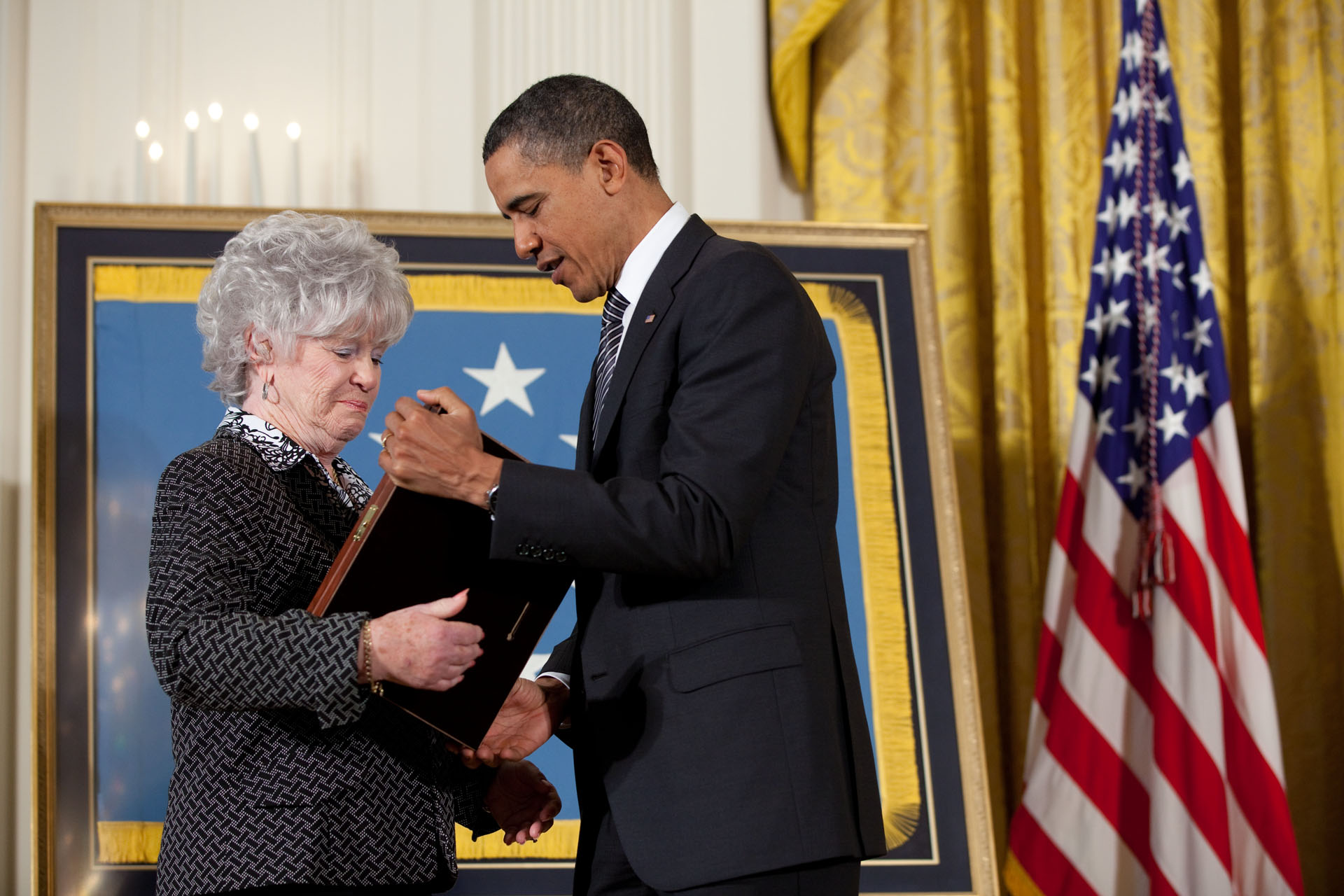
Finally, on June 2, 2015, President Barack Obama presented the Medal of Honor to Johnson's living descendants. The ceremony corrected a nearly century-old wrong, but it came far too late for Johnson himself.
The President's words captured the moment's significance: "No one knew the full story. No one knew that the outcome might have been different if not for a soldier... who said, 'I'll get them before they get me.'"
Lessons in Courage and Character
Johnson's story teaches us that true heroism isn't measured by immediate recognition—it's defined by actions taken when no one is watching and everything is at stake. His courage that night in the Argonne saved American lives and exemplified the highest military values.
His eventual recognition helped spotlight the broader injustice faced by Black World War I veterans. Like other delayed Medal of Honor recipients, Johnson's story reminds us that heroism knows no color, but prejudice can blind us to valor.
The Harlem Hellfighters' legacy lives on, inspiring new generations to understand that courage comes from character, not circumstances. Johnson's bolo knife may have saved his comrade, but his example saves something even more precious—our faith in what ordinary people can accomplish when tested by extraordinary circumstances.
Henry Johnson waited 97 years for his medal, but his heroism was immediate and undeniable. His story proves that while justice may be delayed, true courage echoes through the ages, inspiring us all to stand firm when darkness falls.
What do you think about Henry Johnson's incredible story of delayed recognition? Have you discovered other forgotten heroes whose courage deserves remembering? Share your thoughts below and help keep these important stories alive for future generations.