In the summer of 1813 the Niagara Peninsula was contested ground. The War of 1812 between Britain and the United States had settled into a grinding struggle along the frontier, and after an American victory at Fort George the British had pulled back to a thin screen of advanced posts. One of these, at a place called Beaver Dams near present-day Thorold, Ontario, was held by Lieutenant James FitzGibbon of the British Army with only about fifty regular soldiers. It was into this precarious situation that a thirty-eight-year-old settler named Laura Secord stepped, and her name has been attached to the battle that followed ever since.
The Warning
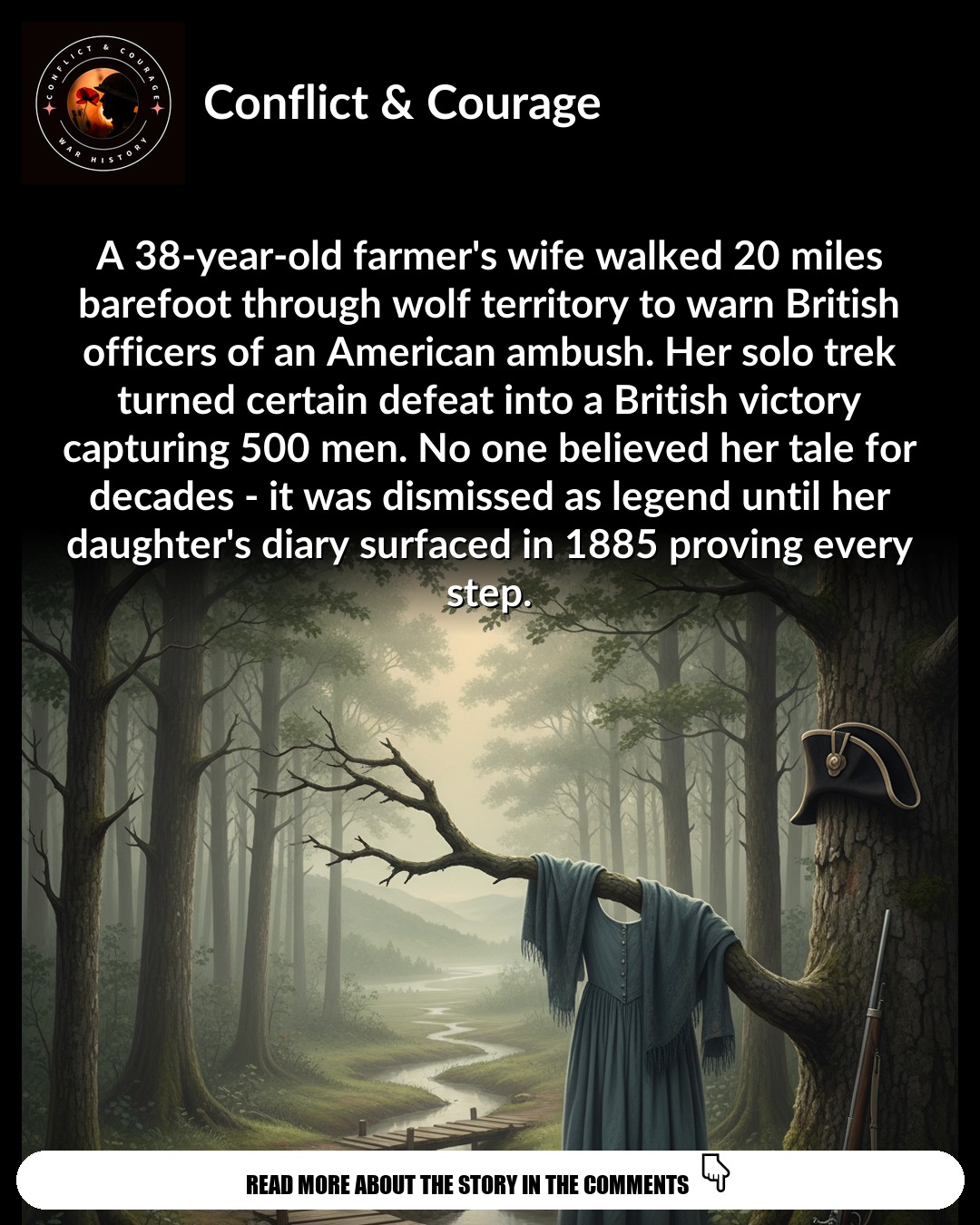
Secord was the wife of James Secord, a Loyalist militiaman who had been badly wounded at the Battle of Queenston Heights the previous year. With American troops billeted in the district and her husband unable to travel, Laura Secord came to learn of an American plan to march out from Queenston and destroy FitzGibbon's outpost. In June 1813 she set out on foot to carry the warning to the British lines, a journey of roughly twenty miles through woods and swamp, made on a hot day and by a circuitous route to avoid American sentries. Contemporary accounts, including FitzGibbon's own later certificates confirming her walk, establish that she did reach him and delivered her warning before the attack.
The Battle of Beaver Dams, 24 June 1813
The American column, some 500 to 600 infantry and cavalry under Lieutenant-Colonel Charles Boerstler, advanced on Beaver Dams on 24 June 1813. But the British and their allies were waiting. According to Parks Canada, which designated the battlefield a National Historic Site, a force of Haudenosaunee (Iroquois) warriors from Kahnawake (Caughnawaga) and the Grand River, led by Captains Dominique Ducharme and William Kerr, ambushed the Americans in the woods. The warriors harried and surrounded the column for hours in a punishing fight before FitzGibbon rode forward under a flag of truce and persuaded Boerstler that he was outnumbered. The American force then surrendered to FitzGibbon and his small body of regulars.
This is the point at which the popular legend of Laura Secord has often distorted the record. The roughly 500 men in question were not British lives saved by her warning; they were the American soldiers who were ambushed and compelled to surrender. And the ambush itself was overwhelmingly the work of the Indigenous warriors, not of FitzGibbon's regulars.
Credit Where It Was Due
FitzGibbon was unusually candid about this at the time. In a later statement he wrote that "with respect to the affair with Captain Boerstler, not a shot was fired on our side by any but the Indians," adding that the Kahnawake and Grand River warriors had beaten the American detachment "into a state of terror" before he arrived to accept the surrender. In other words, the man who received the credit in Boerstler's formal capitulation freely acknowledged that the battle had been won by the Indigenous fighters. The Caughnawaga (Kahnawake) and Grand River nations bore the fighting and the casualties; FitzGibbon, and later Secord, received the lasting fame.
The Legend and the Record
Laura Secord's walk was real, and it was genuinely dangerous and brave. What the popular retelling has too often obscured is everything around it: that FitzGibbon's post was tiny, that the victory at Beaver Dams was primarily an Indigenous one, and that the "500" of the story were surrendering Americans rather than rescued Britons. Secord herself received little recognition in her lifetime and pressed for acknowledgement in her old age; the Indigenous warriors who did the actual fighting received even less, and their central role was frequently written out of the story altogether.
Seen accurately, Beaver Dams is a more interesting episode than the tidy legend allows. It was a victory won by the combined effort of a determined settler who carried a warning, a British officer who exploited it, and the Kahnawake and Grand River warriors whose ambush made the surrender possible. Restoring each of those parts to its proper place does not diminish Laura Secord's courage. It simply tells the truth about who won the battle.
Sources & Further Reading
- Parks Canada, "Battle of Beaver Dams National Historic Site of Canada" — pc.gc.ca
- The Canadian Encyclopedia, "Laura Secord" — thecanadianencyclopedia.ca