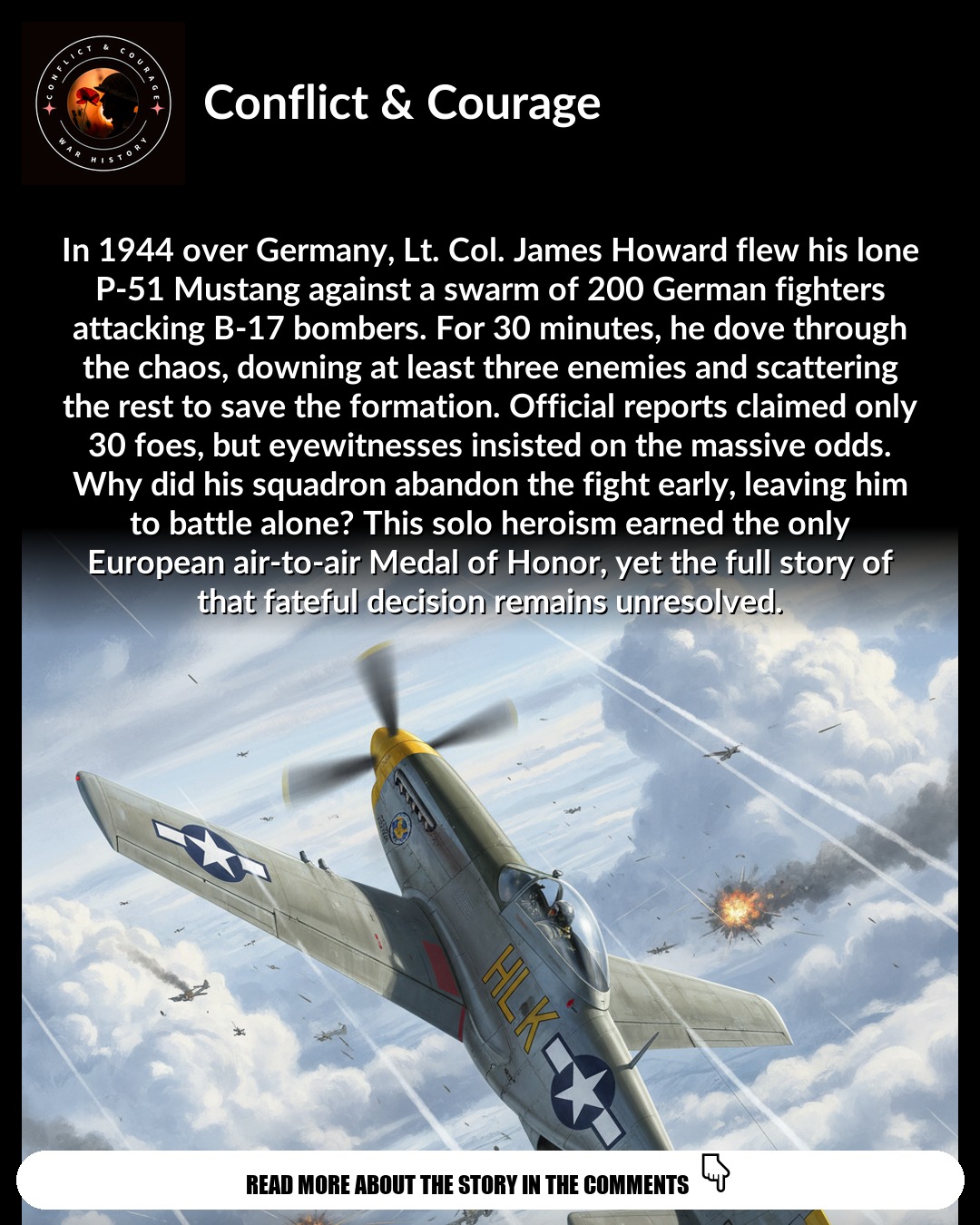
Picture this: a lone American fighter pilot, surrounded by 200 enemy aircraft, refusing to abandon the bombers under his protection. On January 11, 1944, Lt. Col. James Howard rewrote the book on aerial combat in the skies over Germany, earning his place among the greatest heroes in aviation history.
The Mission That Started Like Any Other
The morning of January 11, 1944, dawned cold and gray over England as the 354th Fighter Group prepared for another deep escort mission into Germany. Their job: protect B-17 Flying Fortress bombers as they struck targets deep in the heart of the Reich.
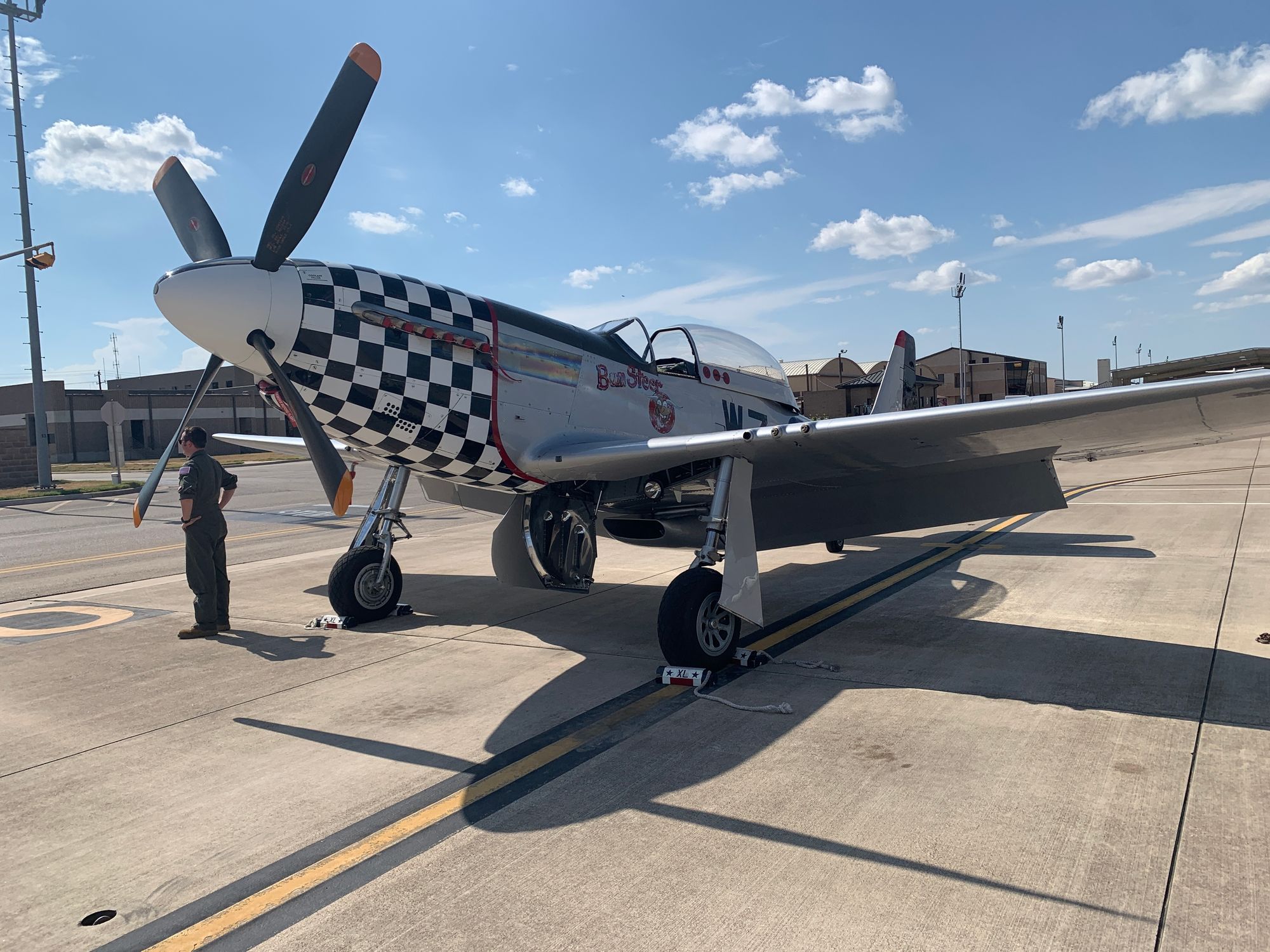
Lt. Col. James Howard climbed into the cockpit of his P-51 Mustang, nicknamed "Ding Hao!" — Chinese for "very good." The sleek fighter was perfectly suited for these long-range missions, with drop tanks that could carry it hundreds of miles into enemy territory.
These escort missions had become the lifeline of the bomber offensive. Without fighter protection, the Flying Fortresses were sitting ducks for swarms of German interceptors.
When Everything Goes Wrong
Somewhere over Germany, disaster struck. Howard's squadron encountered fuel problems that forced most of the fighters to turn back early. The exact reasons remain controversial — some say mechanical issues, others question whether the fuel calculations were overly conservative.
As his wingmen peeled away toward England, Howard faced a crucial decision. He could follow orders and return to base, or continue alone to protect the bombers still hours from their target.
Howard chose to stay. Minutes later, he spotted a terrifying sight: nearly 200 German fighters — Messerschmitts and Focke-Wulfs — assembling for a coordinated attack on the helpless bombers below.
One Against Two Hundred
What happened next defied every rule of aerial combat. Instead of calling for help or retreating, Howard dove straight into the massive enemy formation.
For thirty minutes, he fought alone against overwhelming odds. He broke up attack after attack, using hit-and-run tactics that kept the German pilots confused and off-balance. Every time they tried to organize a coordinated assault on the B-17s, Howard would appear from nowhere, guns blazing.
The bomber crews watched in amazement as this lone Mustang pilot took on an entire air armada. His aggressive tactics scattered the German formation and saved countless American lives.
The Mystery of the Kill Count
How many German aircraft did Howard shoot down that day? The official record is frustratingly vague, and for good reason. In such chaotic combat, with one pilot fighting dozens of enemies simultaneously, accurate kill counts became impossible.
Some witnesses claimed he downed six aircraft. Others said more. Howard himself was modest about his achievements, focused more on the mission's success than personal glory.
What matters isn't the exact number — it's that one man's courage disrupted an entire enemy attack and brought the bombers home safely.
Questions That Still Echo Today
Aviation historians continue to debate the most controversial aspect of this mission: why did the 354th Fighter Group turn back so early? Were the fuel concerns legitimate, or was this a case of overcautious leadership?
The squadron's early departure left Howard in an impossible situation, yet it also created the conditions for one of the most remarkable individual achievements in air combat history.
Some argue the fuel calculations were conservative by design. Others suggest mechanical problems forced the decision. The truth may never be fully known.
The Medal of Honor and Recognition
Howard's extraordinary courage didn't go unnoticed. Bomber crews testified to his heroic actions, describing how his lone fighter had saved their lives against impossible odds.
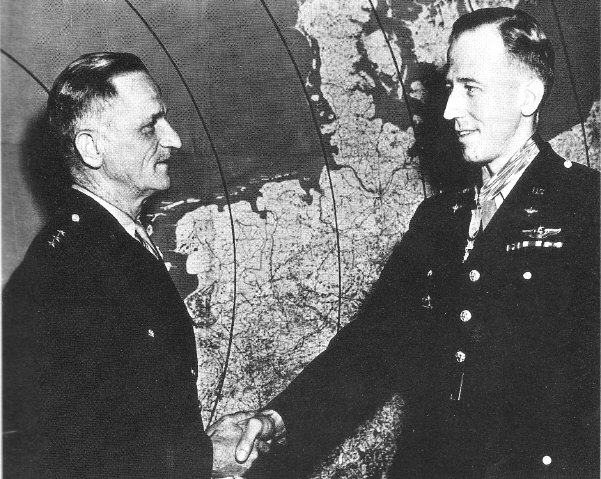
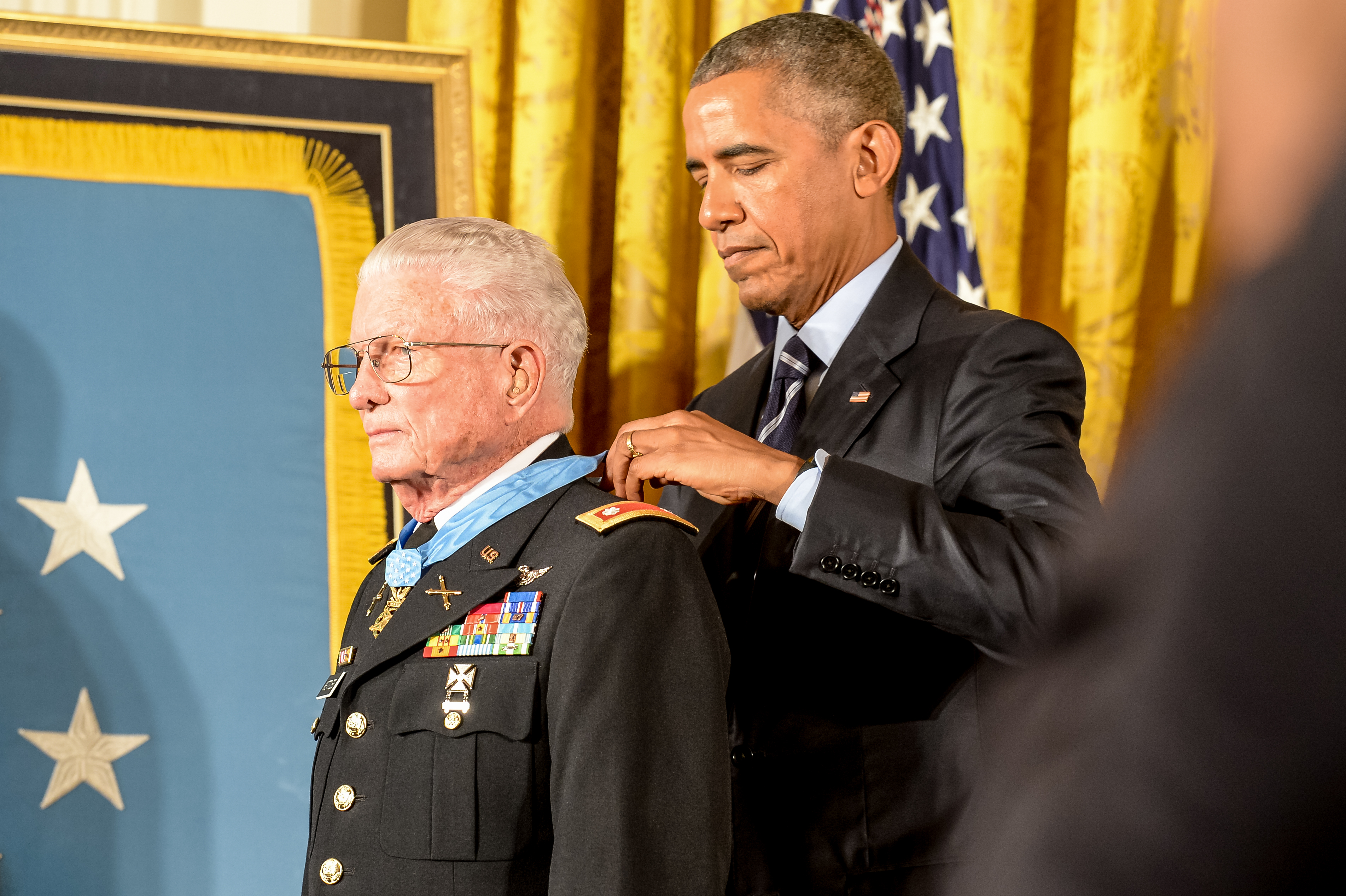
He received the Medal of Honor for his actions that day — the only fighter pilot in the European Theater to earn America's highest military decoration. Like other Medal of Honor recipients, Howard's story demonstrates how individual courage can change the course of battle.
Fellow pilots and the bomber crews he protected never forgot his sacrifice. They knew they'd witnessed something extraordinary in the skies over Germany.
Legacy of the Lone Wolf Mission
Howard's solo mission became legendary in aviation circles, inspiring both Allied and enemy pilots. It proved that aggressive tactics and individual initiative could overcome numerical disadvantage.
The psychological impact on German pilots was significant — if one American fighter could cause such havoc, what could a full squadron accomplish?
After the war, Howard continued his military service, but that January day in 1944 remained his defining moment. Like other heroes who faced overwhelming odds, his story reminds us that extraordinary courage can emerge in the most desperate circumstances.
What aspects of James Howard's incredible lone wolf mission resonate most with you? Have you encountered similar stories of individual heroism that changed the course of battle? Share your thoughts and help keep these remarkable stories of courage alive for future generations.