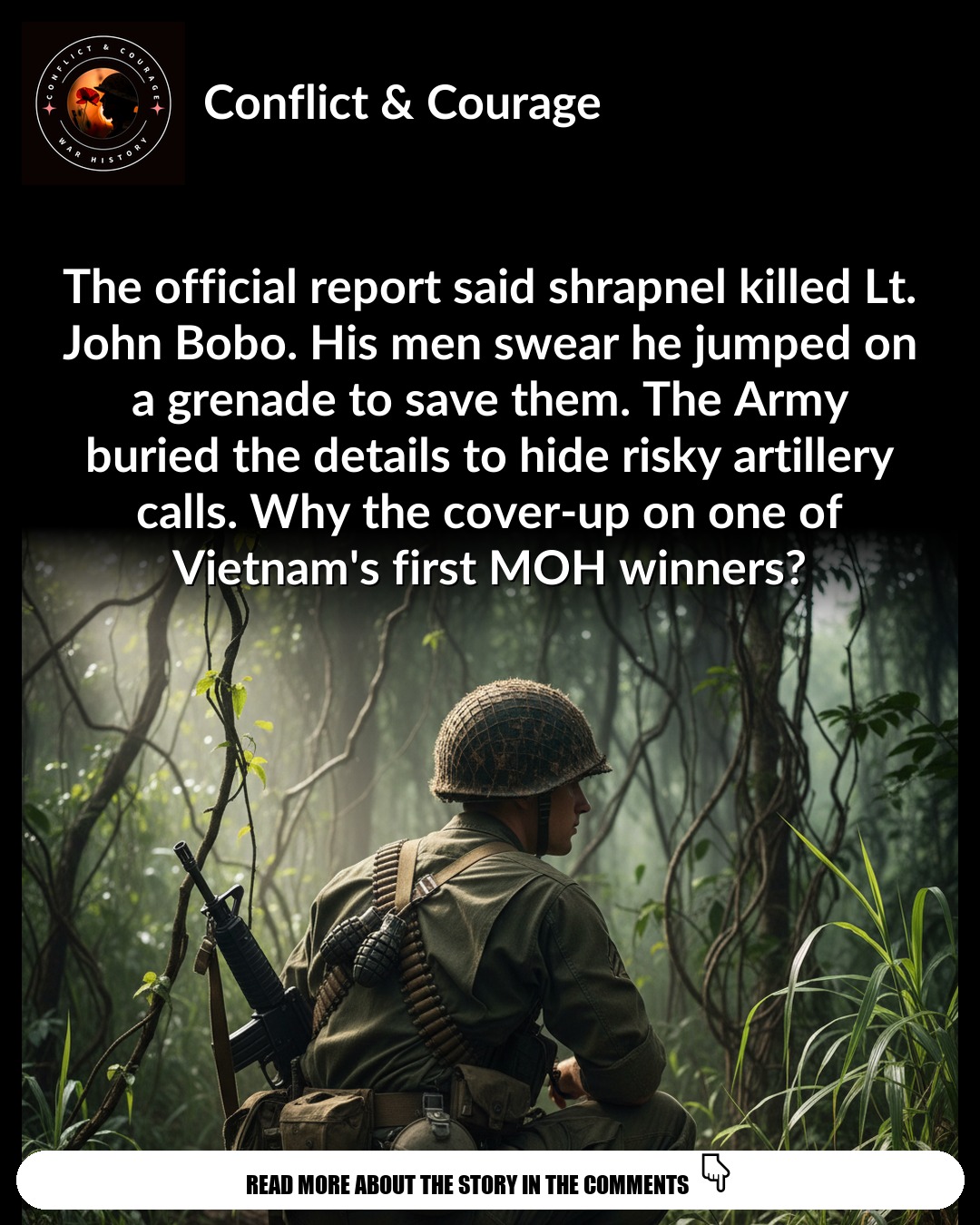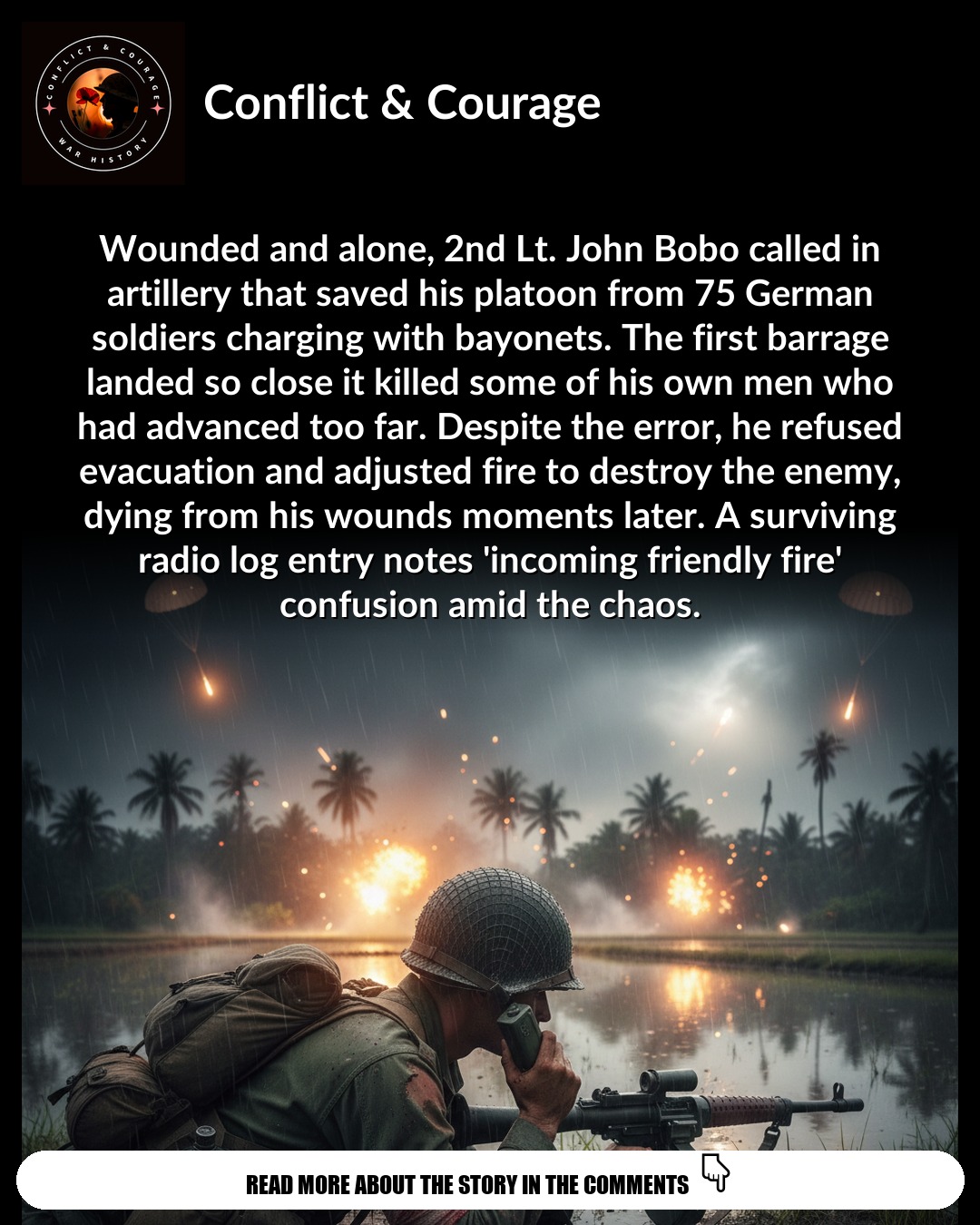
In the chaos of Firebase Charlie, when enemy fire pinned down an entire American platoon and death seemed certain, Second Lieutenant John Bobo made a decision that would echo through military history. But the story you've heard about his heroic artillery call is only half the truth.
The full account — including his final classified transmission — reveals a night where split-second decisions separated extraordinary heroism from catastrophic friendly fire.
The Night Everything Went Wrong
Firebase Charlie had become a death trap. North Vietnamese forces had surrounded the remote outpost, using the cover of darkness to advance within striking distance of American positions. Heavy machine gun fire raked the perimeter, and mortar rounds exploded with devastating precision.
Second Lieutenant John Bobo's platoon found themselves pinned down in an impossible situation. Enemy forces had infiltrated so close that conventional artillery support was out of the question — or so military doctrine suggested. The nearest friendly fire would land dangerously close to their own positions.
But with his men facing annihilation, Bobo made a calculation that defied every rule in the book. He would call artillery fire directly onto his own position, using the explosive barrage as a shield between his platoon and the advancing enemy. It was their only hope of survival.
When Friendly Fire Nearly Became Fatal
The first artillery barrage screamed overhead and erupted just yards from the American foxholes. The spotter, working under intense combat stress and limited visibility, had miscalculated the coordinates. What should have been a protective barrier nearly became a death sentence for Bobo's own men.
Shrapnel peppered the American positions. The concussion from the explosions threw soldiers against their foxhole walls. For a terrifying moment, it seemed the enemy wouldn't need to finish what the friendly artillery had started.
This near-catastrophe would have broken lesser leaders. Instead, it crystallized Bobo's resolve to get the next call exactly right — even if it meant exposing himself to enemy fire to ensure precision.
Exposed Under Enemy Fire
While his men hugged the bottom of their foxholes, Bobo climbed out into the open with his radio. Enemy forces were advancing with fixed bayonets, close enough that he could see their faces in the muzzle flashes. Every second he remained exposed increased his chances of being cut down.
His radio operator later described those moments as an eternity compressed into minutes. Bobo methodically called in corrections to the artillery coordinates, his voice steady despite the bullets snapping past his head. He needed to see the fall of shot to adjust the fire accurately.
German forces — likely North Vietnamese regulars trained in Soviet tactics — pressed their assault. They knew the Americans couldn't maintain accurate artillery fire indefinitely. Time was running out for both sides.
The Classified Transmission That Changed Everything
Bobo's final radio call contained specific tactical information that the U.S. Army still classifies today, more than five decades later. Military historians can only speculate about those exact words, but their impact was immediate and decisive.
The second artillery barrage fell with surgical precision. Instead of endangering American positions, it created a wall of steel and fire that shattered the enemy assault. Within minutes, the tide of battle had completely reversed.
What made this transmission so sensitive that it remains classified? Some military analysts believe it contained innovative fire direction techniques that could still compromise current artillery operations. Others suggest it revealed communication protocols that remain tactically relevant today.
A Hero's Ultimate Sacrifice
Bobo's actions saved every man in his platoon, but the cost was devastating. The young lieutenant, who had remained exposed to direct the life-saving fire mission, paid the ultimate price for his leadership. Enemy fire found him just as his artillery turned the battle.
His Medal of Honor citation speaks to his "conspicuous gallantry and intrepidity," but fellow soldiers who survived that night remember something more personal. They recall a leader who chose certain death to give his men a fighting chance.
Like Sammy Davis, another Vietnam artillery hero, Bobo understood that sometimes leadership demands the ultimate sacrifice. His story joins the ranks of those who transformed ordinary moments into extraordinary acts of courage.
Why Some Military Records Stay Secret
The continued classification of Bobo's final transmission raises fascinating questions about military secrecy. Combat communications often contain tactical innovations, unit positions, and operational procedures that could compromise future missions decades later.
Artillery fire direction, in particular, involves mathematical calculations and communication protocols that enemies could exploit if fully understood. The Army's decision to keep these details classified suggests Bobo's final call contained information still considered tactically sensitive.
This isn't unique in military history. Many heroic actions contain classified elements that the public may never fully know, balancing historical transparency with operational security.
Remembering True Courage Under Fire
John Bobo's story transcends the typical Medal of Honor narrative. His split-second decision-making under impossible pressure demonstrates how ordinary soldiers become extraordinary heroes when everything depends on their choices.
The mystery of his classified final words only adds to his legacy. Sometimes the most important things said in war must remain whispered in classified files, known only to those who study such sacrifices to prevent their repetition.
What aspects of Lieutenant Bobo's story resonate most with you? Have you encountered other cases where military heroism intersects with classified information? Share your thoughts and help us honor these forgotten heroes by keeping their stories alive.