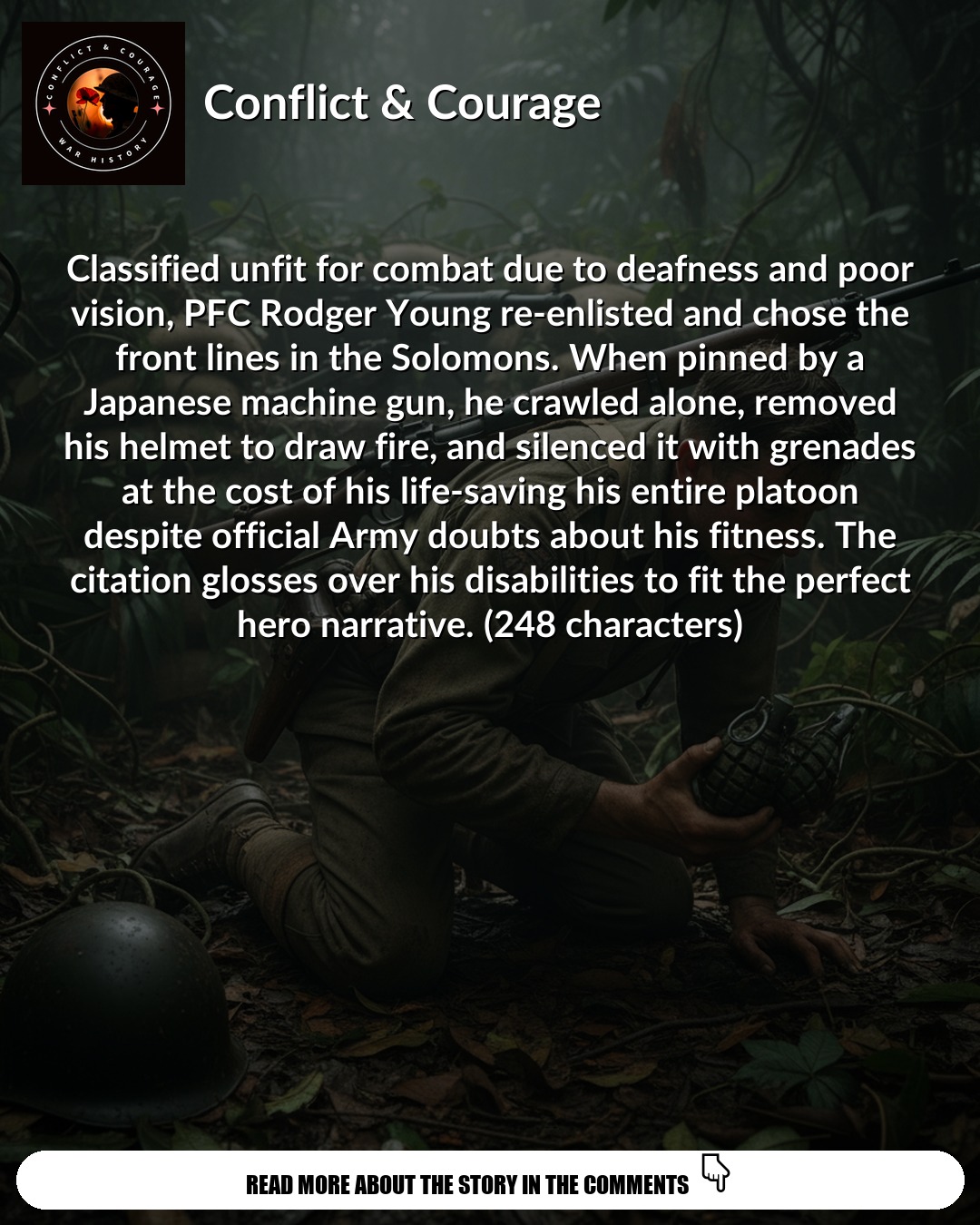
Rodger Wilton Young was not, on paper, the kind of soldier a recruiter would seek out. Born on 28 April 1918 and raised in rural Ohio, he stood only about five feet two inches tall and weighed around 125 pounds. A boyhood injury had damaged his hearing, and his eyesight was failing. He was, by the standards of physical fitness, a poor candidate for the infantry. Yet in 1938 he enlisted in the Ohio National Guard, and when his unit was called into federal service he went with it to the Pacific.
Giving Up His Stripes
Young had risen to the rank of sergeant. But as his hearing and vision continued to deteriorate, he came to a decision that ran against every instinct of ambition. He worried that his disabilities would make him a danger to the men he led, that he might miss an order shouted in the dark or fail to see a threat in time. So he asked to be reduced in rank, voluntarily, from sergeant to private.
This is the true heart of Young's story, and it is often mangled in the retelling. He did not hide a 4-F classification. He did not defy the Army or conceal his condition to sneak into combat, and there was no cover-up by his superiors. He was an enlisted man who took himself out of a leadership position precisely because he did not want his failing senses to cost another soldier his life. He accepted the demotion so that he could keep serving as a rifleman without endangering the men around him.
New Georgia, 31 July 1943
By the summer of 1943, Private Young was serving with Company B, 1st Battalion, 148th Infantry Regiment, 37th Infantry Division, fighting on the island of New Georgia in the Solomon Islands. The terrain was dense jungle, hot and close, where a man could see only a few yards ahead.
On 31 July, Young's company was ordered to make a limited withdrawal from the battle line to adjust the battalion's position for the night. As the movement began, his platoon was suddenly pinned down by intense fire from a Japanese machine gun concealed on higher ground only about 75 yards away. The opening burst wounded Young.
As the platoon started to obey the order to fall back, Young called out that he could see the enemy emplacement. He began creeping toward it. A second burst from the machine gun wounded him again. Despite his wounds, he kept advancing, drawing the enemy's fire onto himself and answering with his rifle. When he was close enough, he began throwing hand grenades at the position. While doing so, he was hit a third time and killed.
What His Sacrifice Bought
Young's advance did exactly what he seems to have intended. By closing with the Japanese pillbox and diverting its fire onto himself, he allowed his platoon to disengage and pull back without loss. His actions were also responsible for several enemy casualties. The half-deaf, half-blind former sergeant who had given up his rank so as not to endanger his comrades ended his life shielding them one last time.
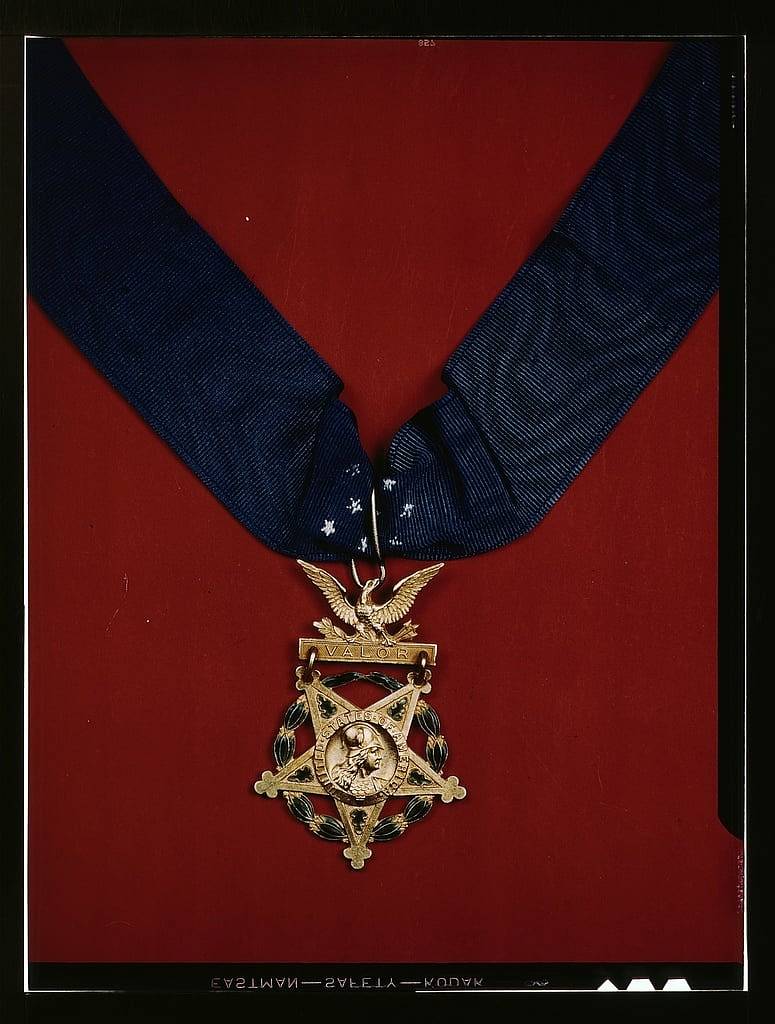
The President of the United States, in the name of Congress, awarded Private Rodger Wilton Young the Medal of Honor posthumously, announced in War Department General Orders No. 3 on 6 January 1944.
The Ballad
Young's story reached far beyond the Solomons. Songwriter Frank Loesser, moved by the citation, wrote "The Ballad of Rodger Young," which became one of the best-known songs of the war years. Its refrain kept a small, unlikely infantryman's name alive for a generation: a man who could have taken a discharge, who gave up his stripes rather than risk his friends, and who died alone in the dark to bring the rest of them home.